Plant Overview
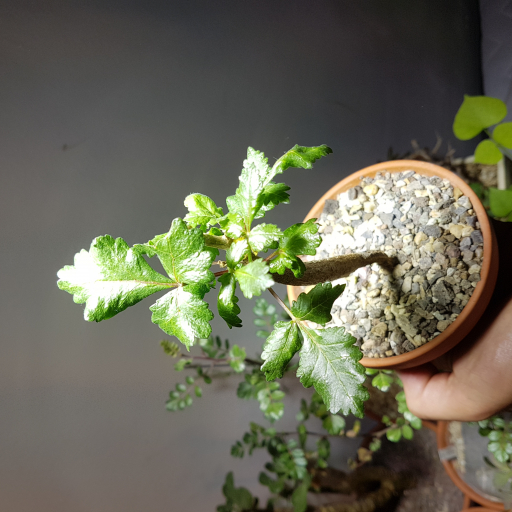
Known as the Red Copal, Bursera hindsiana is a charismatic survivor from the rugged deserts of Baja California and Sonora. This succulent tree is a favorite among "fat plant" enthusiasts for its peeling red bark and its prestigious lineage—it is a close relative to the trees that produce Frankincense and Myrrh. In the wild, it often grows as a gnarled, miniature tree, looking like an ancient sentinel guarding rocky desert slopes.
🔍 How to Identify
- 🔴 The Bark: Its most striking feature is the reddish-brown to copper bark that peels away in thin, papery flakes. This reveals a green layer underneath that can actually perform photosynthesis during droughts.
- 🍃 Fuzzy Foliage: The small, grayish-green leaves are often covered in fine, soft hairs. They usually appear in sets of three (trifoliate) with elegantly scalloped or "toothed" edges.
- 🪵 The Caudex: It naturally develops a thickened, succulent trunk (pachycaul habit) that stores water, giving even young nursery plants a prestigious, "bonsai-like" appearance.
🏡 In Your Garden
- 🏜️ Desert Soul: This plant thrives on "tough love." It requires incredibly gritty, fast-draining soil—think more rocks and sand than peat. Because it has a specialized root system for the desert, it is highly sensitive to "wet feet," which can lead to rapid root rot.
- ☀️ Light & Dormancy: To keep the bark deep red and the growth compact, it needs intense, direct sunlight. Be aware that it is drought-deciduous; it may drop all its leaves if it gets too dry or when temperatures cool down. This isn't a sign of death, but rather the plant "napping" to conserve energy.
- 🪴 Potting Nuance: Because it develops a significant taproot over time, it dislikes frequent transplanting. Choose a sturdy clay pot that allows the roots to breathe and stay in place for several years.
⚠️ Safety & Toxicity
- 🛡️ Safe Assessment: Bursera hindsiana is generally considered non-toxic to humans and common household pets like cats and dogs.
- 🧴 Resin Sensitivity: The tree is famous for its aromatic resin. While this sap is used for incense, it contains volatile oils that can cause mild skin irritation or contact dermatitis in sensitive individuals. It is a good idea to wear gloves when pruning or if the bark is damaged.
✨ Fun Fact
The name "Copal" is derived from the Nahuatl word copalli, which simply means "incense." For centuries, the resin from Bursera trees has been harvested and burned in spiritual ceremonies throughout Mexico for its cleansing, citrus-pine aroma.

Detailed Care Instructions
To grow a Bursera hindsiana plant, also known as the Palo Santo tree, you can follow these steps:
- Climate and Location: Determine if the climate in your region is suitable for growing Bursera hindsiana. This tree is native to dry tropical forests, so it prefers warm, dry climates. It can tolerate light frost, but it's best to protect it from extreme cold temperatures. Provide a location with full sun or partial shade.
- Soil: Bursera hindsiana prefers well-draining soil. Use a mix of sandy soil with organic matter to promote good drainage. Avoid soil that retains water as it may cause root rot.
- Propagation: The Bursera hindsiana is usually propagated from seeds. Soak the seeds in warm water for 24 hours before planting to improve germination rates. Plant the seeds in individual pots or directly in the ground at a depth of about 1 inch (2.5 cm). Keep the soil moist until germination occurs, which may take several weeks.
- Watering: Once the plant has established roots, reduce watering and allow the soil to dry out between watering sessions. Overwatering can lead to root rot, so it's important not to keep the soil consistently wet. This plant is drought-tolerant and prefers dry conditions.
- Pruning: Regular pruning is not necessary for Bursera hindsiana plants. However, you can remove dead or damaged branches to maintain a healthy appearance.
- Fertilizer: These plants do not require regular fertilization. However, you can use a balanced, slow-release fertilizer in early spring to provide essential nutrients.
- Protection from Cold Weather: If you live in an area with frost or colder temperatures, you may need to protect your Bursera hindsiana plant during winter months. Cover the tree with burlap or a frost blanket to shield it from extreme cold, especially in its first few years of growth.
Remember to check local regulations before planting Bursera hindsiana as it may be protected in some regions.

Place in a bright room that is sun drenched almost all day. Or directly in a south-facing window.

Bursera hindsiana plant prefers a well-draining soil that is not overly moist. It is recommended to water the plant deeply but infrequently, allowing the soil to dry out slightly before the next watering. When watering, it is important to saturate the entire root system, which may require a slow and thorough soaking of the soil. Overwatering should be avoided, as it can lead to root rot and other issues. It is also important to avoid getting water on the foliage of the plant, as this can increase the risk of fungal diseases. In dry climates or during periods of drought, the plant may need additional watering.
To fertilize this plant, use a balanced, slow-release fertilizer with a ratio of 10-10-10 or 20-20-20. Apply the fertilizer once every three to four months during the growing season. Be careful not to over-fertilize as this can damage the plant. Water the plant thoroughly before and after fertilizing to help the nutrients penetrate the soil. Also, avoid fertilizing during periods of drought or extreme heat.
Bursera hindsiana is a plant that requires well-draining soil with good moisture retention capacity. The ideal soil type is sandy loam or loamy soil, which provides a good balance of drainage and moisture retention. It is important to avoid soils that are heavy, clayey, or poorly draining, as these can cause root rot and other issues. This plant prefers moderately fertile soil with a slightly acidic pH (between 6.0 and 7.5). It is recommended to add organic material like compost or humus to improve soil structure, fertility, and water-holding capacity. Additionally, regular mulching around the base of the plant can help to conserve soil moisture and regulate soil temperature. Overall, the key to successful Bursera hindsiana growth is to provide a well-draining, moderately fertile soil that retains moisture and promotes healthy root development.
Bursera Hindsiana can be propagated by taking stem cuttings during its active growing season. Select a healthy stem that is new growth and approximately 6 inches long. Make the cut on a 45-degree angle with a clean, sharp knife. Strip the leaves from the bottom one-third of the stem and dip the cut end in rooting hormone powder. Place the cutting in a pot filled with a well-draining potting mix that is moist but not wet. Cover the pot with a plastic bag to create a humid environment and place it in a warm, bright location that is out of direct sunlight. Mist the cutting regularly to keep the soil moist and remove the plastic bag once roots have formed, which is usually in four to six weeks.








