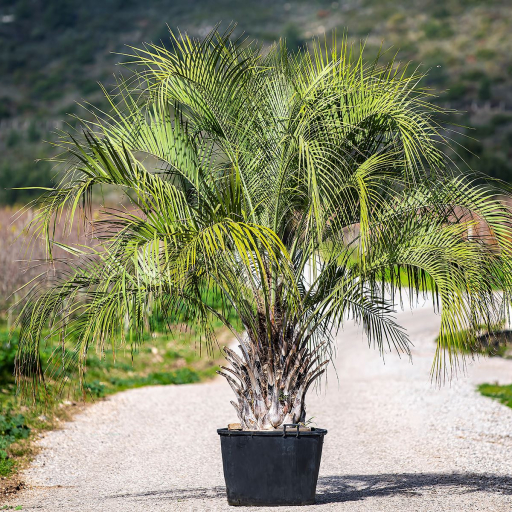
Plant Overview
Known as the Jelly Palm or Pindo Palm, this South American native is a showstopper for those who want a tropical look without the fragility of a true tropical plant. It is famous for its elegant, fountain-like appearance and its clusters of bright orange fruit that taste like a tropical cocktail. Unlike many of its cousins, it is surprisingly cold-hardy, allowing gardeners in cooler climates to enjoy a slice of the subtropics.
🔍 How to Identify
- 🌴 The Fronds: Deeply recurved (arching downward) pinnate leaves that give the tree a weeping, fountain-like silhouette.
- 🎨 The Color: Distinctive silvery-blue to grayish-green foliage, which helps it stand out against the deep greens of a typical garden.
- 🐘 The Trunk: A stout, single trunk that remains covered in old leaf bases (boots) for many years, giving it a rugged, textured appearance.
- 🍊 The Fruit: Large, heavy clusters of round, marble-sized fruits that turn a vibrant orange-yellow when ripe.
🏡 In Your Garden
- ☀️ Sun & Space: This palm thrives in full sun but needs plenty of "elbow room." Because the fronds arch so dramatically, it can grow quite wide, so avoid planting it too close to walkways or house walls.
- ⏳ Growth Habit: It is a slow-to-moderate grower, which means it won't outgrow its welcome overnight. It is exceptionally drought-tolerant once established but appreciates regular deep watering during the hottest months to encourage fruit production.
- 🌬️ Climate Resiliance: One of the best palms for "marginal" climates, it can survive temperatures dropping briefly into the teens (Fahrenheit), making it a staple in coastal and southern landscapes.
⚠️ Safety & Toxicity
- 🛡️ Status: Non-toxic and generally safe.
- 🐾 Details: The Pindo Palm is considered non-toxic to dogs, cats, and horses. However, gardeners should be careful when pruning; the leaf stalks (petioles) are armed with small, sharp spines that can easily scratch the skin or snag clothing.
- 🧹 Maintenance Note: While the fruit is edible, it can be messy if left to fall on patios or sidewalks, as the high sugar content attracts bees and can stain concrete.
✨ Fun Fact
🍹 The fruit isn't just for show! It is high in pectin and has a flavor often described as a mix of pineapple, apricot, and vanilla. In its native Brazil and parts of the Southern US, the fruit is traditionally harvested to make "Pindo Jelly" or fermented into a potent palm wine.

Detailed Care Instructions
| Lighting | Full Sun |
| Hardiness Zones | 8A - 10B |
Here are some steps to help you grow Butia Capitata (Pindo Palm) plant:
- Choose the right location: Pindo palms thrive in full sun but can tolerate partial shade. Select a location in your garden that receives at least 6-8 hours of direct sunlight per day.
- Soil preparation: Pindo palms prefer well-draining soil with a pH level between 6.0 and 7.0. Amend the soil with compost or organic matter to improve drainage and fertility if needed.
- Plant selection: Purchase a healthy Pindo Palm plant from a reputable nursery or garden center. Look for a plant with a strong trunk and healthy, vibrant leaves.
- Dig a hole: Dig a hole that is twice as wide and as deep as the plant's root ball. Ensure that the hole is deep enough to accommodate the entire root system.
- Planting: Gently place the Pindo Palm plant in the hole, ensuring that it stands upright. Backfill the hole with soil, firming it gently around the root ball.
- Watering: After planting, thoroughly water the palm to help settle the soil and eliminate air pockets. For the first few weeks, keep the soil consistently moist but not waterlogged. Afterward, water the plant deeply once a week, adjusting for rainfall.
- Mulching: Apply a layer of organic mulch around the base of the plant to help retain moisture and control weeds. Avoid placing the mulch too close to the trunk to prevent root rot.
- Pruning: Prune dead or damaged fronds by cutting them off at the base. Avoid removing healthy fronds unless necessary, as they provide nourishment to the plant.
- Fertilizing: Pindo palms are relatively low-maintenance and generally do not require much fertilization. However, you can apply a slow-release palm-specific fertilizer in spring and summer to promote healthy growth.
- Protection from cold: Although Pindo palms can tolerate some cold temperatures, they are more suitable for warmer climates. If you live in a colder region, consider planting them in containers or providing protection during winter months.
Remember to regularly monitor your Pindo Palm plant for signs of pests or diseases and take appropriate measures if necessary. With proper care and maintenance, your Butia Capitata should grow and thrive in your garden.

Place in a bright room that is sun drenched almost all day. Or directly in a south-facing window.

When watering this particular plant, it is important to consider the soil type and surrounding environment. This plant requires well-draining soil and should not be overwatered, as this can lead to root rot. The frequency of watering will depend on the temperature and humidity levels, as well as the size of the plant and its container. It is recommended to water thoroughly and deeply, allowing the soil to dry slightly between watering sessions. To ensure the plant is receiving enough water, it is important to check the soil moisture level regularly. Additionally, it is important to avoid getting water on the leaves or trunk, as this can lead to fungal growth and other issues. Overall, timing and precision are key when watering this plant.
To provide proper nutrition for the plant, fertilize it once a month between early spring and early fall using a balanced fertilizer containing equal parts of nitrogen, phosphorus, and potassium. Use a slow-release fertilizer or a liquid fertilizer applied at half-strength to avoid burning the roots. Water the plant thoroughly before and after fertilization. Avoid fertilizing during the winter months when the plant is dormant.
Butia Capitata is a species of plant that requires well-draining soil, with good moisture retention capabilities. The soil should be rich in organic matter and have a slightly acidic to neutral pH range. It is recommended to use a mixture of sand, loam, and peat moss to create the optimal soil conditions for the plant to thrive. Additionally, adding perlite or vermiculite to the soil mix can improve drainage and prevent soil compaction. It is important to avoid using soil that is too heavy or compact, as this can lead to root rot and other pests or diseases. Overall, maintaining proper soil conditions is crucial for the successful growth and development of Butia Capitata plants.
To propagate this plant, start by selecting a healthy parent plant with good genetics. Collect seeds from the plant and soak them in warm water for 24-48 hours. Next, plant the seeds in a well-draining soil mixture and keep them moist. Place the planted seeds in a warm, bright location with indirect sunlight. In approximately 4-6 weeks, the seeds should start to germinate. Once the seedlings have grown their first set of true leaves, transplant them into separate containers and continue to care for them until they are strong enough to be planted in the ground.
Common pests of the jelly palm include Scale insect, mealybugs, spider mites. Make a habit of checking your jelly palm frequently for pests so that any infestations can be caught and managed early.








