Plant Overview
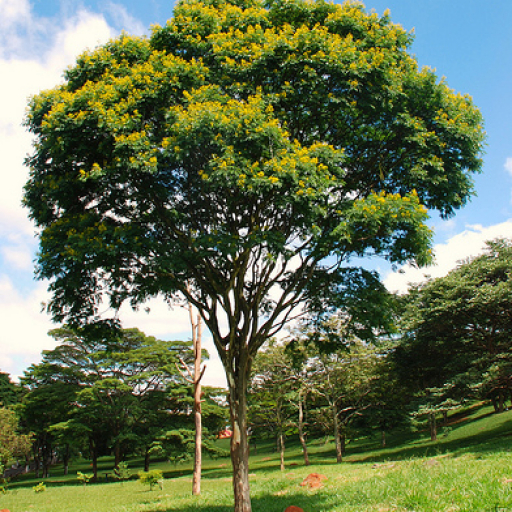
Commonly known as the Leopard Tree or Brazilian Ironwood, this striking specimen is famous for its "cat-like" aesthetic and legendary strength. Native to the lush landscapes of Brazil and Bolivia, it is prized in urban landscaping for its airy, dappled shade and its smooth, mottled trunk. It gets the name "Ironwood" because its timber is so incredibly dense and heavy that it is known to sink in water.
🔍 How to Identify
- 🐆 The Bark: The most iconic feature is the smooth, cream-colored trunk that peels away in patches to reveal shades of grey and brown, mimicking the spots of a leopard.
- 🌿 Foliage: It boasts delicate, bipinnate leaves that look like tiny ferns. These leaves create a soft, "lace-like" canopy that filters sunlight beautifully rather than blocking it entirely.
- 🟡 Flowers: During the warmer months, the tree produces small, bright yellow blossoms in conical clusters that attract a variety of pollinators.
- 🫛 Seed Pods: After flowering, it develops hard, dark brown or black flattened pods that contain very hard seeds.
🏡 In Your Garden
- 🌳 Space Requirements: While beautiful, the Leopard Tree has a vigorous and somewhat invasive root system. It is best planted far away from underground pipes, pools, or house foundations to prevent structural damage.
- ☀️ Sun & Climate: This is a tropical soul through and through. It thrives in full sun and loves heat, but it is quite sensitive to frost. If you live in a cooler climate, it will need a very sheltered spot or a large conservatory.
- ✂️ Structural Pruning: Because it grows relatively fast, it benefit from early "training" or pruning to ensure a strong central leader and to prevent the branches from becoming too heavy and snapping during high winds.
⚠️ Safety & Toxicity
- ✅ General Safety: Caesalpinia ferrea is generally considered non-toxic to humans and is even used in traditional Brazilian medicine (often as an infusion).
- 🐕 Pet Caution: While not high on the list of poisonous plants, the hard seed pods can pose a choking hazard or cause mild digestive upset if chewed on by curious dogs.
- 🦶 Physical Hazard: The fallen seed pods are exceptionally hard—stepping on them barefoot is a bit like stepping on a Lego!
✨ Fun Fact
The wood of the Brazilian Ironwood is a favorite among master luthiers. Because of its density and tonal qualities, it is frequently used to craft the fingerboards of high-end acoustic and electric guitars as a sustainable alternative to Rosewood!

Detailed Care Instructions
To grow a Caesalpinia Ferrea plant, also known as the leopard tree or Brazilian ironwood, follow these steps:
- Climate and Soil: Caesalpinia Ferrea thrives in tropical and subtropical regions. It prefers well-draining soil, rich in organic matter.
- Propagation: You can grow Caesalpinia Ferrea from seeds or cuttings. Seeds can be purchased online or collected from mature plants. Soak the seeds overnight in warm water before sowing to assist germination.
- Planting: Choose a location that receives full sun. Prepare the soil by loosening it and removing any weeds or rocks. Plant the seeds or cuttings in the soil, sowing them 0.5 inches to 1 inch deep.
- Watering: Keep the soil evenly moist, but avoid overwatering. Water the plant regularly, especially during the first few weeks after planting, to help establish a strong root system.
- Fertilizing: Fertilize the Caesalpinia Ferrea plant with a balanced, slow-release fertilizer once every three months during the growing season. Follow the recommended dosage on the fertilizer packaging.
- Pruning: Prune the plant occasionally to maintain its shape and remove any dead or diseased branches. Pruning can be done during the late winter or early spring months.
- Pests and Diseases: Caesalpinia Ferrea is generally pest-free, but it can occasionally be affected by scale insects, caterpillars, or leaf-feeding beetles. Monitor the plant regularly and treat any infestations with appropriate insecticides.
- Support: Stake young plants to provide support until they establish a sturdy trunk.
- Protection: Protect the plant from frost or extreme cold temperatures. If your region experiences freezing temperatures, consider growing the plant in a container that can be moved indoors during winter.
- Patience: Caesalpinia Ferrea is a slow-growing tree, so be patient. It may take several years for it to reach its full potential.
Remember to seek specific advice from a local gardening expert or nursery regarding the specific care requirements for Caesalpinia Ferrea, as they may vary depending on your climate and growing conditions.

Place in a bright room that is sun drenched almost all day. Or directly in a south-facing window.

To water this type of plant, you should ensure that the soil is completely dry before watering it again. This plant prefers a bit of drought and does not tolerate soggy soil well. Water thoroughly and deeply, making sure that the soil is moist down to the root level. It is best to water this plant in the mornings to prevent the soil from becoming too wet overnight, which can lead to fungal issues. Additionally, this plant is sensitive to fluoride in tap water, so it may be best to use rainwater or purified water.
- Begin by selecting a balanced fertilizer that contains equal parts of nitrogen, phosphorus, and potassium.
- Follow the manufacturer's instructions on the label regarding application rates and frequency.
- Apply the fertilizer to the soil around the base of the plant, ensuring that it is spread evenly.
- Water the plant immediately after fertilization to help distribute the nutrients throughout the soil.
- Monitor the plant's growth and adjust fertilization rates as needed. Avoid over-fertilizing, as this can lead to nutrient burn and other problems.
- As a general rule, fertilize Caesalpinia Ferrea plants every 4-6 weeks during the growing season, from spring through fall. Cut back on fertilization during the winter when the plant is dormant.
Caesalpinia Ferrea requires well-draining and nutrient-rich soil for optimal growth. The soil should have a pH level between 6.0-7.5, which is slightly acidic to neutral. The plant prefers a soil that is loamy, sandy, or slightly clayey in texture. It is essential to ensure that the soil is not too heavy or compacted as it can lead to poor growth and root development.
To prepare the soil for planting, it is recommended to mix organic matter such as compost or well-rotted manure. This will help to improve the soil structure, increase water retention, and provide extra nutrients for the plant. Avoid using chemical fertilizers as they can damage the delicate root system of the plant.
When planting Caesalpinia Ferrea, ensure that the soil is well-draining, and the plant is not placed too deep in the ground. The root ball should be level with the soil surface or slightly above it to avoid waterlogging.
Regular watering is necessary for Caesalpinia Ferrea, but it is essential not to overwater the plant. Allow the soil to dry out slightly between watering to prevent root rot. Mulching around the base of the plant can help to retain moisture in the soil and prevent weed growth.
Overall, a well-draining and nutrient-rich soil are crucial for the growth and development of Caesalpinia Ferrea. With the right soil conditions, this plant can thrive and produce beautiful flowers and foliage.
To propagate this plant, you will need to first collect mature seeds from the mother plant. The seeds should be cleaned and soaked in water for 24 hours before planting them in a well-draining soil mixture, preferably mixed with sand or perlite for better aeration. Keep the soil consistently moist and the temperature between 68-86°F (20-30°C) until germination occurs, which can take several weeks to a few months.
Once the seedlings have emerged, they should be allowed to grow until they reach a height of about 6-8 inches (15-20 cm) before being transplanted into individual pots. Again, use a well-draining soil mixture and ensure that the pots have drainage holes to prevent waterlogging.
When transplanting, be careful not to damage the seedling's fragile roots, and provide them with adequate sunlight and moisture to promote healthy growth. Over time, the young plants will develop a strong root system and can be transplanted into larger pots or planted in the ground to grow into mature trees.








