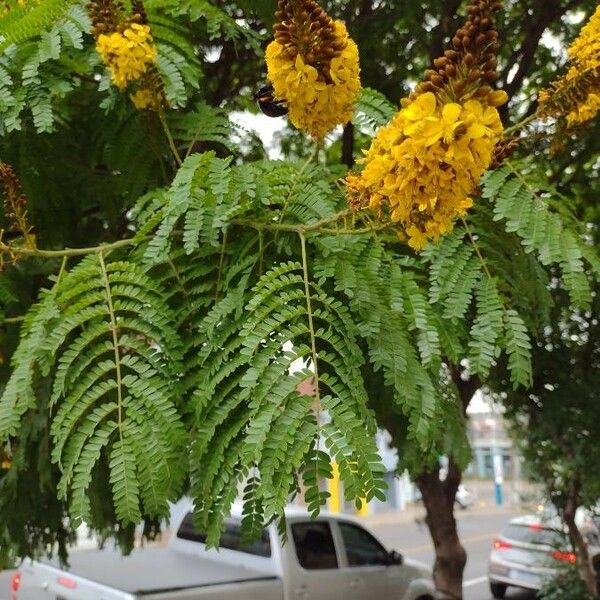
Plant Overview
Often called the Sibipiruna or False Brazilwood, this majestic tree is a crown jewel of the Brazilian Atlantic Forest. It is beloved for its "golden rain" effect, painting city streets and parks in vibrant yellows during its blooming season. Its Latin name, pluviosa, hints at the refreshing, cooling shade of its wide canopy, which feels like a natural shelter during the height of summer.
🔍 How to Identify
- 🌿 Lacy Foliage: The leaves are "bipinnate," meaning they are divided into many tiny, oval leaflets that look like delicate green feathers or ferns.
- 🌼 Golden Spires: It produces upright, pyramid-shaped clusters of bright yellow flowers. If you look closely, the petals often have tiny, reddish spots near the base.
- 🟫 Woody Pods: After the floral show, the tree develops flat, leathery brown seed pods that snap open when dry to flick seeds away from the parent tree.
🏡 In Your Garden
- 🌳 The Ultimate Shade Maker: Because of its wide, umbrella-shaped crown, the Sibipiruna is a favorite for large landscapes. It creates a "dappled light" effect, allowing grass or smaller shrubs to grow comfortably beneath it.
- 🌍 Tropical Toughness: This tree is built for the heat. While it is quite drought-tolerant once it matures, it prefers deep, well-draining soil to accommodate its expansive root system.
- 🏗️ Give It Space: Avoid planting this beauty too close to your home or driveway. Its roots are strong and adventurous, and they may eventually lift light pavement or interfere with underground pipes.
⚠️ Safety & Toxicity
- ✅ Generally Safe: Caesalpinia pluviosa is not known to be toxic to the touch and is generally considered safe for public spaces.
- 🚫 Non-Edible Seeds: While the tree isn't famously poisonous, the hard seed pods and seeds are indigestible and should not be consumed by children or pets. They can present a choking hazard for dogs.
✨ Fun Fact
The Sibipiruna is so visually stunning and similar to the official national tree of Brazil (Paubrasilia echinata) that it is frequently used in urban landscaping as a "stand-in" for its rarer cousin, earning it the nickname "False Brazilwood."

Detailed Care Instructions
To grow Caesalpinia pluviosa, also known as Brazilian striking pea or sibipiruna, follow these steps:
- Location: Choose a suitable location for planting the Caesalpinia pluviosa, preferably an area with full sun exposure.
- Soil preparation: Ensure the soil is well-draining, fertile, and rich in organic matter. The pH level should be between 6.5 and 7.5. Amend the soil with compost or organic matter if necessary.
- Propagation: There are two common ways to propagate Caesalpinia pluviosa: through seeds or cuttings.
- Seeds: Soak the seeds in warm water for 24 hours before planting. Sow the seeds in pots or trays filled with seed starting mix or sandy soil. Cover the seeds lightly with soil and keep them moist. Place the pots or trays in a warm location, such as a greenhouse or a sunny windowsill. Germination generally takes 2-4 weeks. Once the seedlings develop true leaves and are large enough to handle, transplant them into individual pots or directly into the garden.
- Cuttings: Take semi-hardwood cuttings in spring or summer. Select a healthy stem and make a clean cut just below a node. Remove the lower leaves, leaving only a few at the top. Dip the cut end in rooting hormone powder and plant it in a pot filled with well-draining potting mix. Keep the soil moist and place the pot in a warm, shaded area. After several weeks, roots should form. Transplant the rooted cutting into a larger pot or the garden.
- Seeds: Soak the seeds in warm water for 24 hours before planting. Sow the seeds in pots or trays filled with seed starting mix or sandy soil. Cover the seeds lightly with soil and keep them moist. Place the pots or trays in a warm location, such as a greenhouse or a sunny windowsill. Germination generally takes 2-4 weeks. Once the seedlings develop true leaves and are large enough to handle, transplant them into individual pots or directly into the garden.
- Planting: Transplant the seedlings or rooted cuttings to their permanent location in the garden. Ensure they are spaced about 2-3 feet apart to allow for proper growth and spread.
- Watering: Keep the plants well-watered, especially during the establishment period. Ensure the soil does not become waterlogged, as Caesalpinia pluviosa prefers slightly moist to dry conditions.
- Fertilizer: Apply a balanced, slow-release fertilizer or a granular organic fertilizer in early spring and early summer to promote healthy growth.
- Mulching: Apply a layer of organic mulch around the base of the plant to conserve soil moisture, suppress weed growth, and insulate the roots.
- Pruning: Prune Caesalpinia pluviosa in late winter or early spring to maintain shape and remove any dead or damaged growth. However, minimal pruning is usually required for this plant.
- Pest and disease control: Caesalpinia pluviosa is generally pest and disease resistant. However, monitor for common garden pests such as aphids, scale insects, or spider mites. Treat infestations with appropriate organic or chemical control methods if necessary.
- Winter care: In regions with mild winters, Caesalpinia pluviosa can remain evergreen. However, in colder regions, it may go dormant. Protect the plant by applying a layer of mulch around the base and wrapping it with burlap or horticultural fleece.
By following these guidelines, you can successfully grow and enjoy the beauty of the Caesalpinia pluviosa plant.

Place in a bright room that is sun drenched almost all day. Or directly in a south-facing window.

Caesalpinia Pluviosa plant is a species of plant that requires adequate watering to maintain its health and growth. To water Caesalpinia Pluviosa, one needs to follow certain steps. Firstly, observe the soil's moisture level to determine if the plant requires watering or not. One can do this by sticking their finger an inch into the soil. If the soil feels dry, it is time to water the plant.
Next, choose an appropriate watering tool such as a watering can or a hose with a gentle spray nozzle. The tool should allow water to penetrate the soil without eroding it or damaging the plant. Water the plant slowly, directly into the soil, and not onto the plant's leaves or flowers. Pour enough water to allow it to seep down to a depth of about 6 inches.
It is recommended to water the plant in the early morning or late evening when the sun is not too hot to avoid evaporation. Overwatering or allowing water to pool around the plant's roots can cause root rot and damage the plant. Ensure the soil is well-drained and not waterlogged.
Finally, monitor the plant's response to watering and adjust watering frequency depending on the plant's needs. Some factors that may affect the plant's water needs include weather conditions, soil type, and the plant's age and size. With proper watering, Caesalpinia Pluviosa can thrive and add beauty to any garden or landscape.
To provide proper fertilization for the plant, apply a balanced fertilizer once every 2-3 months during the growing season (spring to fall). Use a slow-release granular fertilizer or a liquid fertilizer diluted with water. Be careful not to over-fertilize as this can lead to salt buildup in the soil and damage the roots. Monitor the plant for signs of nutrient deficiencies such as yellowing leaves or stunted growth, which may indicate a need for more fertilizer or a specific nutrient. Water the plant regularly to help nutrients move through the soil and to prevent fertilizer burn.
The recommended soil for Caesalpinia Pluviosa plant is a well-draining, loose and fertile soil with a pH range of 6.0 to 7.5. The ideal soil should have good moisture retention capability while allowing excess water to drain off easily. Organic matter and nutrients play a significant role in the plant's growth and should be incorporated into the soil before planting. Adding compost, manure, or leaf mold can improve soil fertility, structure and ability to retain moisture. Avoid using heavy clay soils or soils that tend to become waterlogged, as they can suffocate the plant's roots which may lead to root rot. When planting a Caesalpinia Pluviosa plant, ensure that the soil is loose, well-drained, and properly amended with organic matter.
Here are the steps to propagate the plant known as Caesalpinia Pluviosa without using its common name:
- Choose a healthy parent plant: Look for a Caesalpinia Pluviosa plant that is healthy, disease-free, and has a good amount of foliage.
- Take cuttings: Select a stem with several leaves and use a sharp, sterile pruning shears to cut a 4-6 inch long piece. Cut the stem just below a node.
- Remove leaves: Trim off the leaves from the lower half of the cutting. Leave only two to three leaves at the top.
- Dip cutting in rooting hormone: Dip the end of the stem of the cutting into rooting hormone powder.
- Plant cutting: Fill a small container with moist potting soil mix. Make a hole in the soil and place the cutting into the hole. Firm the soil around the stem.
- Watering: Water the cutting well after planting and cover with a plastic bag. Place the container in a well-lit area, but out of direct sunlight.
- Keep soil moist: Ensure that the soil remains moist, but not waterlogged. Avoid overwatering as it may lead to the cutting rotting.
- Transplanting: After a few weeks, check for signs of new growth, indicating the cuttings have rooted successfully. Once roots have formed, transplant the cutting to a larger container or into the ground and care for it as a mature plant.








