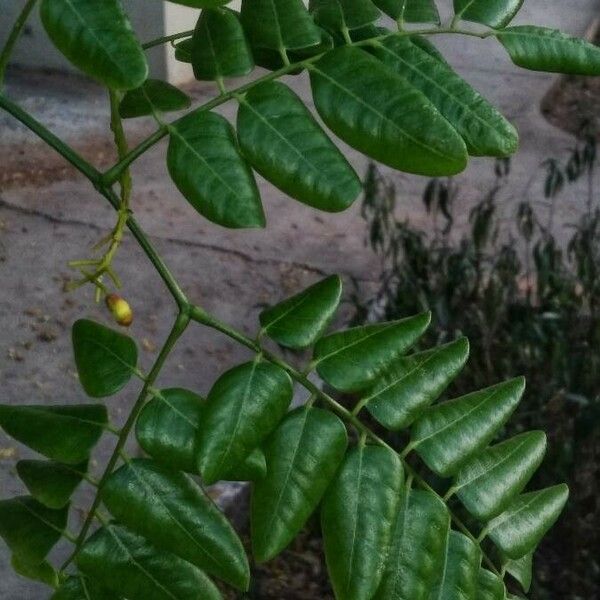
Plant Overview
Often referred to as Brasiletto or the Violet-Dye Tree, this Caribbean native is a hidden gem of the botanical world. Despite its name, you won't find purple flowers here; the "violacea" refers to the prized, deep-violet dye extracted from its heartwood. It is a resilient survivor of rocky coastal soils, often found adding a splash of gold to the tropical scrublands of Cuba and Jamaica.
🔍 How to Identify
- 🌿 The Foliage: It features elegant, fern-like (bipinnate) leaves with small, rounded leaflets that give the tree a soft, airy appearance.
- 🌼 The Blooms: Upright clusters of bright yellow flowers stand out against the green canopy, often featuring long, delicate stamens that look like tiny whiskers.
- 🪵 The Bark and Wood: While the outer bark is dark and unassuming, the inner heartwood is heavy and reveals a rich reddish-violet hue when cut.
🏡 In Your Garden
- ☀️ Sun-Drenched Spaces: This plant is a sun-worshipper. It thrives in high-heat environments and is exceptionally drought-tolerant once its root system is established.
- 🪨 Soil Nuances: It isn't picky about nutrients but demands excellent drainage. It naturally thrives in limestone-heavy or rocky soils, making it perfect for xeriscaping or "difficult" garden patches.
- ✂️ Growth Habit: Left to its own devices, it grows as a sprawling shrub, but it can be carefully pruned into a small, structural tree that provides dappled shade.
⚠️ Safety & Toxicity
- 🐾 General Status: Generally considered non-toxic to touch, but the seeds and pods should never be consumed.
- 🚫 Gastrointestinal Irritant: Like many members of the legume family, the seed pods contain tannins and other compounds that can cause stomach upset or vomiting if ingested by curious pets or children.
✨ Fun Fact
The "blood" of this tree was once a major global commodity! During the colonial era, the wood was harvested extensively and shipped to Europe to create high-end violet and red dyes for royal garments and luxury textiles.

Detailed Care Instructions








