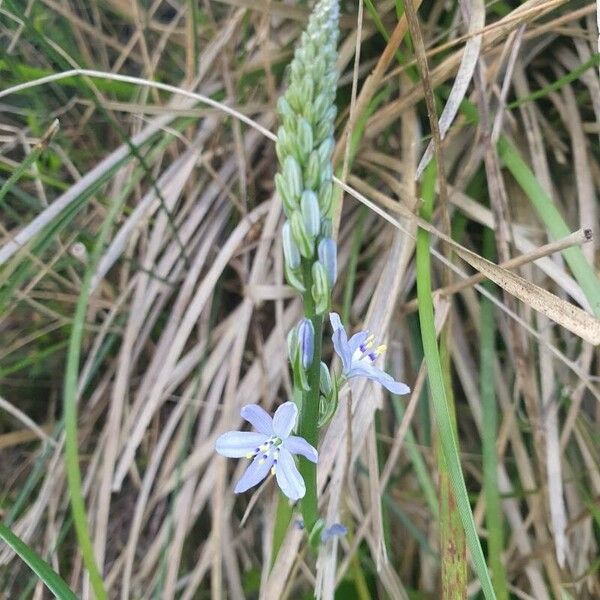
Plant Overview
Often called the Blue Grass-lily, Caesia calliantha is a hidden gem of the Australian landscape. For most of the year, it masquerades as a simple, unassuming clump of grass, but when spring arrives, it unveils stunning, star-like blossoms that look like fallen fragments of the sky. It is a favorite for those looking to add a touch of "wild meadow" charm to their native gardens.
🔍 How to Identify
- 🌿 The Foliage: Long, narrow, strap-like leaves that grow in dense, arching tufts. They are typically bluish-green and look remarkably like common garden grass until the plant stalks emerge.
- 🌸 The Bloom: Delicate six-petaled flowers that range from a soft lilac to a deep, vivid violet-blue. The petals often have a slightly ruffled edge or a darker central vein.
- 🎨 The Stamens: If you look closely at the center of the flower, you’ll see distinctive stamens with bright yellow or orange tips (anthers), providing a sharp, beautiful contrast to the cool-toned petals.
🏡 In Your Garden
- 🌱 Tuberous Resilience: This plant survives harsh seasons by retreating into its fleshy underground tubers. If the foliage dies back during a hot summer, don't dig it up! It is simply "sleeping" and will re-emerge when the conditions are right.
- 🌞 The Perfect Filler: Because of its vertical, tufted growth habit, it works beautifully when mass-planted under larger, "leggy" shrubs or used to soften the edges of a rocky pathway.
- 💧 Drainage is Vital: While it is a hardy survivor, its one true weakness is soggy soil. It requires well-drained earth; in heavy clay, the tubers are prone to rotting during the winter months.
⚠️ Safety & Toxicity
- 🐾 Low Risk: Caesia calliantha is generally considered non-toxic and is not known to be a threat to curious cats or dogs.
- 👶 General Caution: While not poisonous, it is always best to discourage children from tasting garden plants, as the small seeds could pose a minor choking hazard.
✨ Fun Fact
The species name calliantha literally translates from Greek to "beautiful flower." It was named by the famous botanist Ferdinand von Mueller, who was so struck by the plant's elegance that he felt its beauty deserved to be its primary scientific identifier.

Detailed Care Instructions

Place in a bright room that is sun drenched almost all day. Or directly in a south-facing window.

Some plants require more regular watering than others, which should be done every few days. It's critical to maintain the soil moist all of the time. The water requirements of the same plant placed in pots with varying sizes will differ. Because the water in the smaller pot evaporates faster than the water in the larger pot, it will require more watering. Regardless of pot size, the surface should constantly be maintained moist.








