Plant Overview
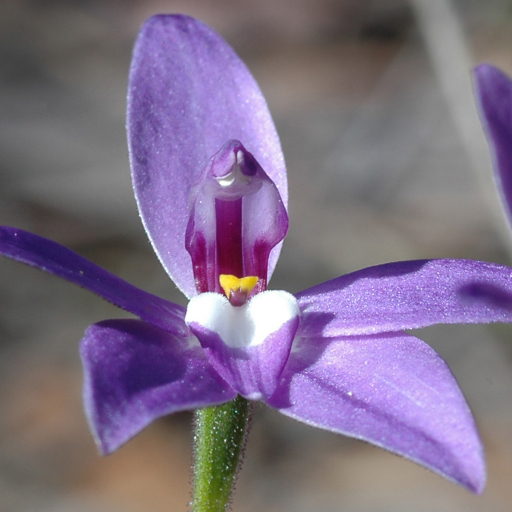
Known as the Waxlip Orchid or the "Parson-in-the-Pulpit," this stunning Australian native is a highlight of the springtime bushland. Its vibrant, indigo-to-mauve petals look as though they’ve been sculpted from fine wax, standing out vividly against the dry earth. In folklore, finding a patch of these orchids was often seen as a sign that spring had truly arrived in the southern hemisphere.
🔍 How to Identify
- 💜 The Bloom: Features a single (occasionally two) large, five-segmented flower, usually in shades of intense purple, violet, or rarely white. The petals have a distinct matte, waxy texture.
- 🕯️ The "Wax" Lip: The labellum (the central lip) is white at the base and tipped with purple, featuring two prominent yellow, waxy bumps that give the plant its common name.
- 🌱 The Leaf: A single, elongated, and noticeably hairy leaf emerges from the base of the plant, hugging the ground closely.
🏡 In Your Garden
- 🍄 The Fungal Connection: Unlike common garden flowers, the Waxlip Orchid is notoriously difficult to cultivate because it relies on a symbiotic relationship with specific soil fungi to germinate and grow. If you find one on your property, it is best to leave it undisturbed in its natural "wild" state.
- ☀️ Light & Soil: In the wild, they thrive in well-drained, sandy, or gravelly soils. They prefer "dappled sunlight," often popping up in open woodlands or heaths where the canopy isn't too thick.
- 💤 The Dormancy Cycle: After flowering in late spring, the entire plant disappears underground to survive the harsh summer as a small, fleshy tuber, waiting for the autumn rains to reappear.
⚠️ Safety & Toxicity
- 🟢 Non-Toxic: Caladenia major is generally considered non-toxic to humans and common pets like cats and dogs.
- 🧤 Skin Sensitivity: While not poisonous, some people with sensitive skin may experience mild irritation if they handle the hairy stems or leaves excessively. It is always best to admire these wild orchids with your eyes rather than your hands to protect their delicate structure.
✨ Fun Fact
The Waxlip Orchid is a "master of deception." It produces a faint, sweet scent to attract bees, but it actually provides no nectar reward. It relies entirely on its looks and perfume to trick insects into doing the hard work of pollination for free!

Detailed Care Instructions

Place in a window with dappled sun or a spot in the middle of a room. Or directly in a window facing west or east.

Some plants require more regular watering than others, which should be done every few days. It's critical to maintain the soil moist all of the time. The water requirements of the same plant placed in pots with varying sizes will differ. Because the water in the smaller pot evaporates faster than the water in the larger pot, it will require more watering. Regardless of pot size, the surface should constantly be maintained moist.








