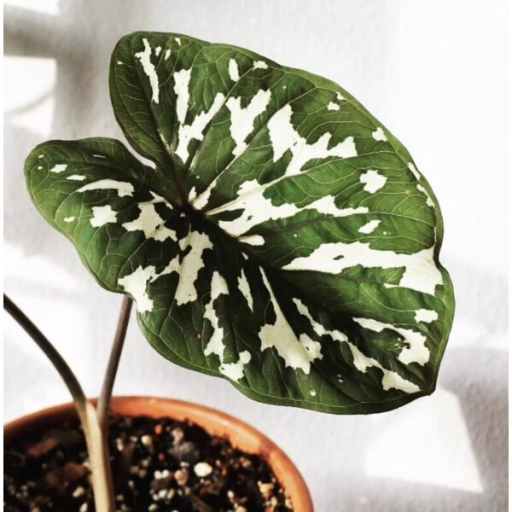
Plant Overview
Often called the "Hilo Beauty," this plant is a living masterpiece of natural camouflage. For years, it was a botanical mystery, frequently mislabeled as an Alocasia before scientists officially recognized it as a unique Caladium. Its striking "military-print" leaves make it a showstopper for collectors who want a "tactical" aesthetic in their indoor jungle.
🔍 How to Identify
- 🎨 Camouflage Foliage: The most striking feature is the irregular, mosaic-like splashes of lime green and creamy pale yellow against a deep forest-green backdrop.
- 📐 Leaf Shape: Large, heart-shaped (sagittate) leaves that have a slightly matte texture compared to the glossy look of many other tropicals.
- 🌿 Sturdy Stems: The leaves are supported by thick, bluish-green to dark purple stems that grow in a clumping habit from an underground tuber.
🏡 In Your Garden
- ☁️ Humidity is Key: Unlike some hardier houseplants, the Hilo Beauty is a humidity diva. It needs moist air to keep those large leaves from crisping at the edges; a bathroom with a window or a pebble tray is its favorite haunt.
- 💤 The Winter Nap: Don't panic if your plant starts to wither in late autumn. Being a Caladium, it often goes through a dormancy period where it "disappears" into its tuber to rest, only to return even larger in the spring.
- 🚿 Thirsty Roots: This plant prefers its soil to stay consistently moist but never waterlogged. If the soil dries out completely, the leaves will droop dramatically to tell you it's time for a drink.
⚠️ Safety & Toxicity
- 🚫 Status: Toxic to humans and pets.
- 👄 Details: Like all members of the Araceae family, it contains insoluble calcium oxalate crystals. If chewed or swallowed, it causes immediate mouth irritation, swelling of the throat, and digestive upset. Keep it on a high shelf away from curious cats, dogs, or toddlers.
✨ Fun Fact
The species name praetermissum is Latin for "neglected" or "overlooked." It was given this name because the plant was widely circulated in the nursery trade for decades without ever being formally described or named by botanists!

Detailed Care Instructions
To grow Caladium praetermissum, also known as Angel Wings, follow these steps:
- Choose a suitable location: Caladiums prefer partial shade or filtered light, as direct sunlight can scorch their leaves. They also prefer well-draining soil that is rich in organic matter.
- Planting: Plant the tubers in spring when the soil temperature reaches around 70°F (21°C). Dig a hole that is approximately 1-2 inches deep and place the tuber with the bumpy side facing upward. Cover it with soil, leaving the top of the tuber slightly exposed.
- Watering: Keep the soil consistently moist but not waterlogged. Water thoroughly whenever the top inch of soil feels dry, and ensure good drainage to prevent root rot.
- Fertilizing: Apply a balanced, slow-release fertilizer when planting, and repeat every 6-8 weeks throughout the growing season. Alternatively, you can use a liquid fertilizer diluted to half strength every 2-4 weeks.
- Mulching: Apply a layer of organic mulch, such as bark or compost, to help retain soil moisture and suppress weed growth.
- Temperature and Humidity: Caladiums prefer temperatures between 70-85°F (21-29°C) during the day and around 60-70°F (15-21°C) at night. They also thrive in high humidity, so misting the leaves or placing a tray of water nearby can help increase humidity levels.
- Pruning: If any leaves become damaged or diseased, remove them promptly to prevent the spread of infection. Additionally, as the plant grows, you may need to trim or remove leaves that are blocking light to other leaves.
- Dormancy: When fall arrives, Caladiums will naturally begin to go dormant. As the leaves turn yellow and die back, reduce watering and allow the plant to rest. You can either leave the tubers in the ground or dig them up, ensuring they are completely dry before storing them in a cool, dry place over winter.
With proper care, Caladium praetermissum can produce vibrant foliage and make an impressive addition to any garden or indoor plant collection.

Place in a window with dappled sun or a spot in the middle of a room. Or directly in a window facing west or east.

To water this plant, you should first assess the moisture level of the soil by feeling the soil with your fingertips. If the top inch of soil feels dry, it is time to water. Water the plant thoroughly, being careful not to overwater as this can lead to root rot. Allow the excess water to drain out of the pot, and empty the saucer underneath. During hot, dry weather, you may need to water the plant more frequently. Alternatively, during cooler, less sunny weather, the plant may require less frequent watering.
To fertilize this plant, mix a balanced, slow-release fertilizer with water according to the instructions on the packaging. Apply the fertilizer to the soil around the base of the plant, taking care not to get any on the foliage. Water the plant well after fertilizing. Avoid over-fertilizing, as this can lead to burns and damage to the plant. Fertilize once a month during the growing season, and stop fertilizing in the fall as the plant goes dormant.
Caladium Praetermissum plants thrive best in a well-draining soil that is slightly acidic with a pH level between 5.5 and 6.5. The soil should have a sufficient amount of organic matter, such as compost, to provide essential nutrients to the plant. It is also recommended to mix perlite or sand in the soil to improve its drainage capacity. The plant prefers moist soil, but it must not be waterlogged as it may cause root rot. Therefore, the soil should be well-draining to prevent the accumulation of excess water. Overall, a well-draining, slightly acidic soil with adequate organic matter is considered ideal for Caladium Praetermissum plants.
To propagate this plant, one can start by carefully removing a mature leaf from the parent plant. Next, one should make several small incisions on the veins of the leaf using a sharp knife or scissors. One should then dust the cuttings with a rooting hormone powder to encourage rooting. Next, one should plant the leaf cutting in a pot filled with a potting mix consisting of equal parts peat moss and perlite. The pot should be kept in a warm, bright spot away from direct sunlight and the soil should be kept moist but not waterlogged. With the right care, the leaf cutting should start producing new plantlets in a few weeks, at which point they can be potted individually.
Common pests of the alocasia hilo beauty include Mealybugs, spider mites, aphids, thrips. Make a habit of checking your alocasia hilo beauty frequently for pests so that any infestations can be caught and managed early.








