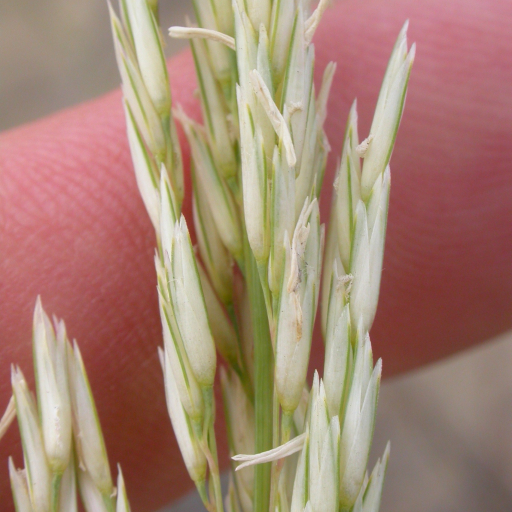
Plant Overview
Often called the Prairie Sandreed, this tall, resilient grass is the unsung hero of the North American Great Plains. It is best known for its "superpower" of holding down shifting sands and dunes where other plants would wither and blow away. In a landscape, it provides a sense of wild, swaying motion, mimicking the ancient sea of grass that once covered the heart of the continent.
🔍 How to Identify
- 🌾 The Stature: A robust, warm-season perennial that grows in thick clumps or "sods," typically reaching heights of 2 to 6 feet.
- 🍃 The Leaves: Long, firm blades that are light green to bluish-gray; they taper to a very fine, thread-like point and often curve gracefully toward the ground.
- ☁️ The Seed Head: It produces a pale, narrow, plume-like cluster (panicle) at the top of the stem that turns a beautiful golden-tan as autumn approaches.
🏡 In Your Garden
- 🏜️ Sand Specialist: This is the ultimate "problem solver" for sandy soil or erosion-prone slopes. Its massive network of underground rhizomes acts like a natural net, locking the soil in place.
- ☀️ Drought Warrior: Because it evolved in harsh prairie conditions, it hates being "pampered." It requires full sun and very little water once its deep roots are established, making it perfect for xeriscaping.
⚠️ Safety & Toxicity
- ✅ Safe Status: Prairie Sandreed is non-toxic to humans, dogs, and cats. It is a "friendly" grass with no sharp burrs or irritating oils.
- 🐄 Wildlife Value: While safe, the mature stems are quite tough. In the wild, it serves as high-quality winter forage for bison and cattle, though it is most tender and nutritious in early spring.
✨ Fun Fact
Because of its incredibly aggressive and deep root system, Prairie Sandreed was one of the primary plants used by conservationists to stabilize the landscape and heal the scars left behind after the "Dust Bowl" era of the 1930s.

Detailed Care Instructions
Calamovilfa Longifolia is a drought-resistant plant that requires minimal watering. The best way to water this plant is to provide a deep watering every two weeks during the summer months. The soil should be allowed to dry out completely before watering again. It is important to avoid overwatering the plant, as this can lead to root rot and other issues. To prevent water from evaporating too quickly, it is recommended to mulch the soil around the plant and to water early in the morning or late in the evening. When watering, it is best to avoid getting water on the leaves, as this can cause damage or encourage fungal growth. Instead, water at the base of the plant, allowing the water to soak in deeply. In areas with high temperatures and low humidity, it may be necessary to water more frequently.
The ideal soil for the Calamovilfa Longifolia plant should be loose and well-draining, with plenty of organic matter to promote healthy growth. It should have a pH level around 6.0 to 7.5, which is slightly acidic to neutral. The soil should also be able to retain moisture without becoming waterlogged, as this can cause root rot and other problems. A sandy loam soil is perfect for this plant, as it allows for good aeration and drainage while also providing essential nutrients. It is also important to ensure that the soil is rich in nitrogen, phosphorus, and potassium, which are essential for healthy plant growth and development. Regular fertilization with a balanced fertilizer will help to keep the soil nutrient-rich and provide the plant with the best growing conditions possible.








