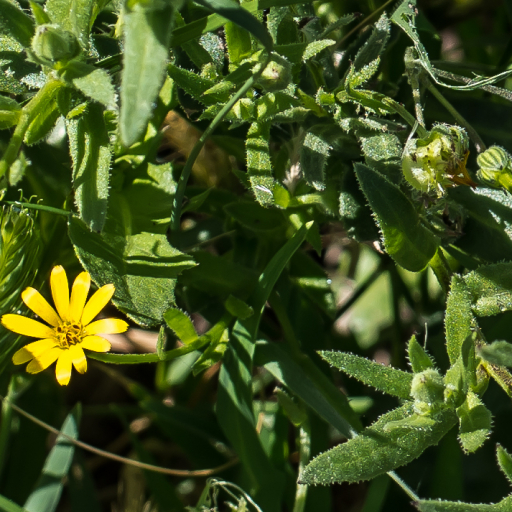
Plant Overview
Known as the Starry Marigold, Calendula stellata is the Mediterranean’s rugged and whimsical version of the classic garden marigold. While its bright yellow-orange blooms are cheerful, the real show begins once the petals fade, revealing seed heads that look like miniature wooden stars. It is a resilient annual that brings a touch of wild coastal beauty to any sunny corner.
🔍 How to Identify
- 🌼 The Blooms: Features classic daisy-like flowers, typically bright orange or deep yellow, with a darker central disk.
- 🍃 The Foliage: The leaves are lance-shaped, slightly wavy, and covered in fine, sticky hairs that give the plant a textured, rustic feel.
- ⭐ The "Stars": The most definitive feature is the seed pod; after flowering, the seeds (achenes) develop into curved, winged, star-shaped structures that are much larger and more intricate than those of common Calendula officinalis.
🏡 In Your Garden
- ☀️ Sun-Seeker Nuance: This plant thrives in full sun but prefers "lean" soil. If you give it too much fertilizer or rich compost, it tends to grow tall and "floppy" rather than producing its signature abundance of flowers.
- 🌱 The Traveler: Because of those unique star-shaped seeds, this plant is an expert at self-seeding. The seeds are designed to catch on the fur of passing animals or the clothes of gardeners, meaning it may pop up in unexpected (but usually welcome) spots next year.
⚠️ Safety & Toxicity
- ✅ Generally Safe: Like its cousin the Pot Marigold, Calendula stellata is considered non-toxic to humans and most common pets, including cats and dogs.
- 🌿 Skin Sensitivity: While not poisonous, the sticky resin on the stems and leaves can cause mild skin irritation or "contact dermatitis" in people with highly sensitive skin or those with allergies to the Asteraceae (daisy) family.
✨ Fun Fact
The name stellata actually refers to the star-like shape of the seeds, not the flower! Most plants are named for their showy petals, but this one earned its botanical title for its unique way of preparing for the next generation.

Detailed Care Instructions
| Humidity | Normal |
| Difficulty | Medium |
| Hibernation | Cold Period |
| Temperature | 20°C - 30°C |
| Hardiness Zones | 5 - 9 |
To grow Calendula Stellata plants, follow these steps:
- Plant the seeds: Start by sowing the seeds directly into well-draining soil or in containers filled with potting mix. The ideal time to sow the seeds is in early spring after the last frost. Space the seeds about 12-18 inches apart as they require room to grow.
- Location: Choose a location that receives full sun to partial shade. Calendula Stellata plants thrive in bright sunlight, but they can tolerate some shade as well.
- Soil conditions: Calendula Stellata plants prefer well-draining soil. Amend heavy clay soil with organic matter or use a potting mix for container planting. The pH level of the soil should be between 6.0 and 7.0.
- Watering: Keep the soil moist but not waterlogged. Calendula Stellata plants require regular watering, especially during hot and dry periods. Water at the base of the plant to avoid wetting the foliage, as wet foliage can lead to diseases.
- Fertilizer: Calendula Stellata plants generally don't require much fertilizer. However, you can apply a balanced, slow-release fertilizer or organic compost once or twice during the growing season to promote healthy growth and blooming.
- Pruning: Regularly deadhead spent flowers to encourage continuous blooming. This will also prevent the plant from going to seed and extend the flowering period.
- Pest and disease control: Calendula Stellata plants are relatively resistant to pests and diseases. However, keep an eye out for aphids, slugs, and powdery mildew. In case of infestation, use organic insecticides or fungicides as necessary.
- Harvesting: Harvest the Calendula Stellata flowers when they are fully open to the sun. Pick them in the morning when the dew has dried for best results.
By following these steps, you can successfully grow Calendula Stellata plants and enjoy their beautiful blooms throughout the growing season.

Place in a window with dappled sun or a spot in the middle of a room. Or directly in a window facing west or east.

To water this plant, wait until the top inch of soil in the container is dry to the touch. Then, use a watering can or a hose with a gentle spray attachment to thoroughly water the soil around the base of the plant. Avoid getting water on the leaves, as this can cause them to become damaged or diseased. Keep the soil moist but not waterlogged, and adjust the frequency of watering based on the plant's environment and growth stage. In general, Calendula Stellata prefers slightly moist soil and may need more frequent watering in hot, dry weather or in a container with limited soil volume.
To fertilize your plant, you can use a balanced fertilizer once a month during the growing season. Make sure to mix the fertilizer into the topsoil and water the plant afterwards. Avoid over-fertilizing, as this can lead to excessive foliage growth and reduced flower production. Additionally, consider adding compost or organic matter to the soil before planting to ensure adequate nutrient levels and soil structure.
Calendula Stellata plant prefers a well-draining soil that is rich in nutrients. The soil should be neither too acidic nor too alkaline, with a pH range of 6.0 to 7.5. A good quality potting mix mixed with equal parts of perlite or sand will provide the ideal combination of drainage, nutrients, and aeration. The soil should be kept moist but not waterlogged, as overly wet conditions can lead to root rot. Adding organic matter, such as compost or well-rotted manure, can also help improve the soil texture and fertility. It is important to avoid using heavy or compacted soils, as they can impede the plant's growth and development.
To propagate this plant, you can collect its seeds after the flowers have dried out. Then, you can either directly sow the seeds in the desired location or start them indoors in seed trays or pots. If starting indoors, plant the seeds at a shallow depth in soilless seed-starting mix and keep the soil consistently moist. Germination typically occurs within 5-10 days. Once the seedlings have developed their first set of true leaves, they can be transplanted into individual pots or directly into the garden.








