Plant Overview
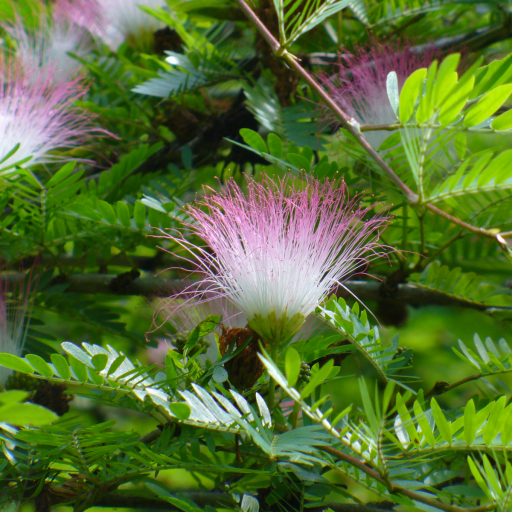
Often called the "Pink Powder Puff," Calliandra surinamensis is a tropical showstopper that looks like it belongs in a Dr. Seuss book. Originally hailing from the lush landscapes of Suriname and Brazil, this low-branching evergreen shrub is beloved for its ethereal, puffball flowers that bloom year-round in warmer climates. Whether used as a specimen tree or a soft privacy screen, its delicate, feathery foliage adds an air of elegance to any landscape.
🔍 How to Identify
- 🌸 The "Powder Puff": The most striking feature is the flower—a globe-shaped cluster of long, silky stamens that are snowy white at the base and ombre into a vibrant candy-pink at the tips.
- 🍃 Feathery Foliage: The leaves are "bipinnate," resembling tiny green feathers or fern fronds. They give the plant a soft, airy texture that contrasts beautifully with coarser garden plants.
- 🛌 Sleep Movement: In a fascinating display of "nyctinasty," the leaflets have a habit of folding shut tightly at night or during heavy rain to protect themselves.
🏡 In Your Garden
- ☀️ Sun Seeker: This plant is a sun-worshipper. While it can survive in partial shade, it requires plenty of direct light to produce its iconic puffs in high volume.
- ✂️ Shape Shifter: It has a naturally sprawling, multi-stemmed habit. If you want it to look like a traditional "tree," you must prune it early and often; otherwise, it will happily grow into a wide, fountain-like shrub.
- 💧 Thirst Quencher: While established plants are somewhat drought-tolerant, they prefer "goldilocks" moisture—not too dry, and definitely not waterlogged. Consistent watering prevents the delicate leaflets from yellowing and dropping.
⚠️ Safety & Toxicity
- ✅ General Safety: Calliandra surinamensis is generally considered non-toxic to humans and common household pets like cats and dogs.
- 🧤 Pruning Precaution: While not poisonous, the sap can occasionally cause mild skin irritation for those with very sensitive skin. It is always a good idea to wear gloves when doing heavy structural pruning.
✨ Fun Fact
🦋 The Pollinator Party: Because the flowers are essentially giant clusters of nectar-rich "drinking straws," this plant is a world-class magnet for hummingbirds and butterflies, making it a "must-have" for any pollinator-friendly garden.

Detailed Care Instructions
To grow a Calliandra Surinamensis plant, you can follow these steps:
- Choose the right location: Calliandra Surinamensis plants require full sun or partial shade. Select a spot in your garden or balcony that receives at least 6 hours of sunlight per day.
- Prepare the soil: The plant thrives in well-draining soil. Mix some organic compost or well-rotted manure into the soil to improve its fertility and drainage.
- Planting: Dig a hole slightly larger than the root ball of the plant. Place the plant into the hole and backfill with soil, making sure the top of the root ball is level with the soil surface. Gently firm the soil around the plant.
- Watering: After planting, water the plant thoroughly to settle the soil and promote root establishment. Water it regularly, aiming to keep the soil consistently moist but never waterlogged.
- Mulching: Apply a layer of organic mulch around the base of the plant to retain moisture, suppress weed growth, and regulate soil temperature.
- Pruning: Prune the Calliandra Surinamensis plant regularly to maintain its shape and size. This will also encourage bushier growth and more flowers. Prune any dead, damaged, or diseased branches as needed.
- Fertilization: Use a balanced, slow-release fertilizer during the growing season to provide essential nutrients to the plant. Follow the instructions on the fertilizer packaging for dosage and application.
- Protection: Protect the plant from extreme temperature fluctuations, strong winds, and frost. If required, cover the plant with a frost cloth during cold weather.
- Pests and diseases: Keep an eye out for common garden pests like aphids, scale insects, and mealybugs. Treat any infestations promptly using organic insecticides or by handpicking the pests. Avoid overwatering, as it can lead to root rot or fungal diseases.
- Propagation: Calliandra Surinamensis plants can be propagated by seeds or cuttings. Collect mature seeds from the plant, soak them in water overnight, and then plant them in a tray filled with well-draining potting mix. Alternatively, take 4-6 inch stem cuttings, remove the lower leaves, and dip the cut end in rooting hormone before planting in a pot with moist potting soil.
Remember to research any specific care requirements based on your location and climate as these instructions are general guidelines.

Place in a bright room that is sun drenched almost all day. Or directly in a south-facing window.

Water the plant with moderate consistency, making sure that the soil is evenly moist but not waterlogged. You can check the moisture level by sticking your finger into the soil about an inch deep. If it feels dry, it's time to water. Make sure the pot has drainage holes so that excess water can drain out. Watering from the bottom is also a good strategy, filling the pot with water and letting the soil soak it up from the bottom. This technique can also help prevent over-watering. Avoid letting the soil completely dry out between waterings, as this can cause stress for the plant. In general, aim for a balance between consistent moisture and avoiding waterlogging.
To fertilize this plant, apply a balanced fertilizer with equal amounts of nitrogen, phosphorus, and potassium every two to three months during the growing season. Avoid over-fertilizing as it can lead to salt build-up in the soil. Water the plant thoroughly after fertilizing to ensure that the nutrients are evenly distributed in the soil.
To grow and care for the specific plant that is known by the scientific name Calliandra surinamensis, it is recommended to use soil that is well-draining and rich in nutrients. The soil should have a slightly acidic to neutral pH level, between 6.0 and 7.0. It is important to avoid soils that are heavy or clay-like, as these can retain too much moisture and lead to root rot. A nutrient-rich soil mixture can be created by combining equal parts peat moss, perlite, and coarse sand or gravel. This will help to ensure proper drainage and aeration while still providing ample nutrients for the roots of the Calliandra surinamensis plant. Regular monitoring of soil moisture and pH levels is also recommended to ensure optimal growth and health of the plant.
Propagating Calliandra Surinamensis plant can be done through stem cuttings. First, identify a healthy stem that is about 4 to 6 inches in length and without any flower buds. Then, using a sharp and sterile pair of scissors, cut the stem at a 45-degree angle just below a node. Remove the leaves from the lower half of the stem to prevent moisture loss and encourage root growth.
Next, dip the cut end of the stem in a rooting hormone powder and plant it in a pot filled with a well-draining soil mixture. Moisten the soil lightly and cover the pot with a clear plastic bag to create a humid environment. Place the pot in a warm and bright spot, but out of direct sunlight.
Check the soil moisture regularly and mist the stem cutting and the inside of the plastic bag if it starts to dry out. After a few weeks, check for root growth by gently tugging on the stem cutting. If it resists, roots have formed and the plastic bag can be removed.
Once the stem cutting has established a good root system, it can be transplanted into a larger pot or into the garden. Keep the soil evenly moist and avoid overwatering to prevent root rot. With proper care, the newly propagated Calliandra Surinamensis plant will grow into a beautiful, mature plant.
Common pests of the surinamese stickpea include Scale insect, mealybugs, spider mites. Make a habit of checking your surinamese stickpea frequently for pests so that any infestations can be caught and managed early.








