Plant Overview
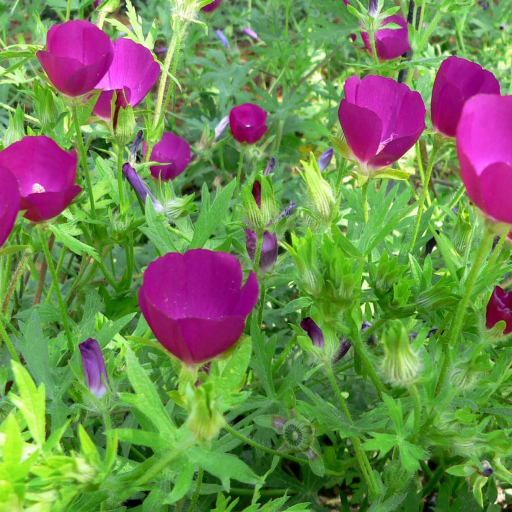
Often called the Winecup or Purple Poppy Mallow, this hardy North American native creates a stunning carpet of neon-magenta blooms. It looks like a wild, sprawling masterpiece from the Great Plains, perfect for adding a pop of intense color to rock gardens or cascading over retaining walls where it can "spill" like a bottle of wine.
🔍 How to Identify
- 🌸 The Flower: Vibrant, cup-shaped petals in deep magenta or wine-purple, often featuring a distinct white center that looks like a tiny glowing spotlight.
- 🌿 The Foliage: Dark green leaves that are deeply divided into finger-like lobes, giving them a delicate, hand-shaped appearance that contrasts beautifully with the bold flowers.
- 🌱 Growth Habit: A low-growing, trailing perennial that creeps along the ground, forming a dense mat that can spread up to 3 feet wide while staying only a few inches tall.
🏡 In Your Garden
- 🏜️ The Deep Taproot: This plant develops a thick, carrot-like taproot that makes it incredibly drought-tolerant. However, this root also means it hates being moved. Once you plant it, pick a permanent home, as transplanting usually results in the plant failing to recover.
- ☀️ Sun & Soil Nuance: It thrives in the hottest, driest spots of your yard where other plants might wither. It absolutely requires well-draining soil—sandy or rocky is best—as it is prone to crown rot if left in soggy "wet feet" during the winter.
⚠️ Safety & Toxicity
- ✅ Status: Non-toxic and generally safe.
- 🐾 Details: It is considered safe for dogs, cats, and humans. It doesn't have thorns or irritating sap, making it a "friendly" choice for walkways and areas where children or pets play.
✨ Fun Fact
✨ The thick, starchy roots of the Winecup are actually edible! Historically, they were a food source for several Native American tribes, who described the flavor as being very similar to a sweet potato or a parsnip.

Detailed Care Instructions
To grow Callirhoe involucrata, also known as the Winecups or Crimson Poppymallow, you can follow these steps:
- Choose the planting location: Winecups perform best in full sun or partial shade. Select a spot with well-draining soil. It is best to plant them in an area protected from strong winds.
- Prepare the soil: Before planting, loosen the soil by tilling or digging down about 6 inches. Remove any rocks, roots, or weeds from the area.
- Sow the seeds: Plant the seeds directly in the ground after the danger of frost has passed, typically in spring or early summer. Scatter the seeds evenly over the prepared soil or plant them in rows about 6 inches apart. Keep in mind that the seeds need light to germinate, so do not bury them too deep. Gently press them into the soil or rake them lightly to ensure good seed-to-soil contact.
- Water regularly: After sowing the seeds, water the area thoroughly to provide moisture for germination. Continue to water regularly, keeping the soil slightly moist but not overly saturated. Avoid overwatering to prevent root rot.
- Mulch the area: Apply a layer of organic mulch around the plants to help retain moisture, suppress weeds, and regulate soil temperature. Avoid covering the seeds or seedlings with mulch.
- Thin the seedlings: Once the seedlings emerge and reach a height of a few inches, thin them to provide adequate spacing. Ideally, the plants should be around 12 inches apart to allow for suitable growth.
- Provide support if needed: Winecups may require some support as they grow. You can use small stakes or plant supports to help keep the stems upright and prevent them from flopping over.
- Maintain the plants: Regularly remove any weeds that compete with the Winecups for nutrients and water. Water the plants during dry periods or droughts, especially during their first growing season. Deadhead the flowers to encourage continuous blooming and prevent the formation of seed pods.
- Enjoy the blooms: The Winecups plant typically blooms from spring to early summer, producing vibrant magenta or red flowers with a cup-like shape. Once established, they are fairly low-maintenance and can naturalize in suitable conditions.
By following these steps, you can successfully grow Callirhoe involucrata and enjoy the beauty of its vibrant flowers in your garden.

Place in a bright room that is sun drenched almost all day. Or directly in a south-facing window.

Water the plant deeply and thoroughly once a week, ensuring that the soil is moist but not soggy. Allow the soil to dry slightly between watering, as the plant prefers slightly drier conditions. Avoid overwatering, as this can cause root rot. During hot and dry weather, water more frequently to prevent the plant from drying out. When watering, aim to water the soil around the base of the plant, avoiding getting water on the leaves or flowers, as this can increase the risk of fungal diseases. Mulching around the base of the plant can help to retain moisture in the soil, reducing the need for frequent watering.
To fertilize this plant, you should apply a balanced, slow-release fertilizer in the spring, when new growth begins. Apply the fertilizer around the base of the plant, following the manufacturer's recommended application rate. Be careful not to over-fertilize, as this can lead to excessive growth and weak, spindly stems. Water the plant well after fertilizing to help incorporate the nutrients into the soil. Repeat the fertilization process once or twice during the growing season, spacing out applications by 6 to 8 weeks. Stop fertilizing in late summer to allow the plant to prepare for dormancy in the colder months.
For Callirhoe Involucrata, it is best to use well-drained soil that is rich in nutrients. The soil should be slightly acidic to neutral, with a pH range of 5.5 to 7.0. It is important to avoid waterlogged soil, as this can lead to root rot and other soil-borne diseases. A mix of compost, sand, and loam can help to create the optimal soil conditions for this plant. Additionally, it is important to ensure that the soil is not too compacted, as this can restrict airflow and lead to poor root development. Regularly aerating the soil and adding organic matter can help to improve soil quality and promote healthy plant growth.
Callirhoe Involucrata is a plant that can be propagated through both seed and vegetative means. If propagating through seed, collect mature seeds from the plant in the fall and stratify them in a moist, cool environment for 30-60 days before planting. Sow the seeds in a well-draining soil mix and keep them moist until germination occurs.
Vegetative propagation can also be achieved through stem cuttings taken from healthy, mature plants. Cut a stem about four inches in length and remove the lower leaves, leaving a few at the top. Dip the cut end in rooting hormone and plant in a well-draining soil mix. Keep the soil moist and in a warm location until roots develop, then transplant the cutting into a larger container or into the ground.
Another method of vegetative propagation is by division. Carefully dig up the plant and separate the root clumps into multiple sections, each with its own stem and roots. Replant these sections in well-draining soil and keep the soil moist until new growth appears.








