Plant Overview
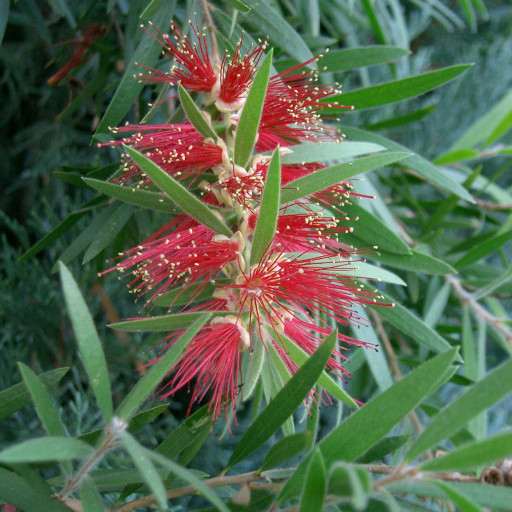
The Callistemon viminalis, famously known as the Weeping Bottlebrush, is a botanical masterpiece that looks like a weeping willow decorated for a celebration. Native to the watercourses of New South Wales and Queensland, this plant is beloved for its graceful, pendulous branches that drip with vibrant, crimson flower spikes. In many cultures, it is seen as a symbol of vitality and is a cornerstone of bird-friendly gardens worldwide.
🔍 How to Identify
- 🌺 The "Brushes": It features unmistakable cylindrical flower spikes made of hundreds of long, bright red stamens that look exactly like a traditional kitchen bottle brush.
- 🍃 Weeping Foliage: Unlike its upright relatives, its branches are slender and drooping, covered in narrow, lance-shaped leaves that release a pleasant citrus scent when crushed.
- 🪵 Woody Capsules: After the flowers fade, they leave behind small, hard, cup-shaped seed pods that cling to the stems for several years, looking like grey "buttons."
🏡 In Your Garden
- ☀️ Sun Seeker: This plant is a true sun-worshipper; the more light it receives, the more intense and frequent its flowering cycles will be.
- ✂️ Pruning for Shape: It has a naturally "leggy" habit. To keep it looking lush and prevent it from becoming thin at the bottom, prune it back just behind the spent flowers once the bloom finishes.
- 💧 Adaptable Roots: While it is incredibly drought-tolerant once established, it actually prefers "wet feet" more than most garden plants, often thriving in damp spots where other shrubs might rot.
- 🐝 Wildlife Magnet: If you plant a Weeping Bottlebrush, expect a flurry of activity! Its nectar-rich flowers are an all-you-can-eat buffet for hummingbirds, honeyeaters, and bees.
⚠️ Safety & Toxicity
- ✅ Status: Generally non-toxic and safe for residential landscapes.
- 🐾 Pet Friendly: The Callistemon viminalis is not known to be poisonous to cats, dogs, or horses, making it an excellent choice for pet owners.
- 🖐️ Physical Safety: While not toxic, the woody seed pods and stiff branches can be a bit scratchy, so wearing gloves during heavy pruning is recommended.
✨ Fun Fact
The "petals" of the Bottlebrush are actually tiny and almost invisible. What you are admiring are actually hundreds of stamens (the male reproductive parts). This design allows the plant to coat the entire forehead of a visiting bird with pollen as it reaches deep into the flower for nectar!

Detailed Care Instructions
| Color | Red |
| Lighting | Full Sun |
| Soil Type | Well-Drained |
| Mature Size | 15-20' Tall And Wide |
| Native Area | Australia |
| Sun Exposure | Full Sun |
| Hardiness Zones | 9-11 |
To grow Callistemon Viminalis, or Weeping Bottlebrush plant, follow these steps:
- Choose a suitable location: Callistemon Viminalis prefers full sun to partial shade. Select a spot in your garden that receives at least 6-8 hours of direct sunlight daily.
- Prepare the soil: The plant requires well-draining soil. Improve the soil quality by adding organic matter like compost or well-rotted manure. Ensure proper drainage to prevent waterlogging.
- Planting: Dig a hole that is slightly larger and deeper than the root ball. Place the plant in the hole, ensuring the top of the root ball is level with the soil surface. Backfill the hole with soil, gently firming it around the roots.
- Watering: After planting, water the plant thoroughly. Water deeply and regularly, especially during the first few months to help establish a strong root system. Keep the soil consistently moist, but avoid overwatering, as it can lead to root rot.
- Mulching: Apply a layer of organic mulch around the base of the plant, such as bark chips or straw. Mulching helps retain soil moisture, suppress weeds, and regulate soil temperature.
- Fertilizing: Apply a balanced slow-release fertilizer in spring and midsummer. Follow the instructions on the fertilizer packaging regarding the application rates. Avoid excessive use of nitrogen-rich fertilizers, as they can promote excessive foliage growth at the expense of flower production.
- Pruning: Callistemon Viminalis generally does not require much pruning. However, you can shape the plant and remove any dead or diseased branches as needed. Prune after flowering to encourage new growth and maintain a desirable shape.
- Pests and diseases: The Weeping Bottlebrush plant is usually resistant to most pests and diseases. However, keep an eye out for common garden pests like aphids or scale insects. If detected, treat the infestation promptly using appropriate insecticides or organic pest control methods.
By following these guidelines, you should be able to successfully grow a healthy Callistemon Viminalis plant. Remember to provide it with proper care and attention to ensure optimal growth and vibrant flowers.

Place in a bright room that is sun drenched almost all day. Or directly in a south-facing window.

To water this plant, you should first check the soil moisture level by sticking your finger 2-3 inches into the soil. If the top layer of soil feels dry, it's time to water. Use a watering can or hose to slowly and evenly water around the base of the plant. Be sure not to overwater, as Callistemon Viminalis prefers well-draining soil. Allow the soil to dry out partially before watering again. Avoid getting water on the foliage, as this can encourage fungal growth. Water more frequently during hot, dry weather or if the plant is in a container.
- Use a slow-release fertilizer designed for acid-loving plants.
- Apply the fertilizer in early spring before new growth appears.
- Water the plant thoroughly before and after fertilizing to prevent burning the roots.
- Follow the recommended application rate on the fertilizer label.
- Spread the fertilizer evenly around the base of the plant.
- Avoid getting the fertilizer on the leaves or flowers as it may cause damage.
- Repeat the fertilizing process once or twice a year, depending on the growth and health of the plant.
When growing this particular plant, it is recommended to use well-draining soil that is slightly acidic to neutral in pH. A mix of loam and sand is ideal, with added organic matter such as compost or aged manure to improve soil fertility and water retention. It is important to avoid using soil that is too heavy or compacted, as it can lead to poor drainage and root rot. Regular monitoring of soil moisture levels and fertilization according to the plant's needs is also essential for optimal growth and health.
To propagate this plant, select a healthy stem from the parent plant and cut a section that is approximately 6-8 inches long. The cutting should be taken from the tip of the stem and should include at least two sets of leaves. Remove the lower set of leaves so that only the top set is remaining.
Using a sharp knife or scissors, make a clean cut at the base of the stem, just below the node where the leaves were removed. Dip the cut end of the stem in rooting hormone powder to promote root growth.
Prepare a potting mix of equal parts perlite and peat moss and moisten it slightly. Make a hole in the potting mix and insert the cutting, gently firming the mix around it. Keep the cutting out of direct sunlight and water the potting mix so that it stays moist but not soaking wet.
It can take several weeks for roots to develop. Once the cutting has rooted and begun to grow, it can be transplanted into a larger container or planted outdoors in a well-draining, sunny location.
Common pests of the weeping bottlebrush include Scale insect, mealybugs, spider mites, aphids. Make a habit of checking your weeping bottlebrush frequently for pests so that any infestations can be caught and managed early.








