Plant Overview
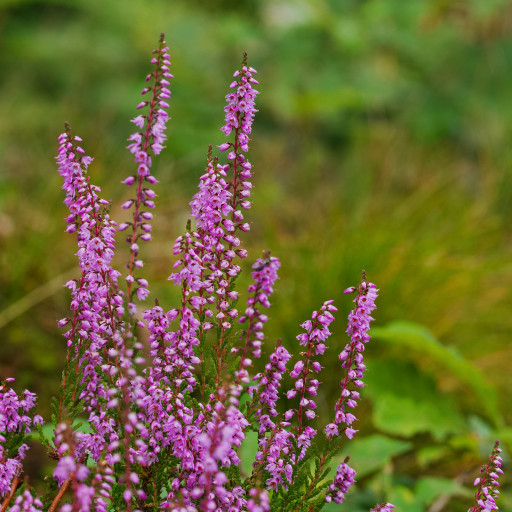
Often called the "Queen of the Highlands," Calluna vulgaris is the iconic Heather that paints the hillsides of Scotland in misty purples. Known historically as "Ling," its name comes from the Greek word kallunein, meaning "to sweep," as its tough, woody stems were once bundled together to make sturdy outdoor brooms. This resilient evergreen shrub is a symbol of wild beauty and endurance, thriving where other plants fail.
🔍 How to Identify
- 🌿 Scale-like Foliage: Unlike true heaths, this plant has tiny, stalkless leaves that overlap like shingles on a roof, arranged in four neat rows along the stems.
- 🌸 Bell-Shaped Blooms: The flowers are small, dainty bells that grow in dense, upright spikes (racemes), typically appearing in shades of mauve, amethyst, or crisp white.
- 🪵 Low-Growing Habit: It forms a dense, sprawling mound that stays close to the ground, rarely exceeding two feet in height, creating a thick "carpet" effect.
🏡 In Your Garden
- 🧪 Acidic Soul: This plant is an "ericaceous" specialist, meaning it requires acidic soil to survive. If your garden soil is alkaline, it will struggle to absorb nutrients; consider planting it in pots with specific peat-free ericaceous compost instead.
- ✂️ The Pruning Secret: To prevent your Heather from becoming "leggy" or woody in the center, give it a light haircut immediately after the flowers fade. This mimics the grazing of wild sheep and keeps the foliage lush and compact.
- ☀️ Sun Seeker: While it can tolerate partial shade, full sun is essential if you want those vibrant, saturated flower colors that the species is famous for.
⚠️ Safety & Toxicity
- ✅ Pet & Child Friendly: Calluna vulgaris is considered non-toxic to cats, dogs, and humans, making it a safe choice for family gardens.
- 🐝 Pollinator Magnet: While safe for us, it is "dangerously" attractive to bees! It is a vital source of late-summer nectar for honeybees producing the highly prized, thick, and pungent heather honey.
✨ Fun Fact
In Scottish folklore, white heather is considered extremely lucky. It is said to grow only on ground where no blood has been shed in battle, or alternatively, that it marks the resting place of fairies. Tradition still dictates that a sprig of white heather should be tucked into a bride’s bouquet for a long and happy marriage.

Detailed Care Instructions
| Color | White, Purple Or Mauve Flowers |
| Soil Ph | 4.5-5.5 |
| Humidity | Normal |
| Invasive | Weed |
| Lighting | Part Sun |
| Difficulty | Medium |
| Hibernation | Cold Period |
| Mature Size | From A Few Inches To Three Feet Tall |
| Temperature | 10°C - 30°C |
| Sun Exposure | Full Sun, Part Shade |
| Hardiness Zones | Min 4A |
To grow Calluna vulgaris (common heather) successfully, follow these steps:
- Choose a suitable location: Calluna vulgaris prefers full sun to partial shade. Ensure the soil is well-draining, acidic (pH between 4.5 and 6), and nutrient-poor.
- Prepare the soil: If the soil is heavy or compacted, amend it with organic matter such as peat moss or compost to improve drainage and fertility. Avoid using lime or alkaline soil amendments, as Calluna vulgaris prefers acidic conditions.
- Planting: Dig a hole, slightly larger than the root ball of the plant. Place the plant in the hole, ensuring that the crown (where stems meet roots) is level with or just above the soil surface. Backfill the hole with soil and gently firm it around the plant.
- Watering: Keep the soil consistently moist but not waterlogged, especially during the plant's establishment period. Reduce watering frequency during the winter months when the plant is dormant.
- Mulching: Apply a layer of organic mulch, such as peat moss or bark chips, around the base of the plant to help retain moisture, regulate soil temperature, and suppress weeds.
- Pruning: Calluna vulgaris benefits from regular pruning to maintain its shape and encourage healthy growth. Prune after the plant has finished flowering to remove spent blooms and shape the plant. Avoid cutting back into old, woody growth, as it may not regrow.
- Fertilizing: Generally, Calluna vulgaris doesn't require much fertilization. However, if the plant appears weak or pale, you can apply a slow-release, acid-loving fertilizer following the manufacturer's instructions.
- Winter protection: Calluna vulgaris is hardy in zones 5-9. However, in colder regions, it may benefit from protection during the winter months. Apply a layer of mulch around the base of the plant in late fall to insulate the roots and protect against freezing temperatures.
By following these steps and providing suitable growing conditions, you can successfully grow Calluna vulgaris plants.

Place in a window with dappled sun or a spot in the middle of a room. Or directly in a window facing west or east.

To properly water this particular plant, you should first check the soil moisture by inserting your finger into the soil. If the soil feels dry to the touch, it's time to water. Use a watering can or hose with a gentle, low-pressure flow to avoid damaging the delicate root system. Make sure to water the soil around the plant base, not the leaves or flowers. Water moderately, enough to moisten the soil thoroughly but not so much that it becomes waterlogged. Allow the top inch of soil to dry out before watering again. The frequency of watering will depend on several factors, such as the climate, the size of the pot, and the humidity in the air. Be mindful not to overwater, as this can cause root rot and damage to the plant.
- Choose a slow-release fertilizer with a balanced N-P-K ratio (e.g. 10-10-10).
- Apply the fertilizer in early spring, before new growth appears.
- Mix the fertilizer into the topsoil around the plant, taking care not to damage the shallow roots.
- Water the plant thoroughly after fertilizing to help distribute the nutrients.
- Repeat fertilization once or twice a year as needed, taking care not to over-fertilize, which can lead to excessive growth and weak stems.
The preferred soil for this plant is one that is acidic and well-draining. The ideal pH level for the soil should be between 4.0 and 5.5. It is recommended to use a soil that is specifically formulated for acid-loving plants, such as heath mix or ericaceous compost. This type of soil will have a low pH and contain additional ingredients that promote good drainage, such as sand or gravel. When planting, it is important to amend the soil with peat moss to improve its acidity. This will create an environment that is conducive to the growth and development of this plant.
Calluna Vulgaris is a popular plant that is grown in many gardens and landscape settings. Propagating this plant can be done through a few different methods, including division, cuttings, and seeds.
To start, division is the process of separating an established plant into smaller sections that can grow independently. This is done by carefully digging up the plant and its root system, then using a sharp knife or garden shears to cut the plant into smaller sections. Each section should have its own root system and at least one stem.
Another way to propagate Calluna Vulgaris is by taking cuttings. This involves selecting a healthy stem from an established plant and cutting it off from the rest of the plant. The stem should be about 4-6 inches long, and cut just below a node. Remove the leaves from the bottom half of the stem, then dip the cut end into rooting hormone. Plant the stem in a well-draining potting mix and keep the soil moist. In a few weeks, roots should begin to appear and the new plants can be transplanted into their own individual pots.
Finally, Calluna Vulgaris can also be propagated by seed. Seeds can be collected from mature plants and sown in pots or directly in the ground. The soil should be well-draining and kept moist until the seedlings begin to sprout. Once the seedlings are a few inches tall, they can be transplanted into their desired location.
No matter which method of propagation is used, it is important to keep the newly propagated plants well-watered and protected from harsh weather conditions until they become established. Over time, Calluna Vulgaris plants will develop their own root systems and thrive in their new location.








