Plant Overview
The California Incense Cedar is the aromatic giant of the West, often nicknamed the "Pencil Cedar" for its historical role in stationery. While it shares a name with true cedars, this evergreen is actually a majestic member of the Cypress family. It is beloved by gardeners for its symmetrical, pillar-like shape and a fragrance that evokes the crisp, resinous air of the Sierra Nevada mountains.
🔍 How to Identify
- 🍃 Flat Foliage: The leaves are scale-like and arranged in flat, fan-like sprays. If you look closely at a single "branchlet," the overlapping scales look like a stack of long-stemmed wine glasses or "duck bills."
- 🪵 Cinnamon Bark: On mature trees, the bark is stunningly thick, fibrous, and deeply furrowed. It glows with a rich, reddish-brown or "cinnamon" hue, which serves as a natural armor against forest fires.
- 🌲 Winged Cones: The small, reddish-brown cones are unique. When they open to release seeds, they split into three parts and look remarkably like a flying goose or a small wooden flower.
🏡 In Your Garden
- 🏗️ Natural Column: This tree is a favorite for "architectural" planting. In its youth, it maintains a tight, columnar shape without any pruning, making it an excellent choice for tall privacy screens or narrow garden spots.
- 💧 Drought Resilience: Because it evolved in the rugged Western mountains, it develops a deep taproot. Once established (usually after two years), it is incredibly drought-tolerant and prefers well-draining soil over "wet feet."
- 🛡️ Hardy Nature: Unlike many delicate conifers, the Incense Cedar is highly resistant to many common pests and can handle both extreme summer heat and freezing winter temperatures with grace.
⚠️ Safety & Toxicity
- ✅ Safe for Pets: Calocedrus decurrens is non-toxic to dogs, cats, and horses. It is a safe choice for family landscapes.
- 🤧 Seasonal Allergies: During the late winter, the tree produces small male "flowers" at the tips of the branches that release yellow pollen. While not poisonous, it can trigger hay fever in sensitive individuals.
✨ Fun Fact
✏️ The Pencil Tree: Take a look at a high-quality wooden pencil—it is almost certainly made of Incense Cedar! The wood is chosen by manufacturers worldwide because it is soft enough to sharpen smoothly without splintering, yet durable enough to protect the graphite core.

Detailed Care Instructions
| Humidity | Normal |
| Lighting | Part Sun |
| Difficulty | Medium |
| Hardiness Zones | 5 - 8 |
To grow Calocedrus Decurrens (Incense Cedar) successfully, follow these steps:
- Choose a suitable location: Select a spot with full sun to partial shade. Ensure that the area receives six or more hours of direct sunlight per day.
- Soil preparation: Incense Cedar prefers well-draining soil. Amend the soil with organic matter to improve drainage if necessary. The soil pH level should be slightly acidic to neutral.
- Planting: Dig a hole that is slightly wider and deeper than the root ball of the plant. Gently place the plant in the hole and backfill it with the amended soil. Ensure that the root flare (where the trunk meets the roots) is at or slightly above ground level.
- Watering: Keep the soil consistently moist until the plant is established. Afterward, water deeply but infrequently, allowing the soil to dry out slightly between waterings. Avoid overwatering, as it can lead to root rot.
- Mulching: Apply a layer of organic mulch, such as wood chips or bark, around the base of the plant. This will help retain moisture, suppress weed growth, and regulate soil temperature.
- Pruning: Generally, Incense Cedar does not require excessive pruning. However, you can trim any dead, damaged, or crossing branches to maintain a healthy structure. Prune during the dormant season (late winter to early spring) to minimize the risk of disease or insect infestation.
- Fertilization: Incorporate a slow-release fertilizer into the soil during planting. Afterward, apply a balanced, water-soluble fertilizer annually in early spring or late winter.
- Pests and diseases: Calocedrus Decurrens is usually resistant to pests and diseases. However, occasional issues can arise, such as spider mites or aphids. Regularly inspect the plant for signs of infestation and treat if necessary.
- Winter protection: In areas with harsh winters, provide some protection to young Calocedrus Decurrens plants. Cover them with burlap or place windbreaks to shield from cold, drying winds.
- Monitor and maintain: Regularly monitor the health and growth of your plant. Be attentive to signs of stress, such as wilting or discoloration, and take appropriate action if needed.
By following these guidelines, you can successfully grow Calocedrus Decurrens and enjoy its beautiful foliage and aromatic properties.

Place in a bright room that is sun drenched almost all day. Or directly in a south-facing window.
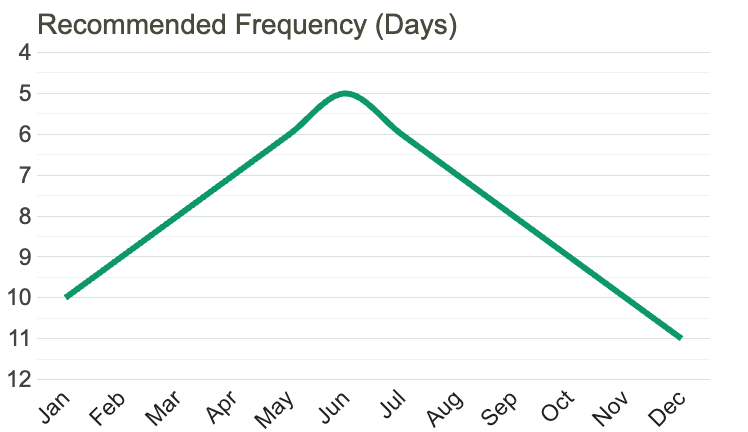
To water this plant, you should ensure that the soil is evenly moist but not waterlogged. One way to check for soil moisture is to insert a finger into the top inch of soil and check if it feels dry. If so, water the plant thoroughly until water drains out of the bottom of the pot or until the soil in the ground feels adequately moist. Watering should be done regularly during the growing season, typically once or twice a week, and less frequently during the winter months when the plant is dormant. Avoid overwatering, as this can lead to root rot and other fungal diseases. Additionally, it is important to provide good drainage to prevent water from accumulating around the roots.
To fertilize this plant, apply a balanced, slow-release fertilizer in the spring before new growth begins. Use 1/4 to 1/2 pound of fertilizer per 100 square feet of soil surface. Avoid fertilizing during periods of drought or extreme heat. Water the plant thoroughly after fertilizing.
Calocedrus Decurrens is a plant that thrives in well-drained soils that are rich in nutrients and have a neutral to slightly acidic pH. It prefers soils that have good drainage, but also retain moisture well. Loamy, sandy or gravelly soils can be combined with organic matter, to provide the ideal growing environment for this plant. Additionally, it prefers to grow in areas with moderate sunlight or partial shade. The ideal soil type for Calocedrus Decurrens is one that is rich in organic matter, well-drained, with a pH of about 6.0-7.0 and a structure that allows air to flow freely through it.
One way to propagate this plant is through seed collection. Mature cones are collected in the fall and placed in a warm, dry location until they open and release their seeds. The seeds are then collected and stored in a cool, dry location until they are ready to be planted. Another method of propagation is through cuttings. New growth from the plant is snipped and placed in a rooting hormone and then planted in a soilless mix. The cutting is then covered with a plastic container, which provides it with a high level of humidity. After a few weeks, the cutting should have developed roots and can be transplanted into a pot or the ground.