Plant Overview
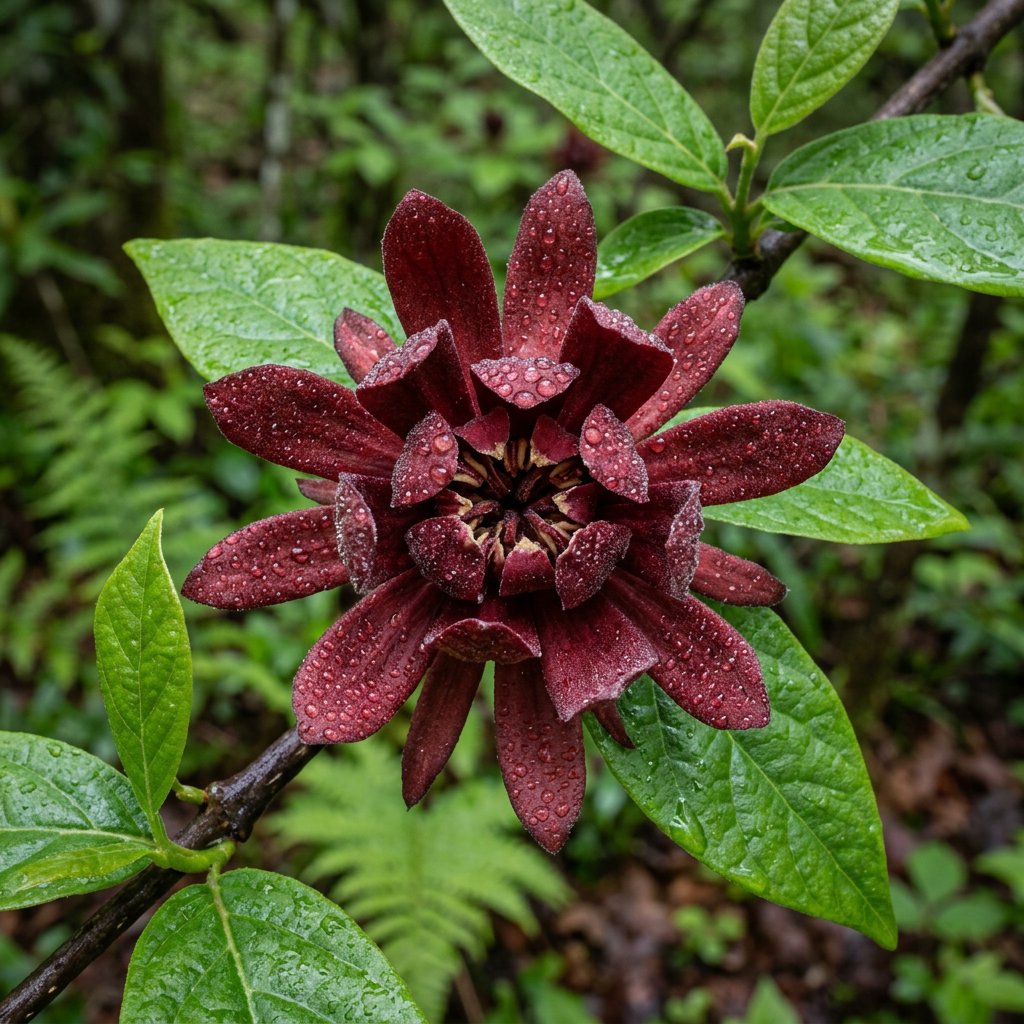
Often called the "Carolina Allspice" or "Strawberry Shrub," Calycanthus floridus is a sensory delight that has graced Southern porches for generations. Unlike flashy modern hybrids, this plant wins hearts through its mysterious, deep-maroon blooms and a fragrance that defies simple description—ranging from ripe strawberries to spiced pineapple or even bubblegum. It is a sturdy, old-fashioned favorite that brings a touch of wild woodland magic and a heavy dose of nostalgia to any landscape.
🔍 How to Identify
- 🍷 The Blooms: Look for unique, multi-petaled flowers that resemble small, leathery water lilies. They range in color from deep burgundy to a chocolatey maroon.
- 🍃 The Foliage: The leaves are large, oval, and slightly rough to the touch, appearing in a lustrous dark green before turning a soft, golden yellow in the autumn.
- 👃 The Scent Test: One of the easiest ways to identify this shrub is to scratch a twig or crush a leaf; it will release a sharp, spicy aroma reminiscent of cloves or cinnamon.
🏡 In Your Garden
- 📍 Strategic Placement: Because the primary appeal is the fragrance, plant this shrub near a walkway, patio, or an open window. The scent is most potent on warm, still summer evenings.
- 🌱 Root Sensitivity: While it is a hardy grower once established, it has a sensitive root system and "hates" being moved. Choose its permanent home carefully, preferring rich, moist soil that mimics its native woodland habitat.
- ✂️ Growth Habit: It tends to sucker and spread into a dense thicket over time. If you want a tidier look, you’ll need to prune it immediately after it finishes flowering to maintain its shape and size.
⚠️ Safety & Toxicity
- 🐾 Status: Caution Recommended.
- ⚠️ The Details: The seeds of the Sweetshrub contain an alkaloid called calycanthine, which is chemically similar to strychnine. While the plant is not typically "touch-toxic," it is dangerous if ingested by humans, dogs, cats, or horses. It can cause cardiac distress or seizures if eaten in large quantities, so keep an eye on curious pets and toddlers.
✨ Fun Fact
In the 18th and 19th centuries, the dried bark of this shrub was frequently used as a substitute for cinnamon. However, because of the plant's inherent toxicity, this "wild spice" practice is no longer recommended today!

Detailed Care Instructions
| Color | Yellow To Brown |
| Soil Ph | Tolerant Of Most Soils |
| Humidity | Normal |
| Toxicity | Toxic |
| Soil Type | Well-Draining |
| Bloom Time | Mid-Spring |
| Difficulty | Easy |
| Plant Type | Flowering Shrub |
| Hibernation | Cold Period |
| Mature Size | 6-9 Ft. Tall |
| Native Area | Southeastern United States |
| Temperature | 20°C - 30°C |
| Sun Exposure | Full Sun To Shade |
| Hardiness Zones | 5-10 |
To grow Calycanthus floridus, also known as the Carolina allspice or sweetshrub, you can follow these steps:
- Climate and Location: Determine if your climate is suitable for growing Calycanthus floridus. It thrives in USDA hardiness zones 5 to 9. Choose a location that receives full to partial sun, preferably with well-draining soil.
- Soil Preparation: Prepare the soil before planting. Calycanthus floridus prefers fertile, moist, and organically rich soil. Amend the soil with compost or well-rotted manure to improve its fertility and drainage.
- Planting: Dig a hole that is wider and deeper than the plant's root ball. Gently place the plant into the hole and backfill it with soil. Ensure the plant is at the same depth as it was in the container or nursery. Firmly press down the soil around the plant to remove any air pockets.
- Watering: After planting, thoroughly water the plant to settle the soil and encourage root establishment. Calycanthus floridus prefers moist soil but can tolerate some dryness once established. Water regularly during dry periods, especially in the plant's first year.
- Mulching: Apply a layer of organic mulch, such as wood chips or shredded bark, around the base of the plant. Mulch helps to retain soil moisture, suppress weed growth, and regulate soil temperature.
- Pruning: Prune Calycanthus floridus sparingly, if necessary. Trim dead or diseased branches and shape the shrub in late winter or early spring before new growth emerges. This plant has a naturally attractive shape and usually requires minimal pruning.
- Fertilizing: Feed Calycanthus floridus once a year in early spring with a balanced slow-release fertilizer. Follow the manufacturer's instructions for the appropriate amount to use based on the size of the plant.
- Pest and Disease Control: Calycanthus floridus is generally resistant to pests and diseases. However, keep an eye out for aphids, spider mites, or fungal diseases like powdery mildew. If problems occur, treat with an appropriate insecticide or fungicide as recommended.
- Propagation: You can propagate Calycanthus floridus by seeds, softwood cuttings, or layering. Seeds require a period of cold stratification before germination. Softwood cuttings can be taken in summer. Layering involves burying a low-hanging branch's node in the soil until roots form, and then detaching it to become a new plant.
By following these steps, you can successfully grow Calycanthus floridus as a beautiful addition to your garden.

Place in a window with dappled sun or a spot in the middle of a room. Or directly in a window facing west or east.

Calycanthus Floridus is a flowering plant that requires regular watering to thrive and grow. To correctly water this plant, it is important to follow a few crucial steps.
Firstly, check the soil moisture level before watering as this plant prefers well-draining soil that is not too wet. To check, stick your finger into the soil up to the first knuckle; your finger should feel dry when the plant needs watering.
When watering, make sure to give enough water to fully saturate the soil down to the root level. It is best to use a watering can, so that the water is targeted and applied evenly.
It is also important to avoid getting water on the plant's leaves as this can cause damage to the foliage and lead to diseases. To avoid this, water the soil around the base of the plant instead of pouring water directly onto the leaves.
Lastly, make sure to not overwater this plant as it can lead to root rot. It is best to water it only when the soil is dry to the touch.
To fertilize this plant, apply a slow-release fertilizer high in phosphorus and potassium in the early spring before new growth appears. Water the plant thoroughly after applying the fertilizer. Avoid using high-nitrogen fertilizers as this plant prefers a balanced nutrient ratio. Apply fertilizer annually or as needed based on soil nutrient levels.
Calycanthus Floridus should be planted in well-draining soil with a pH level ranging from acidic to neutral. The soil should be rich in organic matter, such as compost or aged manure, to ensure optimal growth and development. It is important to avoid using heavy or compacted soils as they can limit root growth and water uptake. Additionally, the soil should be kept consistently moist, but not waterlogged, to prevent root rot. Mulching is recommended to help retain soil moisture and suppress weeds. Regular fertilization with a balanced fertilizer can also help promote healthy growth and flowering.
Calycanthus Floridus is a plant species that is commonly propagated through asexual means, such as stem cuttings or layering. To propagate this plant through stem cuttings, first select a healthy stem from the parent plant that is free from damage and pests. Using a sharp and sterilized cutting tool, cut a stem at a 45-degree angle just below a leaf node.
Remove any leaves from the bottom two-thirds of the stem cutting, leaving only a few at the top. Dip the cut end of the stem into a rooting hormone powder to encourage root growth. Then, plant the stem cutting into a well-draining potting mix or directly into the ground.
Place the newly planted cutting in a shaded location with high humidity for the first few weeks to allow it to establish itself. Once the plant has rooted and begun to grow, gradually introduce it to brighter sunlight and care for it as you would the parent plant.
Propagation through layering involves bending a low-lying branch down to the ground and covering it with soil, leaving the terminal growth of the branch exposed. After a few weeks, the branch will begin to produce roots and can be severed from the parent plant and transplanted to a new location.








