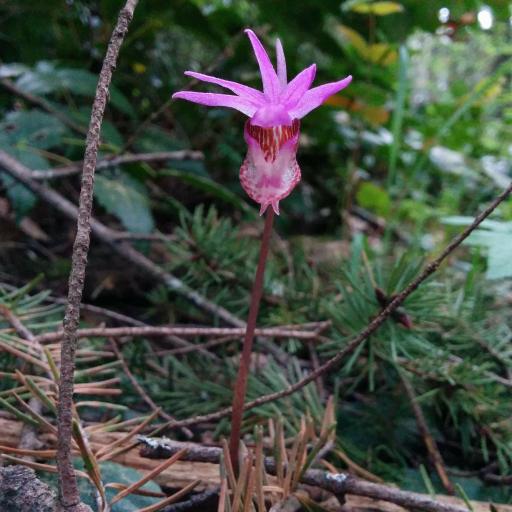
Plant Overview
Known affectionately as the Fairy Slipper or Venus's Slipper, the Calypso bulbosa is a tiny, enchanting orchid that seems to belong in a storybook. It is named after the Greek nymph Calypso, whose name means "to conceal"—fitting for a plant that hides in the deep, shaded moss of ancient evergreen forests. This delicate wildflower is a rare find and is often considered a "holy grail" for woodland hikers and photographers.
🔍 How to Identify
- 🌸 The Slipper Lip: The most striking feature is its "pouch" or lip, which is pinkish-purple with intricate reddish-brown streaks and a "beard" of bright yellow hairs at the opening.
- 🧚 The Crown: Above the slipper pouch, five narrow, pointed sepals and petals fan out like a tiny purple crown or the wings of a fairy.
- 🍃 The Solitary Leaf: Unlike many orchids, Calypso typically produces only one single, dark green, pleated leaf at the base of the stem, which often appears in the fall and survives through the winter.
🏡 In Your Garden
- 🍄 Fungal Friendships: This plant is extremely difficult to cultivate because it relies on a complex "mycorrhizal" relationship with specific soil fungi. Without these invisible partners, the plant cannot absorb nutrients.
- 🚫 Look, Don't Touch: Calypso orchids are incredibly sensitive to soil compaction and root disturbance. They have a tiny, bulb-like "corm" that sits very close to the surface; even stepping near them can crush their delicate root system and kill the plant.
⚠️ Safety & Toxicity
- 🌿 Non-Toxic Status: There are no known reports of Calypso bulbosa being toxic to humans, dogs, or cats.
- 🛑 Ecological Warning: While not poisonous, this orchid is legally protected or listed as "threatened" in many regions. Picking the flower or attempting to transplant it from the wild is almost always a death sentence for the plant and may be illegal.
✨ Fun Fact
The Fairy Slipper is a "master of deception." It produces a sweet scent to lure in newly emerged bumblebees, but it offers absolutely no nectar in return. The bees eventually learn they are being tricked and move on, but not before they’ve accidentally helped the orchid with pollination!

Detailed Care Instructions
| Color | Pink, Purple, Red, White |
| Soil Ph | Acidic |
| Humidity | Normal |
| Lighting | Full Sun |
| Soil Type | Moist, Well-Drained |
| Bloom Time | Spring, Summer |
| Difficulty | Easy |
| Plant Type | Perennial |
| Hibernation | Cold Period |
| Mature Size | 3–6 In. Tall, 3 In. Wide |
| Native Area | North America, Eurasia |
| Temperature | 12°C - 29°C |
| Sun Exposure | Partial, Shade |
| Hardiness Zones | 4-8 |
To grow Calypso Bulbosa plants, also known as Fairy Slipper Orchids or Venus' Slipper Orchids, follow these steps:
- Choose the right location: Calypso Bulbosa plants grow best in shady and moist environments, such as in deciduous or coniferous forests. Find a spot in your garden that mimics these conditions. A location with filtered sunlight or dappled shade is ideal.
- Prepare the soil: Calypso Bulbosa plants prefer well-draining, acidic soil. Amend the soil with organic matter, such as compost or peat moss, to improve its drainage and acidity level.
- Plant the bulbs: Calypso Bulbosa plants are typically grown from bulbs. Plant the bulbs in late summer to early fall, as this is the best time for them to establish roots before the winter. Dig a hole that is slightly larger than the bulb, and place the bulb in the hole with the pointed end facing up. Cover the bulb with soil, ensuring it is at the same depth it was growing in its nursery container.
- Watering: Keep the soil consistently moist, but not waterlogged. Calypso Bulbosa plants need regular watering to thrive. Check the moisture level of the soil regularly and water when it feels dry to the touch.
- Mulching: Apply a layer of organic mulch around the plants to help conserve moisture and suppress weeds. This will also provide insulation for the bulbs during colder months.
- Protect from extreme temperatures: Calypso Bulbosa plants are hardy in cooler climates and can withstand frosts, but extreme heat can be detrimental to their growth. If you live in a region with hot summers, provide some shade or move the plants to a cooler area during peak heat.
- Maintenance: Remove any weeds or competing plants from the area around the Calypso Bulbosa plants to prevent them from overshadowing or overcrowding. Fertilizer is generally not necessary for these plants, as they obtain nutrients from decomposing organic matter.
- Enjoy the blooms: Calypso Bulbosa plants typically flower in spring or early summer. The delicate orchid-like flowers are a sight to behold. Take the time to appreciate their beauty and provide them with the necessary care to thrive.
Remember, Calypso Bulbosa plants are protected in some regions, so make sure you are following local regulations and obtain them from reputable sources.

Place in a window with dappled sun or a spot in the middle of a room. Or directly in a window facing west or east.

Calypso Bulbosa is a flowering plant that prefers moist soil and humidity. When watering, it is important to ensure that the soil is evenly moist, but not soggy or waterlogged.
To water Calypso Bulbosa, start by checking the soil moisture level by inserting your finger into the soil. If the top inch of soil feels dry, it's time to water. Use a watering can with a narrow spout to pour water directly onto the soil, making sure to water around the base of the plant and not on its leaves. Avoid letting the water pool around the plant's roots as this can lead to root rot.
It is important to strike a balance between not letting Calypso Bulbosa's soil dry out completely and not overwatering it. Overwatering can cause the plant's roots to rot, resulting in wilting, yellowing leaves, and stunted growth.
During hot, dry spells, it is important to increase watering frequency and mist the leaves with a sprayer to ensure the plant is getting enough humidity. On the other hand, during cooler months, reduce watering frequency to prevent the plant from sitting in waterlogged soil.
Overall, Calypso Bulbosa thrives when given consistent, moderate watering and humidity levels.
To fertilize the Calypso Bulbosa plant, first make sure the soil is moist. Apply a slow-release, organic fertilizer in the recommended amount according to the package instructions. Spread the granules around the base of the plant, avoiding contact with the stem. Water the plant after fertilizing to help the nutrients reach the roots. Fertilize the plant once in early spring and again in late summer. Avoid over-fertilization as it can damage the plant and cause it to produce excessive foliage at the expense of flowers.
The soil requirements for the Calypso Bulbosa plant include a well-draining soil that is high in organic matter content, with a pH range of 5.0 to 7.0. It prefers a soil mixture that is slightly acidic and has good drainage to prevent waterlogging, which can lead to root rot. A light, friable soil mixture consisting of compost, peat moss, and coarse sand can provide an adequate environment for successful growth and development of the Calypso Bulbosa plant. Additionally, it is important to ensure that the soil is moist but not waterlogged, as the plant is sensitive to overwatering.
To propagate this plant, you can carefully dig up the bulbs in the fall after the foliage has died back. Separate the bulbs and plant them in a new location, making sure to cover them with soil. The soil should be well-draining and slightly acidic. Water the bulbs thoroughly after planting. The new bulbs will require moist soil and cool temperatures to establish themselves. It is also possible to propagate this plant by dividing the rhizomes in the spring.








