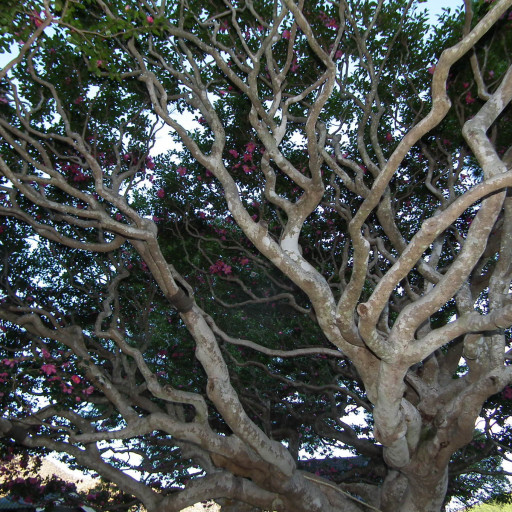
Plant Overview
Known as the "Sun Camellia" or the "Autumn Camellia," Camellia sasanqua is the graceful harbinger of winter. While its cousin, the Camellia japonica, waits for the warmth of spring, the Sasanqua braves the cooling temperatures of late autumn to produce a flurry of delicate, often fragrant blooms. Originating from the coastal forests of Japan, this evergreen shrub has been a staple of tea gardens for centuries, prized for its airy elegance and resilience.
🔍 How to Identify
- 🍃 Small, Serrated Leaves: Unlike the large, leathery leaves of other camellias, these are small (about 1-3 inches), dark green, and have finely pointed teeth along the edges.
- 🌸 Delicate Blooms: The flowers are typically smaller and flatter than japonica varieties, often featuring a central "boss" of bright yellow stamens that look like a golden burst in the center of the petals.
- 🌿 Hairy Stems: One of the most reliable ways to identify a Sasanqua is by looking at the new growth; the young twigs are covered in fine, tiny hairs, whereas most other camellias are smooth.
🏡 In Your Garden
- ☀️ Sun Tolerance: While most camellias crave deep shade, the Sasanqua is the "sun-lover" of the family. It can handle significantly more direct sunlight, though it still appreciates a break from the harsh afternoon heat in hotter climates.
- 💧 Drainage is Vital: This plant hates "wet feet." It requires acidic, well-draining soil. Because it has a relatively shallow root system, it benefits greatly from a thick layer of organic mulch to keep the roots cool and moist.
- ✂️ Graceful Growth: It has a much more open, willowy habit than its denser relatives. This makes it perfect for "espalier" (training it to grow flat against a wall) or as a flowering hedge that doesn't look too blocky or stiff.
⚠️ Safety & Toxicity
- ✅ Safe Status: Camellia sasanqua is considered non-toxic to humans, dogs, cats, and horses.
- 🌼 Garden Friendly: It is a very safe choice for family gardens. However, as with any ornamental plant, it is best to discourage pets or children from chewing on the foliage to avoid minor stomach upset.
✨ Fun Fact
In Japan, the seeds of Camellia sasanqua are cold-pressed to create "Tea Seed Oil." This precious oil has been used for centuries by Geishas as a secret beauty treatment to keep their hair glossy and their skin moisturized!

Detailed Care Instructions
| Humidity | Normal |
| Lighting | Full Sun |
| Difficulty | Easy |
| Hibernation | Cold Period |
| Hardiness Zones | 7 - 10 |
To grow Camellia Sasanqua, you can follow these steps:
- Choose the right location: Camellia Sasanqua prefers a partially shaded area with well-draining soil. Avoid planting it in direct sunlight or extremely hot and dry areas.
- Prepare the soil: Camellias prefer slightly acidic soil with a pH of 5.5 to 6.5. If your soil is too alkaline, you can amend it with sulfur or peat moss to lower the pH. Ensure the soil is rich, fertile, and well-draining.
- Dig a hole: Dig a hole that is twice as wide and deep as the root ball. This will help provide enough space for the roots to spread and grow.
- Plant the Camellia: Place the Camellia Sasanqua plant in the hole and backfill it with soil, ensuring that the top of the root ball is level with or slightly above the soil surface. Gently firm the soil around the plant.
- Water thoroughly: After planting, water the Camellia Sasanqua deeply to settle the soil and ensure good root contact. Water regularly, keeping the soil moist but not waterlogged. Mulching around the base of the plant can help retain moisture.
- Fertilize: Apply a slow-release, balanced fertilizer formulated for acid-loving plants in spring and late summer to provide the necessary nutrients. Follow the package instructions for application rates.
- Prune selectively: Pruning is generally not required for Camellia Sasanqua. However, if necessary, prune after flowering to shape the plant and remove any dead or damaged branches. Avoid heavy pruning, as it may affect flowering.
- Protect from extreme temperatures: Camellia Sasanqua is generally hardy but may require protection from extreme cold or frost. Consider using a frost cloth or covering the plant during freezing temperatures.
- Monitor for pests and diseases: Keep an eye out for common Camellia pests like aphids, scales, and spider mites. Treat with suitable insecticides or organic pest control methods if necessary. Watch for signs of disease such as leaf spot or root rot, and treat accordingly.
- Enjoy the blooms: With proper care and maintenance, your Camellia Sasanqua should bloom in its designated season, providing you with beautiful flowers.
Remember to research the specific variety of Camellia Sasanqua you have, as cultivation requirements may vary slightly.

Place in a window with dappled sun or a spot in the middle of a room. Or directly in a window facing west or east.

To water this plant, make sure the soil around it is completely dry before watering it. This plant prefers moist, well-drained soil, so it is important not to overwater or let it sit in standing water. When watering, use lukewarm water and aim to water the soil directly, not the leaves or flowers. Water deeply until you see moisture at the surface, and then allow the soil to dry slightly between waterings. During periods of hot, dry weather, the plant may need to be watered every 2-3 days, but during cooler, rainy periods, it may only need to be watered once a week.
The ideal time to fertilize this plant is during its active growing season in the spring and summer months. Use a balanced fertilizer that is specifically formulated for acid-loving plants and apply according to the package instructions. Avoid fertilizing during the winter dormant season as this can cause new growth to form which may be damaged by the cold temperatures. When applying the fertilizer, be sure to distribute it evenly around the base of the plant, avoiding direct contact with the trunk. Water the plant thoroughly after fertilizing to help the nutrients penetrate the soil and reach the plant's roots.
The Camellia Sasanqua plant requires well-draining soil that is slightly acidic. The ideal soil pH level should be between 5.5 and 6.5. It is recommended to use soil that is rich in organic matter, such as compost or peat moss, as this will provide sufficient nutrients for the plant to thrive. The soil should also be loose and airy, as compacted soil can hinder the growth of the Camellia Sasanqua. It is essential to avoid using soil that is heavy in clay or sandy, as these types of soil do not provide adequate drainage or retention of moisture. Overall, the soil used for the Camellia Sasanqua plant should be well-balanced and free of any harmful chemicals or contaminants.
To propagate this plant, you will need to take stem cuttings. Choose a healthy stem that does not have any flowers or buds on it. Using a clean, sharp pair of pruning shears, cut a 4-6 inch (10-15 cm) section of stem just below a node (where a leaf or bud is attached).
Remove all leaves from the cutting except for the top two or three. Dip the cut end of the stem into rooting hormone powder and tap off any excess.
Fill a small pot or container with moist potting soil. Use a pencil or your finger to create a hole in the soil and insert the stem cutting. Gently firm the soil around the cutting to hold it in place.
Cover the pot with a plastic bag to create a mini greenhouse effect, keeping the soil moist and the cutting warm and humid. Place the pot in a bright, but indirect, light location.
Check the soil daily to make sure it stays moist. After a few weeks, gently tug on the stem cutting to see if it has rooted. If it resists movement, it has rooted and can be gradually weaned off the plastic bag covering. If it pulls out easily, it needs more time to root.
Once the cutting has rooted and established itself in the pot, it can be transplanted into a larger container or into the ground in a suitable location.
Common pests of the camellia include Scale insect, spider mites, aphids, thrips, larvae. Make a habit of checking your camellia frequently for pests so that any infestations can be caught and managed early.








