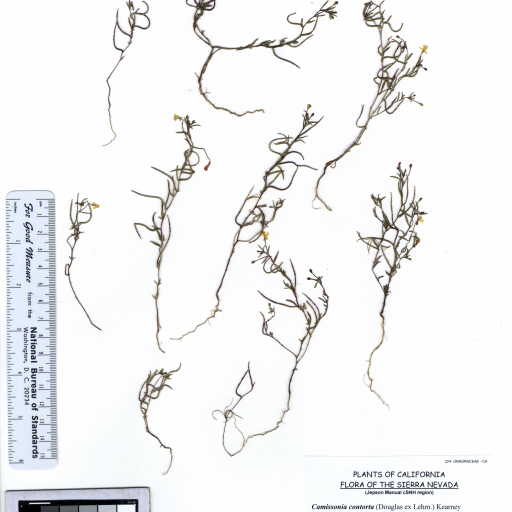
Plant Overview
Known as the Twisted Suncup, this delicate annual is a master of the West Coast sands. Native to the California coastline and inland scrublands, it paints the ground with tiny, sunshine-yellow dots during the spring. Its scientific name, contorta, hints at its quirky, winding seed pods that look like miniature green corkscrews scattered across the soil.
🔍 How to Identify
- 🌼 Petal Power: Small, vibrant yellow flowers with four petals. If you look closely at the center, you may see tiny reddish-brown dots that act as "nectar guides" for visiting insects.
- 🌀 The Twist: Its most distinct feature is the fruit—slender, four-angled seed capsules that curve and coil dramatically as they mature.
- 🌿 Linear Foliage: The leaves are narrow, almost hair-like, and can range from a bright green to a dusty reddish-purple when exposed to high heat or intense sunlight.
🏡 In Your Garden
- 🏖️ Sand Specialist: In a garden or restoration setting, this plant is a "sand specialist." It thrives in gritty, nutrient-poor, well-draining soil. It is a perfect choice for rock gardens or coastal-themed landscapes where other plants might struggle.
- 📅 Short but Sweet: As an annual, its life cycle is fast. It blooms in the spring and disappears once the heat of summer sets in. It relies on its "contorted" pods to drop seeds that will wait patiently in the soil for the next winter rains.
⚠️ Safety & Toxicity
- ✅ Low Risk: The Twisted Suncup is generally considered non-toxic to humans, cats, and dogs. It does not possess thorns or stinging hairs.
- 🧤 Gentle Handling: While safe, the stems are quite thin and fragile. It is best to admire this plant from a distance rather than picking it, as it wilts almost immediately once removed from its root system.
✨ Fun Fact
The Twisted Suncup is a favorite of specialized "oligolectic" bees—bees that have evolved to collect pollen from only a very narrow range of plants. By planting these, you aren't just adding color; you are providing a vital "fast-food stop" for rare native pollinators!

Detailed Care Instructions

Place in a bright room that is sun drenched almost all day. Or directly in a south-facing window.

Water-loving plants flourish in wet or sloppy soil and near ponds. The extensive root system enables these plants to absorb plenty of water. The surface of the soil should be kept moist at all times. Place your pot in a container filled with water to guarantee that plants get enough water. If the ground becomes dry, it is recommended that you water it well. Plants in smaller pots will need to be watered more frequently. Water the soil in which the plant is standing thoroughly using a watering can.








