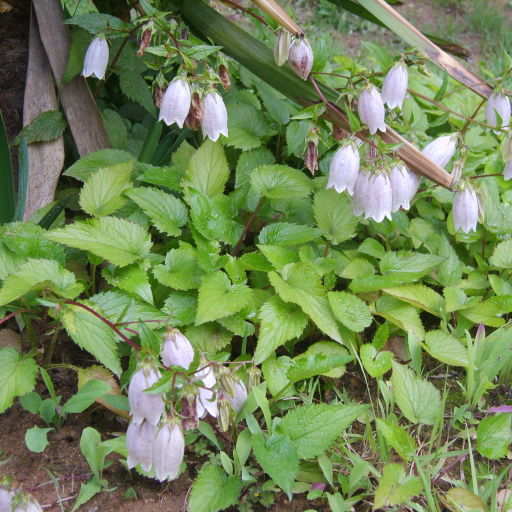
Plant Overview
Often called the "Spotted Bellflower" or "Cherry Bells," this East Asian beauty is a favorite for woodland gardens and romantic borders. It is famous for its oversized, pendulous blossoms that look like they’ve been delicately hand-painted with tiny maroon freckles. It is a plant that whispers of secret fairy gardens and old-world charm, bringing a touch of whimsy to any shaded corner.
🔍 How to Identify
- 🔔 Flower Shape: Features large, tubular, or bell-shaped flowers that hang gracefully downward (pendulous), usually in shades of creamy white, pale pink, or deep rose.
- 🎨 Interior Detail: The inner throat of the bell is heavily marked with deep maroon or purple spots (punctuations), which serve as "nectar guides" for visiting bees.
- 🌿 Foliage: The base consists of a mound of heart-shaped, serrated leaves that are often covered in fine, soft hairs, giving them a slightly fuzzy texture.
🏡 In Your Garden
- 🏃 Growth Habit: Unlike its more clump-forming cousins, Campanula punctata spreads via underground runners (rhizomes). It is a fantastic groundcover for filling gaps, but it can be assertive—ensure it has room to roam without crowding out smaller, delicate neighbors.
- 💧 Moisture Balance: This bellflower thrives in moist, rich soil. If the soil dries out completely during a summer heatwave, the plant may enter an early dormancy to protect itself, so consistent watering is key to a long bloom season.
- 🌗 Lighting Nuance: While it can handle full sun in cooler northern climates, it truly shines in dappled shade. The pale, hanging bells create a "glowing" effect in darker areas of the garden where other flowers might struggle.
⚠️ Safety & Toxicity
- ✅ Safe Status: Good news for families—this plant is generally considered non-toxic to humans, cats, and dogs.
- ✋ Skin Sensitivity: While not poisonous, the fine hairs on the stems and leaves can occasionally cause mild mechanical irritation to those with very sensitive skin. Wearing gloves while pruning is a simple precaution.
✨ Fun Fact
The genus name Campanula is Latin for "little bell." In its native regions of Japan and Korea, this plant isn't just for show—the young leaves are sometimes harvested and used as a cooked green or added to traditional salads!

Detailed Care Instructions
To grow Campanula Punctata plant, also known as the Spotted Bellflower, you can follow these steps:
- Purchase seeds or established plants: You can either buy seeds or already grown Campanula Punctata plants from a local nursery or online.
- Decide on the planting location: Campanula Punctata prefers well-drained soil and partial shade. Choose a spot in your garden that receives morning or afternoon sun with some shade during the hottest part of the day.
- Prepare the soil: Campanula Punctata grows well in loamy, well-drained soil. Add organic matter like compost to improve the soil's fertility and drainage. Remove any weeds or rocks from the planting area.
- Planting: If sowing seeds, follow the instructions on the seed packet for appropriate depth and spacing. Typically, Campanula Punctata seeds should be sown about 1/4 inch deep and spaced 12-18 inches apart. If using established plants, dig a hole slightly larger than the root ball and place the plant in the hole. Backfill with soil, firming gently around the stem.
- Watering: Water the plant immediately after planting and keep the soil consistently moist, but not waterlogged. Water deeply once or twice a week, depending on rainfall and temperature. Avoid overwatering as it can lead to root rot.
- Mulching: Apply a layer of organic mulch around the base of the plant to help retain moisture, reduce weeds, and regulate soil temperature.
- Fertilizing: Campanula Punctata plants generally do not require frequent fertilization. However, you can apply a balanced slow-release fertilizer in spring to provide nutrients for healthy growth.
- Pruning: To maintain a tidy appearance and encourage bushier growth, pinch back the growing tips of the plant, especially in early spring. Deadhead spent flowers to promote prolonged blooming.
- Pests and diseases: Campanula Punctata is generally resistant to pests and diseases. However, occasional aphids or snails might appear. Monitor the plant regularly and treat any infestations promptly.
- Winter care: Campanula Punctata is a perennial plant that is hardy in USDA zones 5-9. In colder climates, apply a layer of mulch around the base of the plant before winter to protect the roots from freezing temperatures.
By following these guidelines, you can successfully grow Campanula Punctata plants and enjoy their beautiful spotted bell-shaped flowers.

Place in a window with dappled sun or a spot in the middle of a room. Or directly in a window facing west or east.

Campanula punctata is a flowering plant that belongs to the Campanulaceae family. This plant prefers well-draining soil and regular watering. However, it is important not to overwater it as this may cause the roots to rot.
To water Campanula punctata, you should wait until the top layer of soil feels dry to the touch. Then, water the plant thoroughly, making sure you saturate the whole root system. Avoid getting water on the leaves as this may lead to fungal growth or disease.
During hot summer months, you may need to water your Campanula punctata more frequently, especially when the weather is dry. On the other hand, during the winter months, you can reduce the frequency of watering to every 10-14 days.
It is important to note that each plant's watering needs can differ depending on factors such as season, temperature, and light exposure. Therefore, it is essential to monitor your plants' soil moisture and adjust your watering accordingly.
To fertilize this plant, use a balanced fertilizer with equal amounts of nitrogen, phosphorus, and potassium. Fertilize the plant once a month during its growing season with a quarter-strength solution. Water the plant thoroughly before and after fertilizing to prevent fertilizer burn. Avoid applying fertilizer to the foliage, as it may cause damage.
The ideal soil for Campanula Punctata is a well-draining soil that is rich in nutrients. It should have a pH level between 5.5 and 7.0. Sandy loam soils with a high content of organic matter are the best choice for this plant. The soil should be moist but not waterlogged, as this can cause root rot and other diseases. It is also important to ensure good drainage, as sitting water can be detrimental to its health. A loamy soil with proper drainage and a pH level in the ideal range will help the plant grow and thrive.
To propagate this plant, you will need to obtain a healthy stem cutting from the parent plant. Select a stem that is at least 3-4 inches long and has a few leaves attached.
Using a sharp, sterile pair of scissors or pruning shears, make a clean cut just below a node (the point where a leaf is attached to the stem). Remove any leaves from the lower half of the stem, leaving only a few at the top.
Dip the cut end of the stem in rooting hormone powder, shaking off any excess. Plant the stem in a well-draining potting mix, burying the lower half of the stem. Water the cutting thoroughly.
Cover the pot with a plastic bag or wrap to create a mini greenhouse. This will help to maintain humidity and prevent the cutting from drying out. Place the pot in a bright, warm location, but out of direct sunlight.
After a few weeks, check for signs of new growth. If the stem has rooted successfully, you will see new leaves emerging from the top. At this stage, you can remove the plastic covering and begin to gradually acclimate the new plant to normal growing conditions.
Once the plant has grown sufficiently, you can transplant it into a larger pot or garden bed. With proper care, it should continue to grow and thrive.
Common pests of the spotted bellflower include Aphids, larvae, snails. Make a habit of checking your spotted bellflower frequently for pests so that any infestations can be caught and managed early.








