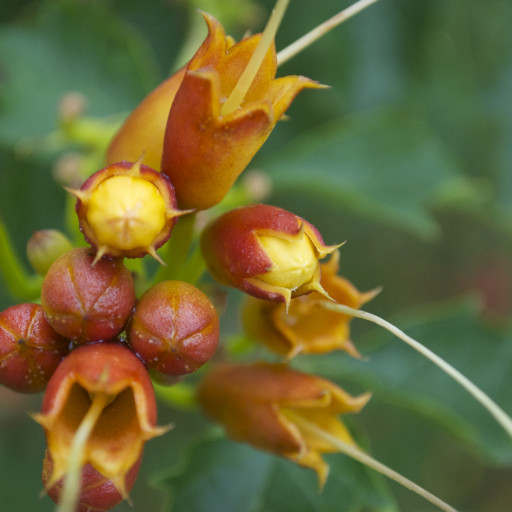
Plant Overview
Known as the Trumpet Vine or the "Hummingbird Vine," Campsis radicans is a powerhouse of the summer garden. This North American native is famous for its fiery, trumpet-shaped blooms that act like neon signs for pollinators. While it offers a spectacular tropical look, it is a vigorous grower that demands respect and a very sturdy trellis to call home.
🔍 How to Identify
- 🎺 The Flowers: Clusters of 3-inch long, tubular blossoms in shades of brilliant orange, scarlet, or yellow that bloom throughout the heat of summer.
- 🌿 The Foliage: Large, dark green, "pinnately compound" leaves (meaning they look like a feather) with 7 to 11 saw-toothed leaflets.
- 🧗 The Stems: Thick, woody vines that develop "aerial rootlets"—tiny, claw-like structures that allow the plant to cling to brick, wood, and stone.
🏡 In Your Garden
- 🏗️ Structural Support: This is not a plant for a plastic trellis. It grows heavy and powerful; it requires a strong fence, a stone wall, or a dedicated arbor. Avoid planting it directly against your house, as the rootlets can damage siding and shingles.
- ✂️ Growth Management: It is famously aggressive. To keep it from "wandering" into your lawn or neighboring trees, be prepared for heavy pruning in late winter or early spring to maintain its shape and encourage more flowers.
⚠️ Safety & Toxicity
- 🧴 Skin Irritant: Often called the "Cow Itch Vine," the sap contains gallic acid which can cause mild skin redness or an itchy rash in sensitive individuals.
- 🐾 Pet Safety: While not usually fatal, the plant is considered toxic if ingested. Keep curious dogs or cats away, as it can cause digestive upset and mouth irritation.
✨ Fun Fact
The Trumpet Vine has co-evolved specifically with the Ruby-throated Hummingbird. The flower’s long, tubular shape is perfectly designed for the hummingbird's beak, and the bright red/orange color is the exact spectrum most visible to these tiny birds!

Detailed Care Instructions
| Color | Yellow, Orange, Red |
| Soil Ph | 3.7 To 6.8 |
| Invasive | Weed |
| Lighting | Full Sun |
| Soil Type | Grows In Any Soil; Prefers Good-Draining Soils |
| Bloom Time | June To September; Peaks In July |
| Plant Type | Deciduous Woody Vine |
| Mature Size | 30 To 40 Feet |
| Native Area | Southeastern U.s. But Has Naturalized In Many Northern States |
| Sun Exposure | Full Sun To Part Shade |
| Hardiness Zones | 4 To 9 |
To grow Campsis Radicans (also known as trumpet vine or cow itch vine), you can follow these steps:
- Choose a suitable location: Campsis Radicans prefers full sunlight to partial shade. Select a location with well-draining soil.
- Prepare the soil: Ensure that the soil is well-draining by amending it with organic matter such as compost or aged manure. This will improve the soil's fertility and drainage.
- Planting: Dig a hole that is slightly larger than the size of the plant's root ball. Place the Campsis Radicans in the hole, making sure the top of the root ball is level with the ground. Backfill the hole with soil, gently firming it around the plant. Water thoroughly after planting.
- Watering: Keep the soil consistently moist but not waterlogged during the growing season. However, once established, the plant is drought-tolerant and can withstand short periods of drought.
- Mulching: Apply a layer of organic mulch, such as wood chips or straw, around the base of the plant. This will help retain moisture in the soil and suppress weed growth.
- Support: Campsis Radicans is a climbing vine that requires support to grow. Provide a sturdy trellis, arbor, or fence for the plant to climb on.
- Pruning: Prune Campsis Radicans in late winter or early spring to remove any dead or damaged branches. You can also prune to control its size or shape. Be cautious as the sap can cause skin irritation, so wear gloves and protect yourself.
- Fertilization: Apply a balanced, slow-release fertilizer in early spring or use organic fertilizers like compost or well-rotted manure. Follow the package instructions for the correct dosage.
- Pest and disease control: Campsis Radicans is generally resistant to pests and diseases. However, keep an eye out for aphids, scale insects, or spider mites. If any pests are detected, use an appropriate insecticide or insecticidal soap to control them.
- Propagation: Campsis Radicans can be propagated through seeds, layering, or stem cuttings. Seeds can be collected after flowering, and stem cuttings can be taken in early summer or late fall.
Remember to check for any local regulations or invasive species concerns before planting Campsis Radicans, as it can be an invasive plant in some regions.

Place in a bright room that is sun drenched almost all day. Or directly in a south-facing window.

To properly water this plant, it is important to consider its soil type and drainage. Begin by checking the moisture level of the soil with your finger or a moisture meter. The soil should be evenly moist but not soggy.
Water the plant deeply and thoroughly, taking care to ensure that water penetrates the soil to the plant's roots. Avoid getting water on the leaves and blooms to prevent disease.
During hot or dry weather, water the plant regularly, taking care not to let the soil dry out completely. In cooler weather or periods of rainfall, reduce watering frequency.
To prevent overwatering and root rot, allow the soil to dry slightly between waterings. You can also improve drainage by amending the soil with organic matter or placing the plant on a slight mound.
In summary, water this plant deeply and regularly while allowing the soil to dry slightly between waterings, taking care to avoid overwatering and improve drainage as needed.
To fertilize this plant, use a slow-release, balanced fertilizer in the spring before new growth emerges. Apply at the base of the plant, following the instructions on the fertilizer packaging for the appropriate amount to use. Avoid fertilizing in late summer or fall, as this can encourage late growth that may not have time to harden off before winter. Always water the plant thoroughly after fertilizing to help the nutrients absorb into the soil.
When selecting the ideal soil type for the plant in question, there are a few factors to consider. Firstly, the soil should be well-draining so that excess water is not retained around the plant's roots. Secondly, it should be rich in nutrients to support healthy growth. In addition, the soil should have a pH level between 6.0 and 7.0 to promote optimal nutrient uptake.
A recommended soil type for the plant would be a loamy soil with sufficient organic matter. This type of soil retains moisture well without becoming waterlogged, ensuring that the plant's roots have access to water while still allowing excess water to drain away. Amending the soil with compost or aged manure can help improve its fertility and provide the plant with essential nutrients.
It's also worth noting that the plant prefers a slightly acidic soil, so adding ground sulfur or aluminum sulfate may help to adjust the pH level. Overall, providing the plant with a nutrient-rich, well-draining soil will help it thrive.
To propagate this plant, you can take a cutting from an established plant. Using a clean, sharp pair of pruning shears, take a 6-8 inch cutting from a branch that is at least ¼ inch in diameter. Remove any leaves from the bottom half of the cutting. Dip the cut end of the cutting in rooting hormone powder, tapping off any excess. Plant the cutting in a pot filled with a well-draining potting mix and keep the soil moist but not waterlogged. Place the pot in a warm, bright area but out of direct sunlight. You can cover the pot with a plastic bag or a clear plastic container to create a mini greenhouse and increase humidity around the cutting. After a few weeks, check to see if roots have formed by gently tugging on the cutting. If you feel resistance, it has rooted. Once it has rooted, you can transplant the new plant to a larger pot or in the desired location in your garden.
Common pests of the trumpet creeper include Scale insect, spider mites, whiteflies. Make a habit of checking your trumpet creeper frequently for pests so that any infestations can be caught and managed early.








