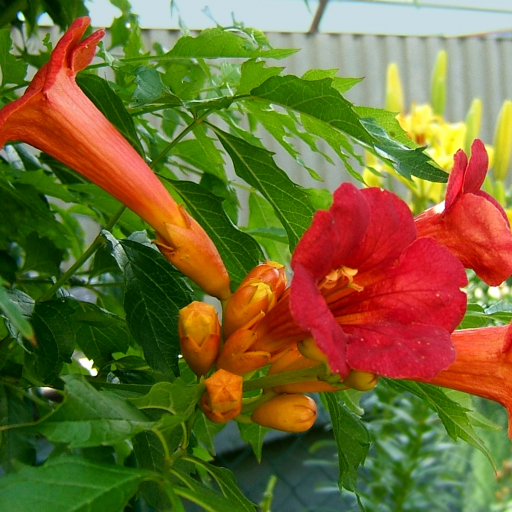
Plant Overview
Often called the "Madame Galen" after its most famous variety, Campsis x tagliabuana is the ultimate garden acrobat. This hybrid is a masterclass in botanical engineering, combining the rugged cold-hardiness of the American Trumpet Vine with the oversized, elegant blooms of its Chinese cousin. It is a literal magnet for hummingbirds, turning any sturdy fence or pergola into a vibrating, nectar-filled theater of color.
🔍 How to Identify
- 🎺 The Flowers: Massive, 3-inch long trumpet-shaped blossoms that erupt in clusters of fiery orange, apricot, or salmon-red during the heat of mid-to-late summer.
- 🍃 The Foliage: Lush, deep-green leaves that are "pinnate" (arranged like a feather) with sharply toothed edges, giving the vine a dense, tropical appearance even in temperate climates.
- 🧗 The Grip: While it produces aerial rootlets to climb, it is a woody, heavy-stemmed vine that tends to lean and scramble more gracefully than its more aggressive parent species.
🏡 In Your Garden
- 🏗️ Structural Strength: This is not a plant for flimsy plastic lattices. As the vine matures, it becomes heavy and woody; it requires a high-tensile wire system, a stone wall, or a heavy-duty wooden pergola to support its weight.
- ✂️ Pruning for Power: Because this hybrid flowers on "new wood" (the growth produced in the current year), you can prune it back aggressively in late winter. This prevents the vine from becoming a tangled mess and encourages a much more dramatic floral display in July.
- ☀️ Sun Seeker: To get the best bloom count, place it in the hottest, sunniest spot you have. In shade, it will grow plenty of green leaves but very few "trumpets."
⚠️ Safety & Toxicity
- 🧴 Mild Irritant: Some gardeners experience "Trumpet Creeper Rash." The sap contains skin irritants that can cause redness or itching, earning it the old-fashioned nickname "Cow-itch vine."
- 🐾 Pet & Child Safety: While not considered deadly, all parts of the plant are mildly toxic if ingested, potentially causing stomach upset or nausea in curious pets or toddlers.
✨ Fun Fact
✨ Evolutionary Engineering: The specific curve and length of the Campsis flower are perfectly evolved to fit the beak of a hummingbird. As the bird reaches deep for nectar, the flower dabs pollen onto the bird's forehead, making the hummingbird an unwitting delivery service for the plant’s next generation.

Detailed Care Instructions
To grow Campsis x tagliabuana, also known as the trumpet vine, you can follow these steps:
- Choose a suitable planting location: Campsis x tagliabuana thrives in full sunlight, so select an area in your garden that receives at least six hours of direct sunlight each day. The plant also requires a sturdy support structure like a trellis, pergola, or fence to climb on.
- Prepare the soil: Trumpet vines prefer well-draining soil, so ensure the soil is loose and fertile. Amend the soil with organic matter like compost or aged manure to improve drainage and add nutrients.
- Planting: Dig a hole slightly larger than the plant's root ball. Place the plant in the hole, ensuring the crown is level with or slightly above the soil surface. Backfill the hole with soil and firmly pack it around the base of the plant. Water thoroughly after planting.
- Watering: Initially, water the plant deeply to help establish the roots. Afterward, provide regular watering, especially during dry spells, to keep the soil moist but not waterlogged. Avoid overwatering, as it can lead to root rot.
- Mulching: Apply a layer of organic mulch around the base of the plant, leaving a few inches of space near the stem to prevent rot. Mulch helps retain moisture, suppress weeds, and insulate the roots.
- Pruning: Campsis x tagliabuana requires regular pruning to control its growth and maintain a tidy appearance. Prune in late winter or early spring before new growth emerges. Remove any damaged or dead branches, and thin out crowded growth. Trim back excessively long shoots to encourage branching and more flowers.
- Fertilizing: While trumpet vines are generally low-maintenance, you can fertilize them annually in early spring with a balanced, slow-release fertilizer, following the package instructions. Avoid excessive fertilizer application, as it may promote lush foliage at the expense of flower production.
- Pests and diseases: Campsis x tagliabuana is generally quite resistant to pests and diseases. However, keep an eye out for aphids, which may occasionally infest the plant. If necessary, hose off the aphids with a strong stream of water or use insecticidal soap, following the product instructions.
- Training and support: As the trumpet vine grows, guide its tendrils toward the support structure you have provided. Regularly check the growth and adjust it if needed to ensure it climbs along the desired path.
Following these steps and providing proper care should help your Campsis x tagliabuana plant grow successfully and produce its beautiful, trumpet-shaped flowers.
To properly water this plant, it is important to first check the soil moisture level before giving it any water. One should wait until the top inch of soil feels dry to the touch before watering it. When it is time to water the plant, it should be done thoroughly, ensuring that the water reaches the roots of the plant. The plant should be watered until water drains out of the bottom of the pot or until the soil feels evenly moist. Overwatering should be avoided as it can lead to root rot and other fungal diseases. It is also recommended to water the plant at the base rather than on the foliage to prevent waterlogging and other potential issues. In addition to regular watering, this plant requires well-draining soil and regular fertilization to thrive.
To fertilize, apply a balanced fertilizer with equal parts nitrogen, phosphorus, and potassium in early spring before new growth appears. Then, apply a phosphorus-rich fertilizer in late summer to promote flower bud development for the following blooming season. Water thoroughly after fertilizing. Avoid fertilizing during drought or extremely hot weather.
The ideal soil for the Campsis X Tagliabuana plant should be well-draining and have a slightly acidic to neutral pH level. The soil should also be rich in nutrients with a mix of organic matter such as compost or well-rotted manure. It is important to avoid soils that are too heavy or compacted as this can prevent proper drainage which can lead to root rot. Additionally, the soil should not be too sandy or dry as this can cause the plant to become dehydrated and stunt its growth. Overall, a loose, fertile soil that is moist but not waterlogged is the best option for the Campsis X Tagliabuana plant to thrive.
To propagate this plant, you will need to take stem cuttings. Select a healthy stem that is at least 6 inches long and has several leaves attached. Using a clean and sharp pair of scissors or pruning shears, make a clean cut just below a node on the stem.
Remove the leaves from the lower third of the stem and any flowers or buds. Dip the cut end of the stem in rooting hormone powder to encourage root growth.
Prepare a potting mix of equal parts perlite and peat moss, and moisten it with water. Poke a hole in the potting mix with a pencil or your finger, and insert the stem cutting. Gently press the soil around the stem to hold it upright.
Cover the pot with a plastic bag or wrap to create a humid environment. Place the pot in a bright location but out of direct sunlight. Check the soil moisture level every few days and water if necessary.
After a few weeks, check for root growth by gently tugging on the stem. If you feel resistance, the roots have started to grow. Once the plant has established roots, remove the plastic covering and gradually expose the plant to more light.
When the plant has grown enough to transplant, prepare a larger pot with well-draining soil and plant the new plant. Water thoroughly and care for it as you would any other mature plant.








