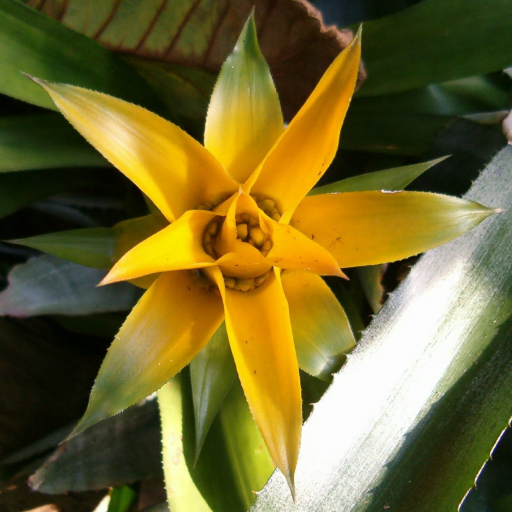
Plant Overview
Often called the Fried Egg Plant or Citron Canistropsis, this Brazilian beauty is a hidden gem of the Atlantic Forest. Unlike many showy tropicals that demand blistering sun, this bromeliad thrives in the emerald shadows, looking like a permanent, glowing bouquet resting on the forest floor.
🔍 How to Identify
- 🍃 The Rosette: It forms a low, spreading star-shape of smooth, strap-like green leaves that can reach up to 12 inches long.
- 🍳 The "Fried Egg": The center of the plant produces a stunning cluster of bright yellow or orange bracts (specialized leaves). Tucked inside these "yolks" are tiny, pure white flowers, creating the iconic breakfast-themed look.
- 🏗️ The Structure: Unlike many bromeliads that grow tall spikes, this plant keeps its vibrant color nestled close to its core, forming a compact "basket."
🏡 In Your Garden
- 💧 The Central Tank: Because it’s an epiphyte, it drinks through its center. Keep the "cup" or "tank" at the base of the leaves filled with fresh water, but be sure to flush it out occasionally to prevent stagnation and mosquito larvae.
- ☁️ Humidity is Key: Coming from the humid rainforests of Brazil, it dislikes bone-dry air. It’s a perfect candidate for a steamy bathroom or a shaded patio where other plants might struggle with low light.
- 🌱 Loose Footing: It hates "wet feet." Use a very airy, bark-based potting mix (like orchid or bromeliad mix) rather than heavy garden soil to keep its sensitive roots from rotting.
⚠️ Safety & Toxicity
- ✅ Status: Non-toxic and generally safe.
- 🐾 Details: This plant is considered safe for cats, dogs, and children. However, some varieties have slightly serrated leaf edges that can cause minor "paper-cut" style scratches if handled roughly.
✨ Fun Fact
The name Canistropsis actually translates to "resembling a little basket." This refers to how the colorful bracts hold the tiny flowers like a woven gift basket presented by the rainforest.

Detailed Care Instructions
To grow Canistropsis Billbergioides, also known as the red quill bromeliad, follow these steps:
- Light: Provide bright, indirect light to the plant. A spot near a window with filtered or diffused sunlight is ideal. Avoid exposing the plant to direct sunlight, as it can lead to leaf burn.
- Temperature: These plants thrive in warm temperatures, ideally around 70-80°F (21-27°C). They can tolerate slightly cooler temperatures but avoid exposing them to extreme cold or frost.
- Watering: Water the plant regularly, keeping the center of the rosette filled with water. Ensure that water does not sit in the leaf axils, as it can lead to rot. Use distilled or rainwater if possible, as bromeliads are sensitive to chemicals found in tap water.
- Humidity: Canistropsis Billbergioides prefers higher humidity levels. Consider using a humidifier or placing the plant on a humidity tray to increase the moisture in the air around it. Alternatively, mist the plant occasionally to provide some humidity.
- Potting: These plants do well in a well-draining bromeliad mix or orchid mix. Avoid using regular potting soil, as it retains moisture and can cause root rot. Ensure the pot has drainage holes, and keep the soil damp but not waterlogged.
- Fertilizer: Feed the plant with a diluted, balanced liquid fertilizer once a month during the growing season (spring to summer). Dilute the fertilizer to half the recommended strength to avoid overfeeding.
- Pup propagation: Canistropsis Billbergioides produces offshoots called pups. Once the pups are about one-third the size of the mother plant, carefully remove them using a clean, sharp knife. Ensure that each pup has some roots attached. Plant the pups in their individual pots using the same type of potting mix described earlier.
- Repotting: Repot the mother plant when it outgrows its current pot. This is typically required every two to three years or when the plant becomes root-bound. Gently remove the plant from its pot, trim off any dead or damaged roots, and place it in a slightly larger pot with fresh potting mix.
By following these guidelines, you should be able to successfully grow and propagate Canistropsis Billbergioides.

Place in a window with dappled sun or a spot in the middle of a room. Or directly in a window facing west or east.

Canistropsis Billbergioides is a tropical plant species that requires regular watering to thrive. Here is a detailed guide on how to water this plant effectively:
1. Assess the soil moisture: Before watering, check the top inch (2.5 cm) of the soil to determine its moisture levels. Stick your finger into the soil or use a moisture meter to gauge its dryness.
2. Watering frequency: Canistropsis Billbergioides prefers slightly moist soil but should not be overwatered. Aim to water the plant every 7-10 days during the growing season, which is usually spring and summer. Adjust the frequency based on environmental conditions and the plant's individual needs.
3. Watering method: Use room temperature water when watering Canistropsis Billbergioides. Slowly pour water directly onto the soil around the base of the plant, avoiding the foliage as much as possible. This helps prevent fungal diseases and allows the roots to absorb water efficiently.
4. Thorough watering: Ensure that you water the plant thoroughly with each watering session. Water until you see it draining out of the bottom drainage holes of the pot. This ensures that the roots receive adequate moisture and prevents waterlogging.
5. Do not let it sit in water: After watering, make sure to discard any excess water that accumulates in the drainage tray or saucer. Canistropsis Billbergioides does not like sitting in water as it can lead to root rot and other issues.
6. Observe plant behavior: Pay attention to the plant's behavior after watering. If the leaves become droopy or start yellowing, it may indicate overwatering. On the other hand, if the leaves become shriveled or the plant appears wilted, it may need more water. Adjust the watering frequency accordingly to meet the plant's needs.
7. Adjust watering schedule during dormancy: Canistropsis Billbergioides may enter a dormancy period during colder months. During this time, reduce the watering frequency to allow the soil to slightly dry out between waterings. It is crucial not to let the soil completely dry out during this period.
Remember, the watering needs of Canistropsis Billbergioides may vary based on factors such as humidity, temperature, and the size of the plant. It's essential to monitor the plant's behavior and adjust the watering regimen accordingly to create the ideal environment for its growth.
Here are the fertilizing instructions for Canistropsis Billbergioides plant:
- Choose a balanced, water-soluble fertilizer formulated for bromeliads or epiphytic plants.
- Dilute the fertilizer according to the package instructions. Generally, a concentration of 1/4 to 1/2 the recommended strength is sufficient.
- Water the plant thoroughly before applying the fertilizer to prevent root burn.
- Apply the diluted fertilizer directly to the soil or spray it onto the foliage, ensuring complete coverage.
- Fertilize the plant every two to four weeks during the growing season, typically from spring through summer.
- During the dormant period in winter, reduce or suspend fertilization as the plant's growth slows down.
- Avoid over-fertilizing, as it can lead to salt build-up and damage the plant. If you notice yellowing or burned leaf tips, decrease the fertilizer concentration or frequency.
- Always follow the fertilizer manufacturer's instructions for application rates and safety precautions.
- Additionally, it's beneficial to supplement the regular fertilization with occasional foliar feeding using a weak, diluted fertilizer spray. This helps the leaves absorb nutrients directly.
Remember, these instructions are specific to Canistropsis Billbergioides plant, so it's essential to adapt them to the specific needs of your plant if you are referring to a different species.
Canistropsis Billbergioides is a plant that belongs to the Bromeliaceae family. When it comes to soil requirements, it prefers a well-draining and slightly acidic soil mix. The soil should have good moisture retention capacity while allowing excess water to drain away to prevent waterlogging, which can lead to root rot.
A suitable soil mix for Canistropsis Billbergioides would typically include a combination of organic matter, such as peat moss or coconut coir, and a well-draining component like perlite or pumice. This combination helps to maintain the ideal balance of moisture and aeration for the plant's root system.
Using a mixture of these components ensures that the soil is lightweight, allows proper air circulation around the roots, and provides the necessary nutrients while preventing waterlogged conditions. This type of soil mix also helps mimic the plant's natural habitat, as Canistropsis Billbergioides is typically found growing epiphytically in trees or on rocky surfaces in its native regions.
It's important to note that Canistropsis Billbergioides is an epiphytic plant, meaning it can grow without soil as well. In that case, using a well-draining medium like orchid bark or sphagnum moss can provide a suitable alternative to traditional soil mixes. This allows the plant's roots to anchor onto the medium while still being able to access nutrients and moisture.
While it is essential to provide the appropriate soil conditions for Canistropsis Billbergioides, maintaining proper watering practices along with adequate lighting and temperature will also contribute to its overall health and growth.
To propagate Canistropsis Billbergioides, follow these steps:
- Select a healthy and mature mother plant: Choose a mature Canistropsis Billbergioides plant that is healthy and free from any diseases or pests. This will ensure successful propagation with strong offspring.
- Prepare a sterile, well-draining medium: Prepare a potting mix that consists of well-draining ingredients such as perlite, coarse sand, or a commercial cactus mix. Sterilize the medium before use to prevent any potential pathogens from interfering with the propagation process.
- Obtain a cutting: Locate a strong and healthy offset (also known as a pup) growing at the base of the mother plant. These offsets are genetically identical to the parent plant and are the most common method of propagation for Canistropsis Billbergioides.
- Gently separate the offset: Using a clean and sharp knife or shears, carefully separate the offset from the mother plant, ensuring that it has its own roots or a healthy pup root system intact. Take care not to damage the roots during the separation process.
- Allow the cutting to callus: After separating the offset, place it in a cool and dry location away from direct sunlight. This will allow the cut end to callus or form a protective layer over the wound, preventing rot and infection. It usually takes around a week for the offset to callus.
- Prepare the planting container: Fill a small pot with the prepared potting mix, leaving enough space for the offset to be comfortably placed. Ensure that the pot has proper drainage holes to avoid excess moisture retention.
- Plant the offset: Gently place the offset in the pot, making sure that the roots are well-spread and covered with soil. Lightly press the soil around the base of the offset to provide stability.
- Provide optimal growing conditions: Place the potted offset in a location that receives bright, indirect light. Avoid direct sunlight as it can scorch the plant. Maintain a temperature range of 65-80°F (18-27°C) for optimal growth.
- Water the offset: Water the newly planted offset thoroughly, ensuring that the soil is evenly moist but not waterlogged. Allow the top one to two inches of soil to dry out before watering again. Overwatering can lead to root rot and other issues.
- Monitor and care for the new plant: Regularly check the moisture levels in the soil and adjust watering accordingly. Avoid fertilizing the offset immediately; allow it to establish itself first. Once the plant shows signs of healthy growth, you can start gradually fertilizing it using a balanced, diluted fertilizer specifically formulated for succulents or bromeliads.
By following these propagation steps, you can successfully propagate Canistropsis Billbergioides and expand your collection of these beautiful plants.








