Plant Overview
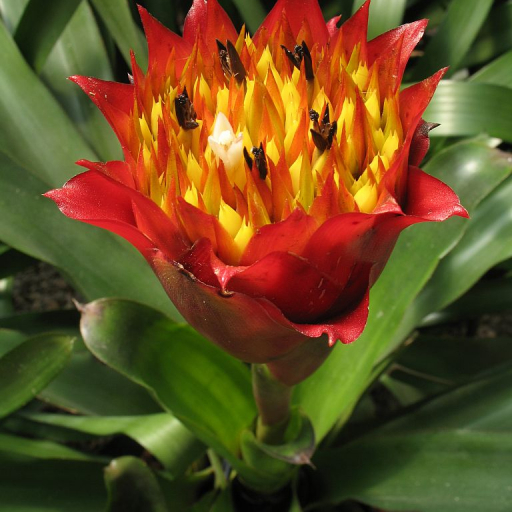
Known affectionately as the Basket Bromeliad, this Brazilian beauty is a true showstopper for tropical plant collectors. Its name, Canistrum, comes from the Greek word for "wicker basket," perfectly describing how its vibrant flowers nestle deep within a protective ring of leaves. It looks less like a typical houseplant and more like a carefully arranged gift from nature.
🔍 How to Identify
- 🌿 The Rosette: It features a classic bromeliad shape with long, arching, sword-like leaves that are usually a deep, waxy green, sometimes speckled with darker spots.
- 🧺 The "Basket": At the center of the plant, short bracts (modified leaves) turn a brilliant, fiery orange or golden-yellow, forming a cup-shaped nest.
- 🌸 Hidden Blooms: Small, white or cream-colored flowers peek out from inside the orange "basket," creating a striking color contrast.
🏡 In Your Garden
- 💧 The Central Tank: Like many bromeliads, this plant has a "tank" at its center. In the wild, it catches rainwater and debris here; at home, it prefers fresh, filtered water kept in that central cup rather than just in the soil.
- ☁️ Humidity Lover: Because it hails from the rainforests of Eastern Brazil, it craves high humidity. It’s an epiphyte (air plant) by nature, meaning it has a small root system and prefers airy, well-draining potting mixes like orchid bark.
- ☀️ Light Nuance: While it loves bright light to keep its orange color vivid, direct midday sun can scorch its leaves. It thrives best in the "dappled" light found under a forest canopy.
⚠️ Safety & Toxicity
- ✅ Status: Generally non-toxic.
- 🌵 Physical Risk: While not poisonous to cats, dogs, or humans, the leaf edges can be quite stiff and occasionally have tiny serrations. Handle with care to avoid minor skin scratches, and keep it out of reach of curious pets who might try to chew the tough foliage.
✨ Fun Fact
In its native Brazilian habitat, the "basket" of the Canistrum aurantiacum often becomes a tiny ecosystem, acting as a miniature pond that provides a home and drinking water for small tree frogs and various rainforest insects!

Detailed Care Instructions
To grow a Canistrum Aurantiacum plant, also known as the orange canistrum, you can follow these steps:
- Obtain a healthy plant: Purchase a young Canistrum Aurantiacum plant from a reputable nursery or obtain a pup (offshoot) from an existing plant.
- Select the right container: Choose a pot with good drainage holes and a size that allows for root growth. The container should be wide and shallow rather than tall.
- Soil mixture: Prepare a well-draining soil mixture for the plant. A suitable mix can include a blend of peat moss, perlite, and orchid bark or coarse sand. This will provide the plant with proper aeration and drainage.
- Planting: Place the plant in the pot, ensuring that the root system is well-covered with soil. Avoid burying the plant too deep; the base should be level with or slightly above the soil surface.
- Light requirements: Canistrum Aurantiacum plants prefer bright but indirect light. Place the pot in a location where it can receive bright, indirect sunlight for several hours a day. Avoid placing it in direct sunlight, as this can scorch the leaves.
- Temperature and humidity: These plants thrive in warm temperatures between 65-85°F (18-29°C). Keep them away from cold drafts or freezing temperatures. They also appreciate higher humidity levels, so consider using a humidifier or placing the pot on a tray filled with water and pebbles.
- Watering: Water the plant thoroughly, allowing the soil to dry slightly between waterings. During warmer months, increase the frequency of watering to keep the soil consistently moist but not waterlogged. Reduce watering during colder months.
- Fertilization: Feed the Canistrum Aurantiacum plant with a balanced, diluted liquid fertilizer during the growing season (spring to early fall) about once every two to four weeks. Follow the package instructions for the proper dilution ratio.
- Repotting: After a year or two, when the plant has outgrown its pot, repot it into a slightly larger container. This will provide enough space for the roots to grow.
- Propagation: Canistrum Aurantiacum plants produce offshoots or pups that can be carefully separated and transplanted into new pots. Allow the pup to develop its own root system before transplanting.
By following these steps, you should be able to successfully grow and care for a Canistrum Aurantiacum plant. Remember to regularly monitor the plant for any signs of pests, diseases, or nutrient deficiencies and take appropriate actions if needed.
Canistrum Aurantiacum is a tropical plant that requires regular watering to thrive. Here are the details on how to properly water this plant:
- Frequency: Water the plant whenever the top inch (2.5 cm) of the soil feels dry to the touch. Depending on the temperature, humidity, and season, this would typically be around once every 1-2 weeks.
- Watering method: Place the pot in a sink or basin and slowly pour water onto the soil. Avoid wetting the leaves as it may lead to fungal diseases.
- Amount of water: Water thoroughly until the excess water starts to drain out of the bottom of the pot. Ensure that the entire root ball is evenly moistened. However, avoid leaving the plant sitting in standing water to prevent root rot.
- Soil moisture: Check the moisture level of the soil regularly by inserting your finger about 1 inch (2.5 cm) deep into the soil. If it feels dry, it's time to water again. Aim to maintain moist but not waterlogged soil.
- Seasonal adjustments: In the growing season (spring and summer), the plant may require more frequent watering due to increased growth and evaporation. During colder months or when the plant is dormant, reduce the watering frequency but ensure the soil doesn't completely dry out.
- Humidity considerations: Canistrum Aurantiacum thrives in higher humidity levels. If the air is dry, you can raise humidity levels around the plant by misting it with water or placing a water-filled tray nearby.
- Water quality: Use room-temperature, filtered water or tap water that has been allowed to sit for 24 hours. This helps eliminate any excess chlorine and allows the water to reach room temperature.
Remember, it's important to observe the plant and adjust the watering frequency based on its individual needs. Different environmental factors, such as temperature, sunlight, and humidity, can influence the plant's water requirements.
- Choose a well-draining potting mix: Canistrum Aurantiacum plants prefer a well-draining soil mixture. Use a potting mix specifically designed for tropical plants or create a mix by combining equal parts of peat moss, perlite, and coarse sand.
- Select an appropriate container: Ensure that the pot has drainage holes at the bottom to prevent waterlogging. Choose a container that is slightly larger than the current size of your Canistrum Aurantiacum plant with room for future growth.
- Watering routine: Water the plant thoroughly when the top 1-2 inches of soil feel dry to the touch. Pour water evenly over the soil until water drains from the bottom of the pot. Avoid letting the plant sit in standing water as it may lead to root rot. During the growing season, generally spring and summer, increase the frequency of watering.
- Fertilizer selection: Canistrum Aurantiacum plants benefit from regular feeding during the growing season. Choose a balanced liquid fertilizer, such as a 10-10-10 or 20-20-20, that is formulated for tropical plants. Alternatively, you can use a slow-release fertilizer granule with a similar nutrient ratio.
- Dilution and application: Follow the label instructions on the fertilizer packaging for the appropriate dilution ratio. Usually, you will mix a small amount of fertilizer with water. Apply the fertilizer solution to the soil around the base of the plant, taking care not to splash it on the foliage. Fertilize once every 2-4 weeks during the growing season.
- Avoid fertilizer burn: Do not overfertilize your Canistrum Aurantiacum plant, as it may lead to fertilizer burn and damage the plant's roots. Always apply fertilizer in the recommended amounts and follow the instructions provided.
- Adjusting fertilizer routine: During the dormant season, typically fall and winter, reduce the frequency of fertilization to once every 6-8 weeks or suspend fertilization altogether. This allows the plant to rest and conserve energy during its natural growth cycle.
- Monitoring plant health: Keep an eye on the overall health of your Canistrum Aurantiacum plant. If you notice any signs of nutrient deficiencies (e.g., yellowing leaves or stunted growth), it may indicate a need for more frequent fertilization or adjustment in the type of fertilizer used.
Note: It is always beneficial to familiarize yourself with the specific care requirements of your Canistrum Aurantiacum plant, including its light preferences and temperature tolerance, to provide optimal conditions for its growth and overall well-being.
Canistrum Aurantiacum plants thrive best in well-draining soil that is rich in organic matter. The soil should have a pH level between 5.5 and 6.5, which is slightly acidic to neutral.
A suitable soil mixture for Canistrum Aurantiacum can be created by combining equal parts of peat moss, perlite, and loam. Peat moss helps retain moisture in the soil, perlite ensures proper drainage, and loam provides essential nutrients for the plant's growth.
This plant also benefits from the addition of organic compost or well-rotted manure to the soil mixture. These organic amendments help to enrich the soil with nutrients and improve its overall fertility.
It is essential to avoid using heavy clay soils or soils with poor drainage, as they can lead to root rot and other issues for the Canistrum Aurantiacum plant. Additionally, using sandy soils alone may cause the soil to dry out too quickly, making it challenging to maintain proper moisture levels.
Regularly monitoring soil moisture levels is crucial for the health of Canistrum Aurantiacum. The soil should be kept consistently moist but not waterlogged, as excess moisture can lead to root rot. It's recommended to allow the top few inches of soil to dry slightly between waterings to ensure proper aeration for the roots.
Overall, using a well-draining, slightly acidic to neutral soil mix that is enriched with organic matter will provide an optimal growing environment for the Canistrum Aurantiacum plant.
To propagate Canistrum Aurantiacum plant, one can use the following methods:
- Division: Start by carefully removing the plant from its pot or ground. Gently separate the clumps into smaller sections, ensuring that each section has roots attached. Plant the divisions in separate containers or prepared soil, and provide them with adequate moisture and light.
- Offshoots/Pups: As the Canistrum Aurantiacum matures, it produces offshoots or pups around its base. These can be propagated by carefully separating them from the parent plant using a sharp, sterilized knife. Ensure that each pup has its own set of roots. Plant them in individual pots or directly in the ground, providing appropriate care.
- Seed Propagation: Collect mature seeds from the Canistrum Aurantiacum plant. Clean the seeds by removing any pulp or debris. Sow the cleaned seeds on a well-draining substrate, covered lightly with a layer of soil. Maintain a consistently moist environment and provide warmth for germination. It may take several weeks for the seeds to sprout. Once the seedlings reach a suitable size, they can be transplanted into individual containers.
- Offset Propagation: Canistrum Aurantiacum sends out offsets or side shoots from the base of the plant, which can be separated to propagate new plants. Carefully remove the side shoots from the parent plant, ensuring that they have several intact roots. Plant the offsets in separate pots or directly in the ground, providing them with suitable growing conditions.
Remember to provide proper care to the propagated plants, including sufficient light, well-draining soil, and adequate watering. Regularly monitor their growth and adjust care accordingly.








