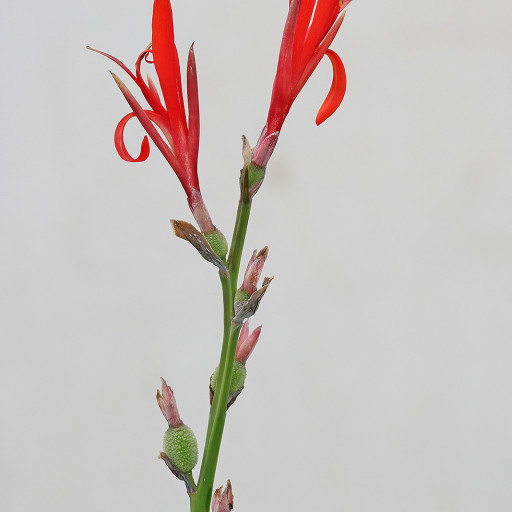
Plant Overview
Known as the "Indian Shot" or "Canna Lily," this tropical powerhouse isn't actually a true lily at all—it’s a close relative of ginger and bananas. With its flamboyant, orchid-like blooms and lush, architectural foliage, it brings an immediate "jungle vibe" to any landscape. Legend has it that its seeds are so incredibly hard they were once used as makeshift ammunition during the 19th century.
🔍 How to Identify
- 🍃 The Foliage: Large, broad, and paddle-shaped leaves that closely resemble those of a banana plant. They can be solid green, deep burgundy, or even strikingly variegated with stripes.
- 🌺 The Flowers: Showy, asymmetrical blooms that cluster at the top of thick stalks. They typically appear in fiery shades of red, orange, yellow, or bi-colors.
- ⚫ The Seeds: Distinctive, perfectly round, pea-sized black seeds that are remarkably heavy and hard—giving the plant its "Indian Shot" nickname.
🏡 In Your Garden
- 💧 Thirsty Giants: Cannas are one of the few garden plants that love "wet feet." They thrive near ponds or in boggy areas and are very difficult to overwater during the peak of summer heat.
- 🍽️ Heavy Feeders: Because they grow so rapidly (sometimes reaching 6 feet in a single season), they require rich soil and frequent fertilizing to keep their dramatic display going.
- ❄️ Winter Sensitivity: While they are tough in the heat, their fleshy rhizomes (underground stems) will rot if the ground freezes. In cooler climates, you’ll need to "lift" and store the bulbs indoors for the winter.
⚠️ Safety & Toxicity
- ✅ Safe Status: Canna indica is generally considered non-toxic to humans, dogs, and cats.
- 🥔 Edible Roots: In many parts of the world, the starchy rhizomes are actually processed into flour or eaten cooked, similar to a sweet potato, though most garden varieties are grown strictly for their beauty.
✨ Fun Fact
The seeds of the Canna Indica are so dense and perfectly round that they are often used as the "beating" heart of African percussion instruments, like the hosho shakers, providing a sharp, crisp rhythmic sound.

Detailed Care Instructions
| Color | Yelllow, Orange, Pink |
| Soil Ph | 6.5; But Tolerates A Wide Range |
| Humidity | Normal |
| Invasive | Weed |
| Lighting | Full Sun |
| Toxicity | Non-Toxic |
| Soil Type | Rich, Water-Retentive, And Well-Draining Soil |
| Bloom Time | Early Summer |
| Difficulty | Medium |
| Plant Type | Rhizomatous Perennial |
| Mature Size | 4 To 8 Feet Tall, Up To 5 Feet In Spread |
| Native Area | South America, Central America, West Indies, Mexico, And The Southeastern United States |
| Temperature | 18°C - 24°C |
| Sun Exposure | Full Sun |
| Hardiness Zones | 9-10 |
To grow Canna indica plants, you can follow these steps:
- Obtain seeds or bulbs: Purchase Canna indica seeds or bulbs from a reputable nursery or seed supplier. Make sure they are fresh and of good quality.
- Choose the right location: Canna indica plants thrive in full sunlight, so select a location in your garden or outdoor space that receives at least 6-8 hours of direct sunlight per day. Ensure the soil is well-draining and rich in organic matter.
- Planting: If using seeds, soak them in warm water for 24 hours before planting to help with germination. If using bulbs, plant them directly into the soil at a depth of around 4 inches, leaving the bud facing up.
- Watering: Keep the soil consistently moist but not waterlogged. Water the plants regularly, especially during dry spells. Mulching around the plants can help retain moisture.
- Fertilizing: Apply a balanced, slow-release fertilizer or a liquid fertilizer every 4-6 weeks during the growing season to promote healthy growth and flowering. Follow the manufacturer's instructions for proper application.
- Pruning: Remove dead or faded flowers to encourage the continuous blooming of new flowers. Additionally, remove any damaged or diseased foliage to maintain the overall health of the plant.
- Pests and diseases: Canna indica plants are generally resistant to most pests and diseases. However, it's important to regularly inspect the plants for common issues like aphids, spider mites, or fungal diseases. Treat any problems promptly with appropriate insecticides or fungicides.
- Winter care: Canna indica plants are sensitive to cold temperatures, so in regions with frost or freezing winters, it's best to dig up the bulbs and store them indoors in a cool, dark location until spring. In frost-free regions, winter care is not necessary, and the plants can remain in the ground year-round.
- Dividing: Over time, Canna indica plants can become crowded and benefit from being divided. Dig up the clumps of bulbs in early spring and separate them carefully, ensuring each division has a few healthy bulbs. Replant them in new locations or share them with fellow gardeners.
With proper care and attention, your Canna indica plant should flourish and provide beautiful blooms throughout the growing season.

Place in a bright room that is sun drenched almost all day. Or directly in a south-facing window.

The plant in question prefers moist, well-draining soil that is consistently watered. The frequency of watering will depend on the specific environmental conditions, such as the temperature and humidity. When watering, pour water slowly and thoroughly around the base of the plant, taking care not to get water on the leaves or flowers. It is important to monitor the soil moisture and adjust watering frequency and amount accordingly to prevent over or under watering. Additionally, it is beneficial to use a mulch layer around the base of the plant to help retain moisture and prevent the soil from drying out too quickly.
To fertilize this plant, use a balanced fertilizer with equal amounts of nitrogen, phosphorus, and potassium. Apply the fertilizer every two weeks during the plant's active growing period. Be careful not to over-fertilize, as this can cause damage to the plant. Water the plant well before and after fertilizing to ensure that the nutrients are fully absorbed. Additionally, consider using an organic fertilizer to improve soil health and encourage healthy growth.
For the Canna Indica plant, it is recommended to use a well-draining soil mix that has good moisture retention. The mix should comprise of organic materials such as compost, peat moss, and aged bark, along with sand or perlite to enhance the drainage. Additionally, it is important to maintain a slightly acidic soil pH level (around 6.0-6.5) to ensure optimal growth and nutrient uptake. Avoid using soils with high salt content and steer clear of heavy clay soils that tend to retain too much moisture. Overall, a high-quality potting mix that is rich in organic matter and allows for proper drainage is the best choice for growing Canna Indica plants.
To propagate this plant, take a rhizome section that has at least one bud and plant it in well-draining soil. Ensure that the bud faces up and is at a depth of around 3 inches. Keep the soil consistently moist but not waterlogged and place the pot in a warm, bright area. In a few weeks, new shoots will start to emerge from the buds and you can transplant the plant to a larger pot or outdoors once the roots have established. Alternatively, you can plant the rhizome directly outdoors in the spring after the last frost in a sunny spot with well-draining soil.








