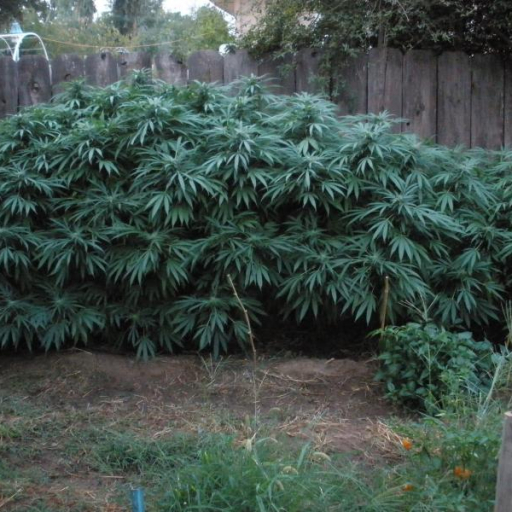
Plant Overview
Often called the "couch-lock" variety, Cannabis indica is a compact, sturdy species originally hailing from the harsh, rocky environments of the Hindu Kush mountains. Unlike its tall, lanky cousin sativa, this plant evolved to withstand wind and cold, making it naturally resilient and broad-shouldered. It carries a long history of use in ancient medicine and traditional ceremonies across Central and South Asia.
🔍 How to Identify
- 🍃 Broad Leaves: Features wide, overlapping leaflets that are significantly fatter and darker green than the slender "fingers" of other cannabis varieties.
- 🌳 Growth Habit: Grows short and bushy, typically reaching only 3 to 6 feet in height, resembling a dense shrub rather than a tall stalk.
- 🌲 Dense Buds: Produces thick, heavy flower clusters (colas) that are often coated in a sticky, frost-like layer of resinous trichomes.
🏡 In Your Garden
- 🏔️ Mountain Origins: Because it evolved in mountainous regions, it is naturally more resistant to nighttime temperature drops but can be prone to mold or "bud rot" if the air is too stagnant or humid.
- ⏱️ Fast Finisher: It has a notably short flowering cycle, rushing to produce seeds before the early mountain winters arrive, which makes it popular for shorter growing seasons.
- 🥣 Nutrient Needs: During its peak growth, it requires a rich nutrient profile and well-draining soil to support those heavy, resinous flower heads.
⚠️ Safety & Toxicity
- 🐕 Pet Warning: Highly toxic to dogs, cats, and horses. Ingestion can cause severe disorientation, vomiting, tremors, and in high doses, can be life-threatening.
- ⚖️ Legal Status: Cultivation and possession are strictly governed by local and federal laws. Always verify the legal status in your specific region before planting.
- 🧠 Psychoactive Properties: The plant contains high concentrations of THC; while handling the leaves is generally safe, the flowers produce significant neurological effects if consumed or inhaled.
✨ Fun Fact
- 🌬️ Nature's Sunscreen: The sticky resin that humans have used for millennia actually evolved as a biological "sunscreen" and pest repellent, protecting the plant's DNA from intense high-altitude UV radiation!

Detailed Care Instructions
| Humidity | High |
| Lighting | Full Sun |
| Difficulty | Easy |
| Temperature | 20°C - 30°C |
| Hardiness Zones | 8 - 11 |
Growing Cannabis indica plants can be a rewarding experience, but it is important to note that laws regarding the cultivation of cannabis vary by country and state. Before proceeding, make sure to research and comply with the legal requirements in your area. Here are general steps to grow Cannabis indica plants:
- Germination: Start by germinating the seeds. Place the seeds in a damp paper towel and keep it in a warm, dark place for a few days until they sprout.
- Seedling stage: Once the seeds have germinated, transfer them to small pots or seedling trays filled with a well-draining soil mix. Provide them with a warm and humid environment, preferably using a heated propagator or a humidity dome.
- Vegetative stage: After the seedlings have developed a few sets of true leaves, usually after 2-3 weeks, you can move them to larger containers or transplant them into your desired grow medium. Cannabis indica plants thrive in well-draining soil or hydroponic setups. Provide them with ample light, either from natural sunlight or grow lights, for at least 18 hours a day to encourage vegetative growth.
- Pruning and training: During the vegetative stage, consider pruning and training your plants to promote a bushier and more even canopy. Techniques like topping, low-stress training, and the ScrOG method can help optimize growth and maximize yields.
- Flowering stage: After several weeks of vegetative growth, switch the light cycle to 12 hours of light and 12 hours of uninterrupted darkness to trigger the flowering stage. During this period, the plants will develop buds. Provide them with the necessary nutrients, adjust the temperature and humidity levels, and maintain good airflow to prevent mold and pest issues.
- Harvesting: The flowering stage usually lasts 8-12 weeks, depending on the strain. Monitor the trichomes (tiny resin glands) on the buds using a magnifying tool to determine the ideal time for harvest. Harvest when the trichomes have turned milky or amber, signaling peak potency. Cut the plants down, hang them upside down in a well-ventilated and dark area to dry, and then cure the buds for a few weeks in glass jars to enhance their flavor and smoothness.
Remember that growing Cannabis indica plants requires attention to detail, proper lighting, temperature, humidity control, and nutrient management. Additionally, it's essential to regularly check and maintain a legal compliance with the laws and regulations in your area.

Place in a window with dappled sun or a spot in the middle of a room. Or directly in a window facing west or east.
To water Cannabis Indica plants, ensure that you are using water that is at room temperature. Check soil moisture levels before watering and only water when the top inch of soil is dry. Avoid overwatering as it can lead to root rot and other issues. Water the plants at the base, avoiding getting water on the leaves to prevent fungal growth. Consider using a drip irrigation system or watering can with a long spout to water plants slowly and evenly. Keep an eye on the plants and adjust watering frequency based on the plant's needs.
To fertilize this plant, you will want to use a balanced nutrient solution during the vegetative stage and a higher phosphorus and potassium solution during the flowering stage. Start with a low dosage and gradually increase as needed. pH levels should be between 6.0-7.0 for optimal absorption of nutrients. Be mindful not to over-fertilize as it can cause nutrient burn and damage the plant. Always follow the instructions on your fertilizer package and monitor your plant's growth and health to ensure proper fertilization.
When growing Cannabis Indica, it is important to use a soil that is rich in nutrients and well-draining. The soil should have a pH level in the range of 6.0 to 7.0, which is slightly acidic to neutral. It is recommended to use a soil that has a mixture of organic matter, such as peat moss or compost, and mineral components such as perlite or vermiculite to enhance drainage. Additionally, the soil should be free from any harmful chemicals or toxins that could negatively affect the plant's growth. To ensure the best results, it is also recommended to add a high-quality fertilizer or compost to the soil during the growing process.
To propagate this particular plant, you would first need to acquire a healthy and viable donor plant. This can be accomplished through either seeds or cuttings.
If propagating through seeds, it's important to ensure they are of good quality and sourced from a reputable supplier. The seeds should be germinated in a sterile medium, such as peat pellets, to avoid any potential contaminants. Once germinated, the seedlings can be transplanted into nutrient-rich soil and provided with proper light, temperature, and humidity levels.
On the other hand, if propagating through cuttings, you would need to take a stem cutting from the donor plant. The cutting should be taken from a healthy, vigorous branch and should ideally contain at least two nodes. The cutting should then be placed into a rooting hormone to encourage root growth before it's planted in well-draining soil. The soil should be kept moist and the cutting should be placed in a location with adequate light and humidity.
In both cases, it's important to monitor the plant closely and make any necessary adjustments to ensure it's growing properly. Once the new plant has established roots and is ready for transplantation, it can be moved into larger pots or even into an outdoor garden if the climate permits.








