Plant Overview
Often called the "Harrier’s Claw" due to its sharp, curved spines, Canthium horridum is a rugged evergreen shrub native to the tropical forests of Southeast Asia. While its name sounds intimidating, this plant is a master of defense and a sanctuary for local wildlife. In its native habitat, it forms dense, impenetrable thickets that provide the ultimate "security system" for nesting birds.
🔍 How to Identify
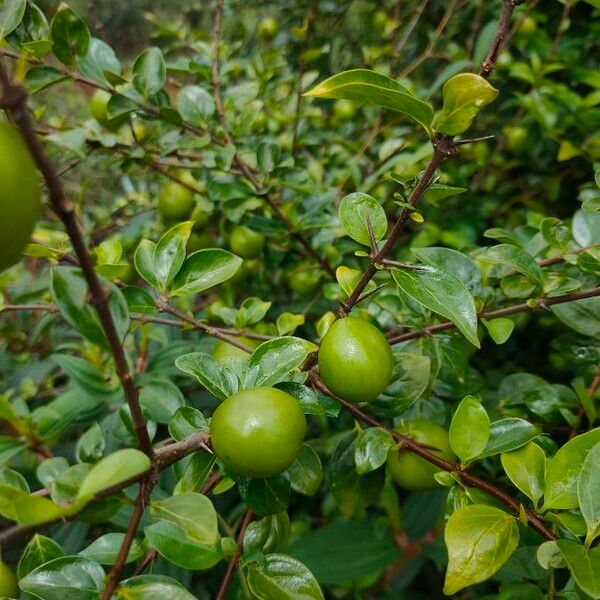
- ⚔️ The Spines: The most striking feature is its pair of sharp, woody thorns that grow at the base of the leaves, often curving slightly like a bird's talon.
- 🍃 The Foliage: It features small, teardrop-shaped green leaves with a smooth, waxy texture that grow in opposite pairs along the branches.
- 🍒 The Berries: After flowering, the plant produces small, round fruits that turn from a pale green to a warm orange or reddish-brown as they ripen.
🏡 In Your Garden
- 🛡️ Living Fences: Due to its "horrid" thorns, this species is frequently used as a boundary plant. It creates a natural, evergreen barrier that is much more beautiful (and effective) than a chain-link fence.
- 🐦 Wildlife Magnet: If you enjoy birdwatching, this is a top-tier choice. Birds are attracted to the berries, and the thorny branches provide a "predator-proof" zone for them to build nests and hide.
- ☀️ Sun & Soil: It is a tough survivor that prefers well-draining soil. While it loves the tropical sun, it is surprisingly adaptable to partial shade, making it useful for filling tricky corners of a landscape.
⚠️ Safety & Toxicity
- 🩹 Physical Hazard: Use extreme caution! The thorns are very sharp and can cause painful punctures. It is not recommended for areas where children play or near narrow walkways.
- 🐾 Pet Safety: While the plant is not known for high chemical toxicity, the thorns pose a serious risk for eye and paw injuries to curious dogs or cats. The berries should be considered "for the birds" only and kept away from humans and pets.
✨ Fun Fact
- 📜 Naming Rights: The species name horridum is Latin for "bristly" or "rough." It wasn't named because the plant is "horrible" to look at, but rather because of the "horrid" task of trying to walk through a thicket of its sharp spines!

Detailed Care Instructions

Place in a bright room that is sun drenched almost all day. Or directly in a south-facing window.

Canthium Horridum is a shrub that needs regular watering to thrive. When watering, it is important to avoid getting the leaves wet and to water only the root zone. This plant prefers moist, well-drained soil, and should not be allowed to dry out completely. Watering frequency will depend on the plant's location, soil type, and temperature. It is best to check the soil moisture level regularly and water when the top inch of soil feels dry to the touch. Overwatering can also harm the plant, so it is important not to let the soil become waterlogged. Using a drip irrigation system or watering can with a spout will help control the amount of water delivered to the plant. Always avoid splashing water on the leaves, as this can lead to the development of fungal diseases.
Canthium Horridum plant belongs to the Rubiaceae family and is a tropical flowering shrub. It requires well-draining soil with a pH range of 5.5 to 7.0. The soil should be rich in organic matter and have good moisture retention capacity. A mixture of peat moss, sand, and loam soil or a commercial potting mix that is formulated for acid-loving plants is ideal for this species. It is also essential to ensure that the soil is not too compacted as it can affect root development and overall growth of the plant. Adding perlite or vermiculite to the soil mix can help improve drainage and enhance aeration, providing the appropriate growing conditions for Canthium Horridum.








