Plant Overview
Known as the "Wild Orange" or "Bumble," Capparis mitchellii is a rugged survivor of the Australian outback. Despite its common name, it isn't a citrus at all but a member of the caper family. This slow-growing tree is a cultural icon in arid regions, long prized by Indigenous Australians for its sweet, nutritious fruit and its ability to provide deep shade in the scorching desert heat.
🔍 How to Identify
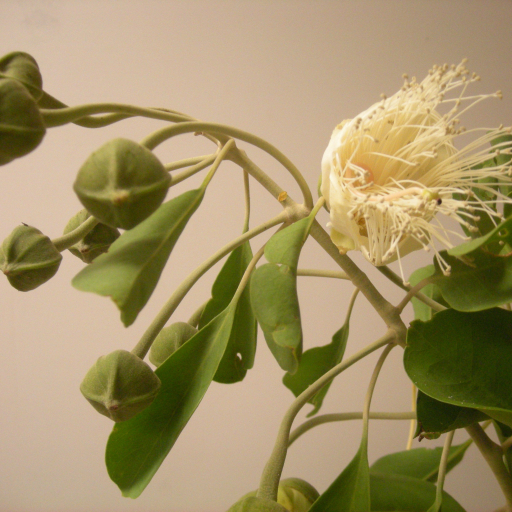
- 🌼 The "Powder Puff" Flowers: Large, striking blossoms that are creamy-white to pale yellow, featuring a dramatic spray of long, delicate stamens that look like a burst of silk.
- 🍃 Leathery Foliage: Thick, dull-green leaves that are oval or heart-shaped, designed to conserve moisture in harsh, dry winds.
- 🍈 The Fruit: Round, golf-ball-sized fruits with a rough, woody skin that turns from green to a yellowish-bronze or purple hue when ripe.
- 🌵 Juvenile Spines: Young branches are often "zigzagged" and heavily protected by pairs of sharp, recurved thorns, though these often disappear as the tree matures and grows out of reach of grazers.
🏡 In Your Garden
- 🌱 The Deep Taproot: This plant is notoriously difficult to transplant once established. It sends down a massive taproot very early in life to find deep water, so choose its permanent "forever home" in your garden while it is still a small seedling.
- 🦋 Butterfly Magnet: It is the primary host plant for the Caper White butterfly. While the caterpillars may munch on the leaves, the sight of hundreds of white butterflies hovering around the tree in spring is a spectacular reward for any nature lover.
- ☀️ Arid Specialist: It thrives in heavy clay or sandy soils and requires very little supplemental water once established. It is the definition of "set and forget," provided it has plenty of scorching sunlight.
⚠️ Safety & Toxicity
- ✅ Edible Fruit: The yellow, seedy pulp inside the ripe fruit is edible and often described as tasting like a mix of orange and custard. However, the skin and the seeds themselves are quite bitter and are usually discarded.
- ⚔️ Physical Hazard: The "hidden" thorns on juvenile branches can be very sharp. Wear thick gloves when pruning or training young plants to avoid painful scratches.
- 🐾 Pet Safety: While the fruit pulp is generally considered safe, the high tannin content in the bark and leaves means it isn't a recommended snack for curious pets.
✨ Fun Fact
The Wild Orange has an incredible internal clock. Its flowers typically open at night or very early in the morning and often wither by the heat of the afternoon, relying on dusk-active insects for pollination.

Detailed Care Instructions
To grow a Capparis mitchellii plant, also known as the big root caper, you can follow these steps:
- Obtain seeds or cuttings: You can either collect seeds from existing plants or purchase them from a reputable source. Alternatively, you can also obtain cuttings from a mature plant.
- Prepare the soil: Capparis mitchellii prefers well-drained soil with a pH between 6.5 and 8.5. Mix organic matter, such as compost, into the soil to improve its fertility and drainage.
- Sow seeds or plant cuttings: If using seeds, sow them in a seed tray or small pots filled with moist soil. Place the seeds about 0.5 inches deep and cover them lightly with soil. If using cuttings, plant them directly into the prepared soil, ensuring that there are at least two leaf nodes buried in the soil.
- Provide appropriate conditions: Capparis mitchellii plants thrive in full sun in warm climates. Ensure they receive at least six hours of direct sunlight per day. If growing indoors, place them near a sunny window or under grow lights.
- Water correctly: Water the plants regularly but avoid overwatering or letting the soil become waterlogged. Allow the top layer of soil to dry between waterings.
- Prune the plants: Pruning can help encourage bushier growth and maintain a desired shape. Prune back any dead or diseased branches as needed.
- Fertilize sparingly: Capparis mitchellii plants do not require heavy fertilization. Use a balanced fertilizer once or twice during the growing season, following the package instructions. Avoid over-fertilization as it can lead to excessive vegetative growth at the expense of flowers.
- Watch for pests and diseases: Keep an eye out for common pests such as aphids, mealybugs, or whiteflies. Treat infestations promptly using organic insecticides or by manually removing them. Watch for signs of diseases such as powdery mildew or root rot and take appropriate measures to control them.
- Harvesting: Capparis mitchellii produces edible flower buds and fruits. Harvest the flower buds when they are still closed and apply a preserving technique like pickling or drying for consumption. Harvest the fruits when they turn yellow and become plump.
By following these steps, you can successfully grow your own Capparis mitchellii plant.
To water this particular plant, it is important to consider its natural habitat and watering needs. Capparis Mitchellii prefers well-draining soil and needs to be watered deeply but infrequently. It is important to allow the soil to dry out slightly before watering again. Therefore, it is best to water this plant when the top inch of soil is dry to the touch. When watering, make sure to saturate the soil thoroughly, allowing the water to soak deep into the roots. Be careful not to overwater as this can lead to root rot. Additionally, this plant should be watered in the morning or early afternoon to allow the plant enough time to dry before nightfall, which can prevent fungal growth.
To fertilize this plant, use a slow-release fertilizer with a balanced NPK ratio, such as a 10-10-10 or a 14-14-14. Apply the fertilizer according to the manufacturer's instructions, being careful not to over-fertilize as this can damage the plant. Apply fertilizer during the growing season, which is typically in the spring and summer months. Avoid fertilizing during the dormant season in the fall and winter. Water the plant thoroughly after fertilizing to help distribute the nutrients evenly throughout the soil.
The ideal soil for the plant in question should be well-draining and loamy, with a slightly acidic pH between 5.5 and 6.5. It should also be rich in organic matter, such as compost or leaf mold, to provide nutrients for healthy growth. Additionally, the soil should be kept consistently moist but not waterlogged, as the plant does not tolerate drought or standing water.
To propagate this plant, you can take semi-hardwood stem cuttings from a healthy mother plant. Cut the stems into 6-8 inch lengths, making sure to use clean and sharp pruning shears. Remove the bottom leaves from the stem and apply rooting hormone to the cut end. Plant the cutting in a well-draining potting mix and keep it moist but not waterlogged. Place the pot in a warm, bright location, but avoid direct sun exposure. Mist the cutting regularly to keep it hydrated. After a few weeks, new growth should appear, indicating successful rooting. Gradually acclimate the plant to normal growing conditions and eventually move it outdoors if desired.








