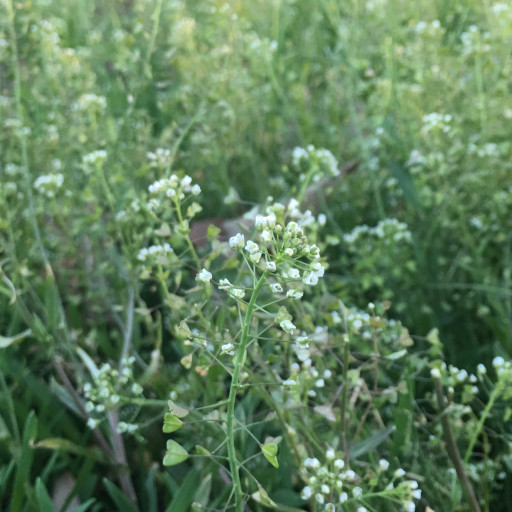
Plant Overview
Often called "Mother's Heart" or "Shovelweed," the Shepherd's Purse is a globetrotting member of the mustard family that has followed human civilization for centuries. Its most charming feature is the tiny, heart-shaped seed pods that resemble the leather pouches carried by shepherds in the Middle Ages. While many gardeners dismiss it as a mere weed, it has a long history as a nutrient-dense forage green and a staple in traditional herbalism.
🔍 How to Identify
- 💚 Seed Pods: The most iconic feature—flat, triangular, heart-shaped pods that grow along the length of the upper stem.
- ☁️ Flowers: Tiny, four-petaled white flowers that bloom in clusters at the very tip of the plant, often appearing while the pods below are already ripening.
- 🌿 Foliage: It features a "basal rosette" at the ground level with deeply lobed leaves (similar to a dandelion), while the leaves on the upright stem are smaller, narrow, and clasp the stalk.
🏡 In Your Garden
- 🌱 Soil Pioneer: This plant is an "opportunist" that loves disturbed soil. If you see it popping up, it’s often a sign that the earth has been recently turned or is slightly compacted, as its taproot helps break up the ground.
- 🦋 Pollinator Support: Because it can bloom almost year-round in mild climates, it provides a vital early-season nectar source for tiny hoverflies and small native bees when few other plants are active.
⚠️ Safety & Toxicity
- 🥗 Edibility: Generally safe and widely foraged. The young basal leaves can be used in salads for a peppery, mustard-like kick, and the seed pods can be used like cracked pepper.
- 🚫 Nitrate Warning: This plant is known to accumulate nitrates from the soil. Avoid harvesting or eating plants growing in areas heavily treated with chemical fertilizers or near industrial runoff.
- 🐾 Pets: It is considered non-toxic to cats and dogs, though most animals find the mustardy oils unappealing and will leave it alone.
✨ Fun Fact
The seeds of the Shepherd's Purse are "protocarnivorous." When they get wet, they secrete a sticky substance that attracts and traps tiny soil microbes like nematodes. As these microbes die and decompose, they provide a boost of nitrogen directly to the germinating seed!

Detailed Care Instructions
| Lighting | Full Sun |
Growing Capsella bursa-pastoris, commonly known as shepherd's purse, is relatively simple. Here are the steps you can follow to grow this plant:
- Obtaining seeds: Purchase Capsella bursa-pastoris seeds from a reputable seed supplier or collect them from mature plants. The plant is a common weed in many parts of the world, so you may even find its seeds freely available in your local area.
- Preparing the planting location: Choose an area with well-draining soil and full to partial sunlight. Capsella bursa-pastoris can tolerate a wide range of soil types but prefers slightly alkaline to neutral soil pH.
- Sowing the seeds: Shepherd's purse can be sown directly into the ground during the spring or fall. Loosen the soil and sprinkle the seeds on the surface, gently pressing them into the soil. Lightly water the area after sowing.
- Watering: Keep the soil consistently moist but not waterlogged. Water the plant regularly, especially during dry spells or in hot weather. Avoid overwatering, as this can lead to root rot.
- Thinning and spacing: Once the seedlings have emerged, thin them out to provide sufficient space for each plant to grow. Space them about 6-12 inches apart to allow for proper air circulation.
- Fertilizing: Shepherd's purse can grow well without regular fertilization. However, if your soil is lacking in nutrients, you can apply a balanced fertilizer once or twice during the growing season.
- Managing weeds: Keep the area around the plant free from weeds, as Capsella bursa-pastoris is a competitive plant and can tolerate some weed pressure. Regularly remove any weeds that may compete for nutrients and sunlight.
- Harvesting seeds or leaves: If you want to collect seeds, allow the plants to mature and dry on the stalk. When the seed pods turn brown, harvest them and store in a cool, dry place. If you wish to harvest leaves, they can be collected anytime before flowering.
Note: Shepherd's purse is known for its invasive nature in some areas. If you live in a region where it is considered invasive, be cautious, as it can spread quickly and harm native plant populations.

Place in a bright room that is sun drenched almost all day. Or directly in a south-facing window.

One way to water this plant is to use a watering can or hose with a gentle stream of water to avoid damaging the delicate leaves and stems. Ensure that the soil around the plant is moist but not waterlogged. A good time to water the plant is early in the morning when the temperature is cooler and the soil can absorb the water before it evaporates due to the heat of the day. It is important not to let the soil completely dry out, as this can lead to wilting and damage to the roots. Observing the plant closely can give an indication of whether it needs watering - for example, if the leaves are drooping or if the soil appears very dry.
For best results, apply a balanced fertilizer with equal parts nitrogen, phosphorus, and potassium every two weeks throughout the growing season. Be sure to follow the instructions on the fertilizer packaging for proper application rates. Additionally, supplement the soil with organic matter such as compost to promote healthy growth and increase water retention.
Capsella Bursa-pastoris plant prefers a well-draining and fertile soil that is rich in nutrients. The ideal soil for this plant should have a pH range of 6.0 to 7.5 and be moderately moist. It is best to use a mix of garden soil and compost or organic matter when planting this species. It is also important to avoid using soils that are too compact or create stagnant water, as this can lead to disease and root rot. Regular watering and fertilization can help to maintain the health and vigor of this plant, ensuring optimal growth and flowering over time.
Capsella Bursa-pastoris plant can be propagated through various methods such as stem cuttings, division, and seed propagation.
To propagate through stem cuttings, select healthy stems from the parent plant and cut them at a 45-degree angle. Remove the lower leaves and dip the cut end into rooting hormone powder. Plant the cutting in a pot with a well-draining potting mix and keep it in a warm, bright spot with consistent moisture.
To propagate through division, carefully dig up the parent plant and gently tease apart the roots into smaller clumps. Replant these clumps into individual pots or directly into the soil in the desired location.
To propagate through seed propagation, collect seeds from the parent plant when they are mature and dry. Sow the seeds directly into the soil in the desired location, or start the seeds indoors in trays filled with a well-draining potting mix. Keep the soil consistently moist and provide bright light until the seeds germinate and the seedlings are ready to be transplanted.








