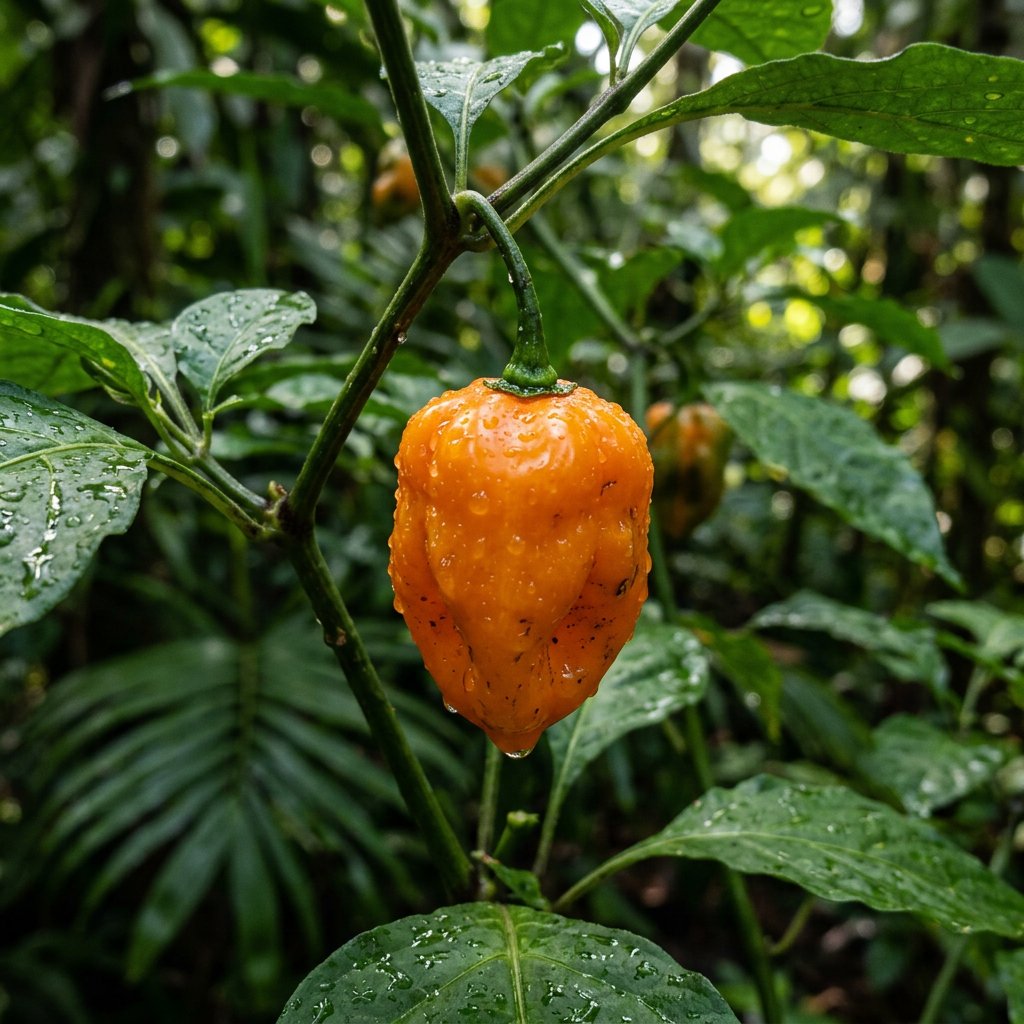
Plant Overview
Known as the family that holds the world’s most explosive heat records, Capsicum chinense includes legendary varieties like the Habanero, the Scotch Bonnet, and the infamous Carolina Reaper. Despite its botanical name suggesting a Chinese origin, these fiery beauties are actually natives of the Caribbean and Central America. They are prized by gardeners not just for their intense capsaicin levels, but for their surprisingly fruity, tropical aromas that hide beneath the sting.
🔍 How to Identify
- 🌿 The Foliage: Unlike the common bell pepper, these plants typically have broader, more ovate leaves that may appear slightly wrinkled or "quilted" rather than perfectly smooth.
- 🌸 The Flowers: Look for small, greenish-white flowers that often grow in clusters of two or more at each leaf node, a key trait that distinguishes them from other pepper species.
- 🌶️ The Fruit: The peppers vary wildly in shape—from the classic lantern-like Habanero to the tail-tipped Reaper—but they almost always have a waxy, thin skin and a characteristic fruity scent when sliced.
🏡 In Your Garden
- ☀️ Tropical Requirements: These are the "sun-worshippers" of the vegetable patch. They require significantly more heat and a much longer growing season than standard peppers to develop their full flavor and heat profile.
- 💧 Stress Management: If your plant drops its blossoms before they fruit, it’s often a sign of "temperature shock." They are finicky about nighttime temperatures; if it stays above 90°F (32°C) or drops below 60°F (15°C), the plant may temporarily stop producing to protect itself.
- 🌱 Drainage is Key: They despise "wet feet." Using a well-draining potting mix with perlite is essential, as their fine root systems are highly susceptible to rot in heavy, compacted soil.
⚠️ Safety & Toxicity
- 🔥 Extreme Irritant: The capsaicin in these peppers is concentrated in the internal membranes. Handling sliced fruit can cause "Habanero hand"—a painful burning sensation on the skin that can last for hours.
- 🐾 Pet & Child Safety: These plants are toxic to dogs, cats, and horses if ingested. More importantly, the fruit can cause severe respiratory and gastric distress in children or pets. Always wear gloves when harvesting and keep the plants out of reach of curious paws.
✨ Fun Fact
The species name Chinense (meaning "from China") was actually a 18th-century mistake! Dutch botanist Nikolaus von Jacquin named the plant after seeing it frequently in Chinese markets, incorrectly assuming it was a native species of the East rather than a New World import.

Detailed Care Instructions
| Color | Green With Bright Red Fruits And White Flowers |
| Soil Ph | 5.8–6.5 |
| Humidity | High |
| Lighting | Part Sun |
| Toxicity | Toxic |
| Soil Type | Rich, Moist, Well-Draining |
| Bloom Time | Summer |
| Difficulty | Hard |
| Plant Type | Perennial, Grown As An Annual |
| Hibernation | Cold Period |
| Mature Size | Up To 5 Feet Tall |
| Native Area | Usa |
| Temperature | 18°C - 24°C |
| Sun Exposure | Full Sun |
| Hardiness Zones | 8-11 (Suitable For Container Growth In Zones 4-7) |
To grow a Capsicum Chinense plant, also known as the habanero pepper, follow these steps:
- Obtain habanero pepper seeds or seedlings from a reputable source. You can often find them at garden centers or order them online.
- Choose the right location: Habanero peppers require a warm and sunny location. Select an area with at least 6-8 hours of direct sunlight per day.
- Prepare the soil: Habanero peppers prefer well-draining and fertile soil. Ensure the soil is loose and rich in organic matter. You can amend the soil with compost or well-rotted manure before planting.
- Planting: If using seeds, start them indoors 8-10 weeks before the last frost date. Plant the seeds in seedling trays or small pots filled with seed-starting mix. Keep the soil moist and maintain a warm temperature around 70-80°F (21-27°C). Transplant the seedlings outdoors once all frost danger has passed.
If using seedlings, plant them directly in the garden after the last frost date.
- Spacing: Leave about 18-24 inches of space between each plant to allow for proper air circulation and growth.
- Watering: Habanero peppers require regular watering to keep the soil moist but not waterlogged. Water deeply when the top inch of soil feels dry. Avoid overwatering, as it may lead to root rot.
- Fertilizing: Apply a balanced fertilizer, such as a 10-10-10 or 14-14-14 formulation, every 4-6 weeks during the growing season. Follow the package instructions for proper application rates.
- Mulching: Apply a layer of organic mulch, such as straw or wood chips, around the base of the plants to conserve moisture, suppress weeds, and regulate soil temperature.
- Support: If the plants grow tall and produce heavy fruits, consider staking or providing a support structure to prevent them from bending or breaking.
- Pest and Disease Control: Monitor the plants regularly for pests, such as aphids or caterpillars, and apply appropriate organic or chemical controls if necessary. Also, be vigilant for diseases like powdery mildew and treat them promptly if detected.
- Harvest: Habanero peppers usually mature within 80-100 days from transplanting. Harvest the fruits when they have fully ripened to their vibrant colors and have reached their desired level of spiciness. Use pruners or scissors to cut the fruit off the plant, leaving a small stem attached.
Remember to handle habanero peppers with care as they are extremely spicy and can cause skin and eye irritation.

Place in a window with dappled sun or a spot in the middle of a room. Or directly in a window facing west or east.

The best approach to watering the Capsicum Chinense plant is to ensure that it receives consistent moisture in its growing medium. This means that you should water the plant regularly, but be sure not to overwater it as this might lead to root rot and other issues.
To water the plant, use a watering can or hose with a gentle spray or misting nozzle that will avoid damaging the plant. Water the soil evenly around the base of the plant, ensuring that the water penetrates deeply into the soil. Avoid splashing water on the leaves as this may lead to fungal growth and other plant issues.
Moreover, it is important to note the plant's growing conditions, such as whether it is growing in a pot or in the ground, as this will affect its watering needs. In general, potted plants need more frequent watering than plants in the ground, as the soil in pots can dry out more quickly.
In addition, it is important to monitor the plant's moisture levels regularly and adjust your watering schedule as needed. You may also want to consider using a moisture meter to help you measure the soil's moisture levels and avoid over- or under-watering.
Lastly, be cautious of the water quality you're using for your Capsicum Chinense plant. Using hard water or heavily chlorinated water can lead to mineral buildup in the soil and can potentially harm the plant. It is best to use filtered or distilled water when possible.
To fertilize this plant, you will need to use a balanced fertilizer with equal amounts of nitrogen, phosphorus, and potassium. Apply the fertilizer once a month during the growing season, starting in early spring. The amount of fertilizer to use will depend on the size of the plant, but follow the package instructions for guidance. Additionally, you may want to add organic matter, such as compost or aged manure, to the soil before planting to provide additional nutrients and improve soil structure. Finally, be sure to water the plant regularly to ensure proper nutrient uptake.
Capsicum Chinense plants require a well-draining soil that is rich in organic matter. The soil should be slightly acidic with a pH range of 6.0-6.8. A mixture of peat moss, perlite, and vermiculite is an ideal soil mix. It is important to avoid using heavy, compacted, or clay soils, as they tend to retain too much water and can lead to root rot. Additionally, the soil should be fertilized regularly with a balanced fertilizer to encourage healthy growth and fruit production. Overall, the key to a successful Capsicum Chinense plant is to provide it with a nutrient-rich and well-draining soil that is kept moist but not waterlogged.
One method to propagate this particular plant is by taking stem cuttings. Start by selecting a healthy, mature stem from the parent plant. Using clean pruning shears, make a clean cut just below a node (the spot on the stem where leaves attach). Remove any leaves from the lower portion of the cutting, leaving only a few on the top. Dip the cut end into rooting hormone powder, which will help stimulate root growth. Plant the cutting into a well-draining soil mixture, covering the cut end by about an inch. Water thoroughly, and place in a warm, bright spot, but out of direct sunlight. Keep soil moist but not too wet. Roots should start forming within a few weeks, and once the plant has established roots, it can be transferred to a larger pot or planted into a garden bed.
Common pests of the habanero include Spider mites, fungus gnats, aphids, thrips, whiteflies. Make a habit of checking your habanero frequently for pests so that any infestations can be caught and managed early.








