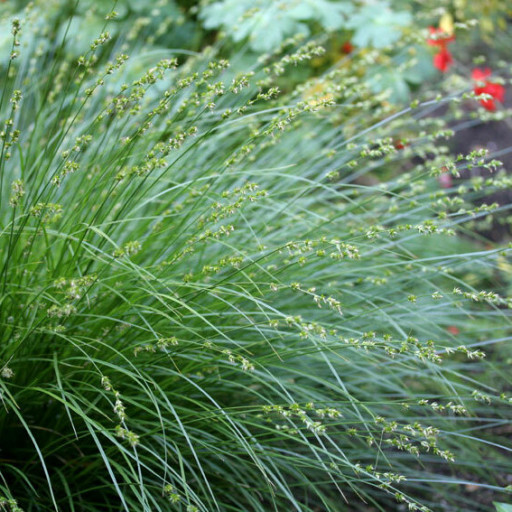
Plant Overview
Often called the Grey Sedge or frequently confused with its cousin, the Berkeley Sedge, Carex divulsa is the unsung hero of the meadow-style garden. Originally hailing from Europe and North Africa, this hardy perennial has become a favorite for those looking to ditch the high-maintenance lawn in favor of a "no-mow" look. It creates a lush, fountain-like effect that sways beautifully in the breeze.
🔍 How to Identify
- 🌿 The Foliage: Look for narrow, arching, deep-green leaves that grow in dense, fountain-like clumps. Unlike many grasses, the leaves have a subtle triangular cross-section if you roll them between your fingers.
- 🌾 The Flowers: In late spring, look for small, inconspicuous brownish-green flower spikes that sit atop slender stems. They aren't "showy" like garden flowers, but they add a delicate, textured look to the plant.
- 🌱 Growth Habit: It is a "clumping" sedge, meaning it stays in a neat mound rather than spreading aggressively via underground runners like some invasive grasses.
🏡 In Your Garden
- 🌦️ The Resilience Factor: This is a "problem-solver" plant. It is exceptionally tough and can thrive in dry shade—a spot where most traditional lawn grasses would struggle and die. It’s perfect for planting under large trees.
- ✂️ Low-Maintenance Love: While it doesn't require regular mowing, a quick "haircut" once a year in late winter or early spring helps clear out old, browned blades and encourages fresh, vibrant green growth for the new season.
⚠️ Safety & Toxicity
- ✅ Pet & Human Safe: Carex divulsa is generally considered non-toxic to dogs, cats, and humans. It is a safe choice for families and pet owners.
- 🧤 Skin Sensitivity: While not poisonous, the edges of the leaves can be slightly sharp or "toothed." If you are doing extensive pruning or handling, wearing gloves can prevent minor "grass cuts" or skin irritation.
✨ Fun Fact
In the world of professional landscaping, Carex divulsa is often called a "Matrix Plant." This means it is used to form a living mulch or "green carpet" that fills the gaps between larger flowers, naturally suppressing weeds without the need for wood chips or chemicals!

Detailed Care Instructions
To grow Carex divulsa (glaucous sedge), follow these steps:
- Location: Choose a suitable location for planting. Carex divulsa prefers partial shade to full shade, ideally under trees or in areas where direct sunlight is limited.
- Soil: The plant prefers moist, well-draining soil. Amend the soil with organic matter, such as compost, to improve its texture and fertility.
- Watering: Keep the soil consistently moist. Regularly water the plant, particularly during dry periods. Avoid overwatering, as it can lead to root rot.
- Mulching: Apply a layer of mulch around the plant to help retain moisture and suppress weed growth. Leaf mulch or wood chips are suitable options.
- Fertilization: Carex divulsa generally doesn't require much fertilization. If desired, you can use a slow-release organic fertilizer in early spring.
- Maintenance: Regularly remove any weeds or competing plants around the Carex divulsa to prevent them from overshadowing or obstructing its growth. Also, periodically divide the clumps of the plant to maintain its vigor and prevent overcrowding.
- Pest and disease control: Carex divulsa is generally resistant to most pests and diseases. However, occasionally, aphids or slugs may be an issue. Monitor the plant and address any pest or disease issues promptly using appropriate methods – organic or chemical – if necessary.
Remember to check the specific growing conditions recommended for your region and climate, as they can affect the success of growing Carex divulsa.

Place in a bright room that is sun drenched almost all day. Or directly in a south-facing window.

The watering requirements for this plant should be moderate, ensuring that the soil is always slightly moist but not waterlogged. It is important to water directly to the soil and avoid getting water on the leaves as it can lead to fungal diseases. To maintain proper moisture levels, it is best to water deeply once a week during the growing season and reduce the frequency during dormant periods. Check the moisture levels regularly by sticking a finger into the soil up to the first knuckle to ensure it is neither too dry nor too wet. Adjust watering accordingly based on local weather conditions.
To fertilize this type of plant, apply a slow-release, balanced fertilizer in the early spring and again in mid-summer. Use a fertilizer with a higher nitrogen content to encourage healthy growth. Follow the package instructions for the correct amount of fertilizer to apply. Spread the fertilizer evenly around the base of the plant, being careful not to place it directly on the foliage or roots. Water the plant well after fertilizing.
Carex Divulsa prefers a well-draining soil mixture that is loamy in texture. A soil that is rich in organic matter, such as compost, is beneficial for the plant's growth. It is recommended to use a soil mixture that has a pH level between 5.5 and 7.5. The soil should not be too dry or too wet as this can affect the plant's growth. Adding perlite or sand to the soil mixture can improve its drainage properties. It is important to avoid using heavy clay soils as they can retain too much moisture and cause root rot. Potting soil can be used for container-grown plants, ensuring it does not contain any added fertilizers or moisture-holding products.
To propagate this plant, you can start by collecting mature seeds from the mother plant after it has completed its flowering cycle. Another method is to divide the plant during its dormant period in the fall or early spring. To do this, gently dig up the clump and separate the individual plants, making sure each section has some roots and foliage. Replant each division in a well-draining soil mixture and water thoroughly to encourage new root growth. You can also propagate this plant using stem cuttings, taking a 3-4 inch long section from healthy growth and rooting it in a moist growing medium.








