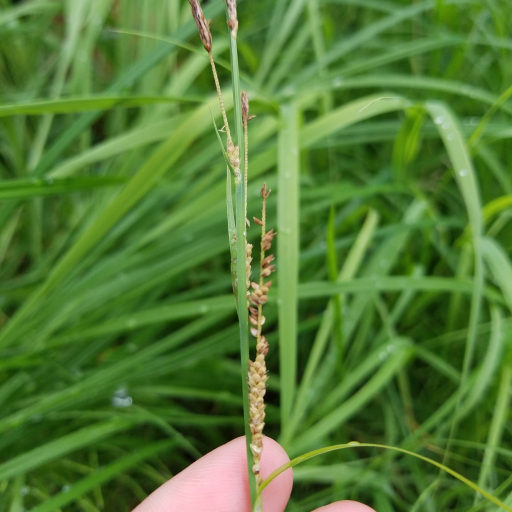
Plant Overview
Known as Emory's Sedge or the River Sedge, this plant is the unsung hero of North American wetlands and riverbanks. While it may look like a common grass at first glance, it is actually a rugged, perennial sedge built to withstand rushing floodwaters and shifting mud. It is a favorite among environmentalists for its incredible ability to "knit" the earth together, creating lush, flowing green carpets where other plants would simply wash away.
🔍 How to Identify
- 📐 Triangular Stems: True to the old botanist's rhyme—"Sedges have edges"—the stems of Emory’s Sedge are distinctly three-sided and triangular if you roll them between your fingers.
- 🌾 Waxy Foliage: The leaves are long, narrow, and often display a beautiful glaucous (waxy) blue-green hue, arching gracefully as they grow.
- 🌱 Creeping Roots: Unlike clumping grasses, this sedge spreads via vigorous underground runners called rhizomes, eventually forming a thick, sod-like mat that covers the ground.
🏡 In Your Garden
- 💧 Wetland Warrior: This plant absolutely loves "wet feet." It is the perfect solution for rain gardens, pond edges, or those troublesome low spots in your yard where water tends to pool after a storm.
- 🚜 Erosion Control: If you have a sloping backyard or a creek bed that is washing away, Emory's Sedge acts like a natural rebar. Its dense root system stabilizes the soil, though you should give it plenty of room—it is a fast spreader and can easily overtake smaller, delicate garden flowers.
⚠️ Safety & Toxicity
- ✅ Non-Toxic: Emory's Sedge is generally considered safe and non-toxic for humans, dogs, cats, and livestock.
- ✂️ Leaf Scratches: While it isn't poisonous, the edges of the leaves can be quite sharp and "toothed." It is wise to wear gardening gloves when handling or thinning out large patches to avoid minor skin irritation or "grass cuts."
✨ Fun Fact
Emory’s Sedge is a vital "nursery" plant in the wild; it serves as a primary host for the caterpillars of several rare skipper butterflies, providing them with both food and a safe place to hide from predators!

Detailed Care Instructions
To successfully grow Carex emoryi (Emory's sedge), follow these steps:
- Choose a suitable location: Carex emoryi performs best in partial shade to full sun. It can tolerate a wide range of soil types but prefers well-draining soil.
- Prepare the soil: Before planting, loosen the soil and remove any weeds or debris. Amend the soil with organic matter, such as compost, to improve fertility and moisture retention.
- Planting the seeds: You can sow Carex emoryi seeds directly into the prepared soil in early spring or fall. Scatter the seeds evenly and gently press them into the soil without covering them. Keep the soil consistently moist until germination, which can take several weeks.
- Watering: While establishing, Carex emoryi requires consistent moisture. Water the area regularly, aiming for evenly moist soil, but avoid overwatering. Once established, it becomes more drought-tolerant.
- Mulching: Applying a layer of mulch around the plants can help retain moisture, suppress weeds, and regulate soil temperature. Use a natural mulch like wood chips, straw, or compost.
- Fertilization: Carex emoryi generally does not require heavy fertilization. However, you can apply a slow-release organic fertilizer in early spring to promote healthy growth.
- Pruning and maintenance: Carex emoryi does not require regular pruning but may benefit from occasional cleaning. Remove any dead or damaged foliage to maintain a neat appearance.
- Division: If the clump becomes overcrowded or you want to propagate more plants, you can divide Carex emoryi in early spring. Dig up the clump, separate the sections, and replant them in suitable locations.
- Pest and disease control: Carex emoryi is generally pest and disease resistant. However, regular inspection can help catch any issues early. If necessary, treat problems with appropriate organic pest control methods.
Remember that Carex emoryi is a native plant, so it is adapted to your local climate and conditions. By providing the right growing conditions and care, you can enjoy a healthy and thriving Carex emoryi plant.

Place in a window with dappled sun or a spot in the middle of a room. Or directly in a window facing west or east.

1. First, identify the plant you want to water by its unique physical characteristics such as its long, slender green leaves and the distinctive flower spikes that emerge from the center of the plant.
2. Choose a location for the plant that receives partial to full shade and has well-draining soil. Carex Emoryi does not tolerate standing water, so make sure the area you plant it in does not retain excess moisture.
3. Water the plant in the early morning or late evening when the temperature is cooler. This will help to reduce water evaporation and allow better absorption by the plant’s roots.
4. Water the plant deeply, saturating the soil around the roots. Use a watering can or hose and direct the water to the base of the plant and avoid getting the leaves wet.
5. Allow the soil to dry out between watering. Carex Emoryi prefers moderately moist soil, but it should not be waterlogged. Use a moisture meter or stick your finger in the soil to determine when it’s time to water again.
6. During hot, dry weather, you may need to water the plant more frequently to prevent it from drying out. However, be careful not to overwater as this may cause damage to the roots.
7. Regularly check the plant for signs of underwatering or overwatering. If the leaves start to turn brown or the plant looks wilted, it may need more water. If the soil appears waterlogged or the leaves turn yellow, it may be getting too much water.
8. In addition to watering, you can help to maintain adequate moisture levels by adding a layer of mulch around the plant. This will help to retain moisture and regulate soil temperature.
Following these steps will help to keep your Carex Emoryi healthy and thriving.
- Choose a slow-release fertilizer specifically formulated for ornamental grasses.
- Apply the fertilizer evenly around the base of the plant.
- Water thoroughly after fertilizing to ensure the nutrients reach the roots.
- Repeat fertilization every six months to maintain healthy growth and appearance.
- Do not over-fertilize as this can lead to excessive growth and decrease the plant's resilience to environmental stress.
The most suitable soil for planting Carex Emoryi is a well-draining, loamy soil with a neutral to slightly acidic pH level. The soil should be rich in organic matter and nutrients, and it should be able to retain moisture without becoming waterlogged. A well-draining soil is essential, as this plant does not tolerate wet feet and can quickly succumb to root rot. Additionally, the soil should be free from weeds, rocks, and debris that could impede the growth of Carex Emoryi roots. An annual application of a slow-release fertilizer can help promote healthy growth and vigorous foliage.
To propagate this plant, first identify mature, healthy stems that have not yet blossomed. Cut a small section of stem that includes a few leaves and roots. Plant the stem in a moist potting mix, ensuring that the lower nodes are buried in the mix. Cover the pot with clear plastic to maintain humidity and place in a warm, bright location. Water the new plant regularly and remove the plastic once it has rooted and is producing new growth.








