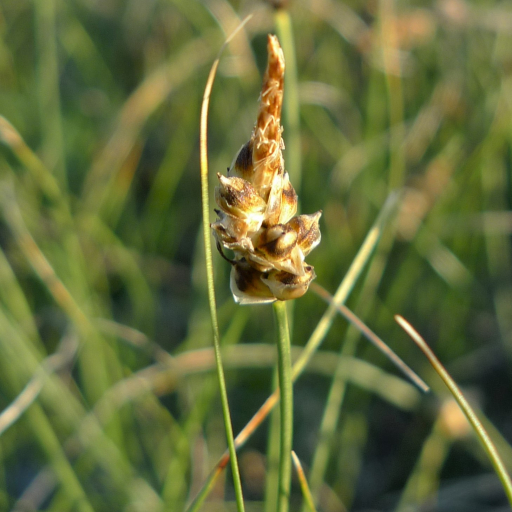
Plant Overview
Known as the "Blackroot Sedge," this resilient prairie survivor is the secret backbone of the North American Great Plains. It forms dense, wispy cushions that look like fine green hair spilling over the earth, earning it a reputation as one of the most elegant native grasses. It is a long-lived perennial that thrives where other plants give up, often anchoring the soil for decades.
🔍 How to Identify
- 🌿 The Foliage: Features incredibly narrow, thread-like leaves that are almost cylindrical. The leaves are a soft grayish-green and grow in tight, mounded clumps.
- 🌾 The Flowers: Produces single, upright spikes at the tips of the stems in early spring. These spikes are initially inconspicuous but turn a distinct golden-brown as they mature.
- ⬛ The Roots: If you were to look underground, you would see dense, dark brown to black fibrous roots. These "black roots" are tough and wiry, helping the plant survive extreme grazing and wind.
🏡 In Your Garden
- 🏜️ Xeriscape Hero: This sedge is a champion of water conservation. It is extremely drought-tolerant and performs beautifully in rock gardens or as a "no-mow" groundcover in arid climates.
- ⏳ Settling In: Because it develops such a deep and complex root system, this plant hates being moved. It is best to plant it in its permanent home and avoid transplanting it once it has matured.
- 🌬️ Erosion Control: Its mat-forming roots are excellent for stabilizing slopes or sandy areas where wind might otherwise strip away the topsoil.
⚠️ Safety & Toxicity
- ✅ Non-Toxic: Carex filifolia is considered safe and non-toxic for humans, dogs, and cats.
- ☁️ Soft Touch: Unlike many other sedges that have "teeth" or sharp edges on their leaves (giving rise to the saying "sedges have edges"), the thread-leaf sedge is relatively soft and won't cause skin irritation.
✨ Fun Fact
- 📜 Prairie History: In the wild, a single clump of Thread-leaf Sedge can live for over 50 years! Because it grows so slowly and lives so long, it is often used by ecologists as an indicator of a healthy, undisturbed ancient prairie.

Detailed Care Instructions
To grow Carex Filifolia plant, also known as Threadleaf Sedge, follow these steps:
- Choose the right location: Carex Filifolia plants prefer moist to wet soil and full to partial shade. Ensure that the planting area receives at least 4-6 hours of indirect sunlight per day.
- Prepare the soil: Amend the existing soil with organic matter like compost or well-rotted manure to improve its fertility and drainage. Ensure that the soil remains consistently moist but not waterlogged.
- Planting: Dig a hole that is slightly wider and deeper than the plant's root ball. Place the plant in the hole, ensuring that the crown (base of the plant where the stems emerge) is level with the ground surface. Backfill the hole, gently firming the soil around the plant's roots.
- Watering: Water the plant thoroughly after planting to settle the soil and encourage root establishment. Provide regular watering to keep the soil consistently moist, especially during dry periods.
- Mulching: Apply a layer of organic mulch around the base of the plant, such as wood chips or straw, to help retain moisture, suppress weed growth, and regulate soil temperature.
- Maintenance: Ensure regular watering to prevent the plant from drying out. Avoid overwatering, as this can lead to rotting of the roots. Remove any weeds from the planting area to prevent competition for nutrients.
- Fertilization: Carex Filifolia generally does not require regular fertilization. However, if the plant shows signs of nutrient deficiency, apply a balanced, slow-release fertilizer in early spring according to the package instructions.
- Pruning: Trim any dead or damaged foliage as needed to maintain the plant's appearance. However, note that Carex Filifolia is typically low maintenance and does not require extensive pruning.
By following these steps, you should be able to grow a healthy and attractive Carex Filifolia plant in your garden.

Place in a bright room that is sun drenched almost all day. Or directly in a south-facing window.

To water this particular plant, it is important to take into account its natural habitat and watering needs. Careful attention should be paid to the soil moisture level as the plant prefers consistently moist soil, but not waterlogged. Overwatering can lead to root rot and other issues. It is best to let the soil partially dry out before watering again. When watering, it is recommended to use a watering can or gently shower the soil with a hose, avoiding getting water on the foliage. It is also important to consider the specific climate and temperature of the plant's surroundings, as this can affect its watering needs.
To fertilize this plant, use a balanced organic or slow-release fertilizer in the spring or early summer, following the package instructions for application rates. Avoid over-fertilization which can cause burned roots and foliage. Water well after fertilizing and keep the soil consistently moist during the growing season.
The ideal soil for the Carex Filifolia plant is a well-draining, slightly acidic soil with good organic content. It should be moist but not waterlogged. The plant prefers sandy or loamy soils that are rich in nutrients. The pH range of the soil should be between 6.0 and 7.5. The soil should be kept consistently moist, but not wet, to keep the plant healthy and thriving. It is important to avoid heavy clay soils or soils with poor drainage, which can result in root rot and other plant diseases. Adding compost or other organic matter to the soil can help improve soil quality and moisture retention.
To propagate this plant, the first step is to locate an established plant. Take a stem cutting that is about 4-6 inches long and remove the leaves from the bottom half of the stem. Dip the cut end of the stem into rooting hormone powder to encourage root growth.
Fill a small pot with well-draining soil and make a hole in the center. Place the stem cutting into the hole and cover with soil. Water the soil and place the pot in a warm, bright location but out of direct sunlight. Mist the cutting regularly to keep it moist.
Within a few weeks, the cutting should start to develop roots. Once the new plant has established a strong root system, it can be transplanted into a larger pot or into the ground outdoors. Ensure that the new plant is watered regularly and receives sufficient sunlight to promote growth.








