Plant Overview
Often called the Blue Sedge or Glaucous Sedge, Carex flacca is the silver-blue chameleon of the plant world. While many sedges are notorious "water-lovers" that demand a swampy environment, this hardy European native is surprisingly versatile, feeling just as at home in a dry rock garden as it is on a pond edge. It is a favorite for garden designers who want to add a "cool," frosty texture to a landscape without the fuss of temperamental ornamental grasses.
🔍 How to Identify
- 🌊 The Foliage: The leaves are narrow and arching, featuring a distinct chalky, blue-green hue (glaucous) on the undersides that gives the plant its metallic shimmer.
- 🌱 Growth Habit: It grows in low, dense tufts that slowly spread via underground runners (rhizomes) to form a thick, weed-suppressing carpet.
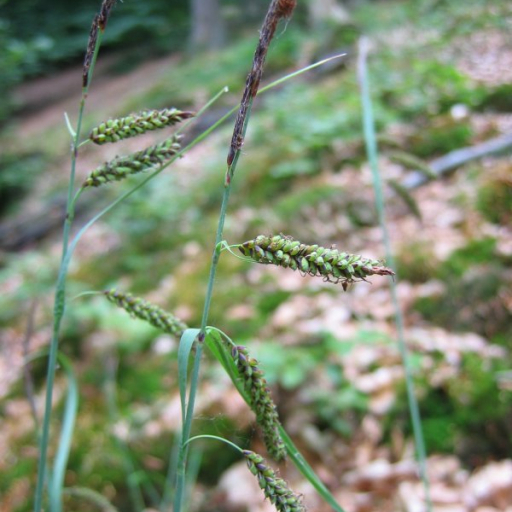
- 🌾 Dark Spikes: In late spring, it sends up thin stems topped with small, cigar-shaped flower spikes that turn a deep brownish-black, providing a sharp contrast to the blue leaves.
🏡 In Your Garden
- 🧱 The Problem Solver: This sedge is famous for thriving in "difficult" spots. It is one of the few plants that can handle heavy, wet clay in the winter and bone-dry soil in the heat of summer.
- ✂️ Low Maintenance: Unlike turf grass, it requires almost no mowing. It is often used as a "living mulch" to fill gaps between larger perennials, keeping the soil cool and preventing weeds from taking hold.
⚠️ Safety & Toxicity
- 🐾 Pet Friendly: Carex flacca is generally considered non-toxic to dogs, cats, and horses, making it a safe choice for pet-filled backyards.
- 🧤 Rough Edges: While not as sharp as some of its "Sawgrass" cousins, the leaf edges can be slightly abrasive. Wearing gloves during major pruning is recommended to avoid minor "grass cuts" or skin irritation.
✨ Fun Fact
The genus name Carex is derived from the Greek word keirein, which means "to cut." This refers to the sharp, saw-like edges of the leaves found on many sedge species, a trait that gave rise to the old folk rhyme: "Sedges have edges, rushes are round, and grasses are hollow right up from the ground!"

Detailed Care Instructions
To grow Carex flacca, also known as blue sedge or glaucous sedge, you can follow these steps:
- Select a suitable planting location: Carex flacca prefers full sun to partial shade but can tolerate shade. It thrives in moist, well-drained soil.
- Prepare the soil: Ensure that the soil is loose and well-draining. If the soil is heavy or clayey, consider incorporating organic matter such as compost to improve drainage.
- Planting: Depending on the size of the plant you have, dig a hole that is slightly larger than the root ball. Place the plant in the hole, ensuring that the top of the root ball is level with or slightly above the soil surface. Backfill the hole with soil, gently firming it around the roots.
- Watering: Water the plant thoroughly after planting to settle the soil and to provide adequate moisture. Carex flacca appreciates moist soil, so water regularly to keep the soil consistently moist, especially during hot and dry periods.
- Mulching: Apply a layer of organic mulch, such as shredded bark or wood chips, around the base of the plant to help retain moisture and suppress weeds. Ensure that the mulch does not pile up against the stem as it can cause rot.
- Fertilization: Carex flacca generally does not require heavy fertilization. If desired, you can apply a slow-release fertilizer in early spring to provide nutrients for the growing season. Follow the package instructions for application rates.
- Maintenance: Trim back any dead or damaged leaves as needed. In late winter or early spring, you can cut back the plant to encourage fresh growth. It's a low-maintenance plant, but you should regularly check for pests or diseases and address any issues promptly.
Carex flacca is a hardy and resilient plant that can tolerate a wide range of conditions. By providing suitable growing conditions and regular care, you can successfully grow and enjoy this attractive ornamental grass.

Place in a window with dappled sun or a spot in the middle of a room. Or directly in a window facing west or east.

Watering a plant with the scientific name Carex Flacca requires a certain amount of attention to detail. This plant is a delicate species that needs to be cared for correctly to flourish. First, regular watering is necessary to keep the soil moist, but not soaking wet. Overwatering can damage the roots and cause the plant to die. The soil should be allowed to dry out slightly between waterings to prevent the water from stagnating around the roots.
To water the plant correctly, it is best to use a watering can or a hose with a fine nozzle, to ensure a gentle flow of water. The water should be applied to the base of the plant, directly onto the soil, rather than on the leaves or stems. This will prevent the plant from developing fungal infections and other diseases that can harm it.
It is also essential to water the plant regularly and consistently all year round, especially during the summer months when the weather is warmer, and the sun is more intense. During the winter, it may be necessary to water less frequently, but still, ensure that the soil is kept moist.
Finally, it is recommended to avoid watering the plant during the hottest parts of the day, which can cause water evaporation and make the soil dry out faster. Watering the plant early in the morning or late in the afternoon is best when the temperatures are cooler, and the water is less likely to evaporate.
To fertilize this plant, use a balanced fertilizer, with an N-P-K ratio of 10-10-10. Apply the fertilizer at the base of the plant, and follow the manufacturer's instructions for the amount of fertilizer to use. Fertilize the plant at the beginning of the growing season and again in midsummer. Avoid over-fertilizing, as this can cause the plant to produce too much foliage and reduce its overall health.
The ideal soil for growing the plant Carex Flacca is a well-draining soil mixture that is rich in organic matter. The ideal pH range is between 5.5 and 7.5. The soil should be moist, but not water-logged, and have good aeration. Adding sand and perlite to the soil can help improve drainage and prevent waterlogging. It is recommended to avoid using heavy clay soils. The plant prefers slightly acidic to neutral soil but can tolerate alkaline soil conditions. Overall, the soil should be nutrient-rich, well-draining, and have good aeration to support the growth of Carex Flacca.
To propagate this plant, you need to identify a healthy, mature plant with strong roots. You will need to carefully divide the clumps of the plant, separating the shoots from the parent plant and trimming away any unwanted foliage or dead material.
Then, prepare the new planting site by loosening the soil and adding organic matter to improve drainage. Next, transplant the new shoots into the prepared soil, taking care to bury them at the same depth as they were growing before.
Water the new plants deeply and provide them with regular watering as needed to keep the soil moist. You may also wish to provide them with a light mulch to help retain moisture and protect the delicate roots.
With patience and proper care, your newly propagated Carex Flacca plants should soon establish themselves and begin to grow into healthy, vibrant specimens.








