Plant Overview
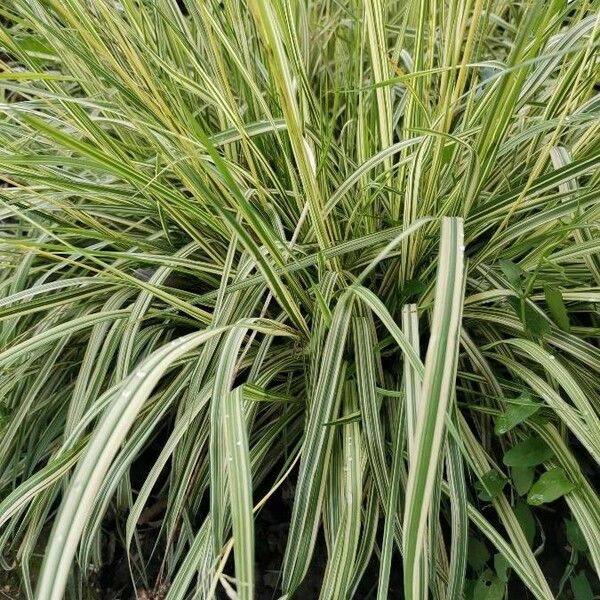
Often called the Japanese Sedge or "Evergold," this elegant perennial is a master of illumination. Originating from the rocky, coastal islands of Japan, it acts like a living fountain of light in the garden. It is the perfect solution for nature lovers who want the breezy look of ornamental grass but only have shady corners to work with.
🔍 How to Identify
- 🍃 Leaf Shape: Narrow, strap-like leaves that arch gracefully outward from the center, creating a tidy, symmetrical "mop-top" mound.
- 🎨 Variegation: The most popular forms feature a striking creamy-yellow or white stripe running down the center, bordered by deep, forest-green edges.
- 📐 The "Sedge" Stem: Unlike true grasses which have round stems, sedges have edges. If you gently feel the base of a stem, you’ll notice it is distinctly triangular.
🏡 In Your Garden
- 🌑 Shade Specialist: This plant thrives where traditional lawn grasses fail. It loves dappled sunlight or full shade, making it the ideal "ground-lighter" for the dark areas under large trees or along north-facing walls.
- ✂️ Evergreen Habits: Because it holds its color all winter, you should never cut it back to the ground like you would with fountain grass. Instead, simply "comb" through the foliage with gloved hands in early spring to remove any stray brown blades.
- 💧 Slow & Steady: It has a polite growth habit and won't invasively take over your garden. It prefers moist, well-drained soil and dislikes "wet feet" (standing water) during the cold winter months.
⚠️ Safety & Toxicity
- 🐾 Pet Safe: Carex hachijoensis is non-toxic to cats and dogs. It is a popular choice for "pet-friendly" landscaping where curious paws might wander.
- 👶 Soft Texture: Unlike some marsh sedges that have "saw-tooth" edges capable of causing paper-like cuts, this variety is soft to the touch and safe to plant alongside walkways and play areas.
✨ Fun Fact
The species name hachijoensis is a tribute to its homeland, Hachijo-jima, a subtropical volcanic island south of Tokyo. In its native habitat, it clings to rocky slopes and forest floors, cooled by the humid breezes of the Philippine Sea.

Detailed Care Instructions
Here are some steps you can follow to grow Carex hachijoensis:
- Choose a suitable location: Carex hachijoensis prefers partial shade to full shade. Select a spot in your garden that receives filtered sunlight or is shaded for most parts of the day. The soil should be well-draining and rich in organic matter.
- Prepare the soil: Before planting, prepare the soil by digging it up to a depth of about 8-10 inches. Remove any weeds, rocks, or other debris from the soil. Mix in some compost or well-rotted manure to improve soil fertility and drainage.
- Planting: Dig a hole slightly larger than the root ball of the Carex hachijoensis plant. Place the plant in the hole, ensuring that the crown (where the roots meet the stem) is level with the soil surface. Backfill the hole with soil, gently firming it around the plant. Water thoroughly after planting.
- Watering: Carex hachijoensis prefers moist soil. Water regularly, especially during dry spells, to keep the soil consistently moist. Avoid waterlogged conditions, as excessive moisture can lead to root rot.
- Mulching: Apply a layer of organic mulch around the plant to help retain moisture, suppress weeds, and insulate the soil. This can be done after planting or when the plant has established.
- Fertilization: Carex hachijoensis is not a heavy feeder. However, an annual application of a balanced, slow-release fertilizer in early spring can provide a nutrient boost. Follow the manufacturer's instructions for application rates.
- Maintenance: Trim back any dead or damaged leaves or stems as needed. Carex hachijoensis does not require extensive pruning unless it becomes overcrowded or unruly. In such cases, you can cut back the plant in early spring before new growth appears.
- Division: Over time, Carex hachijoensis may form clumps. To maintain plant health and vigor, you can divide the clumps every few years in early spring or early fall. Dig up the clumps and carefully separate them into smaller sections, ensuring that each division has sufficient roots. Replant the divisions in prepared soil and water thoroughly.
By following these steps, you should be able to successfully grow Carex hachijoensis in your garden. Remember to observe and cater to the specific needs of the plant, as environmental factors and regional variations can affect its growth.

Place in a bright room that is sun drenched almost all day. Or directly in a south-facing window.
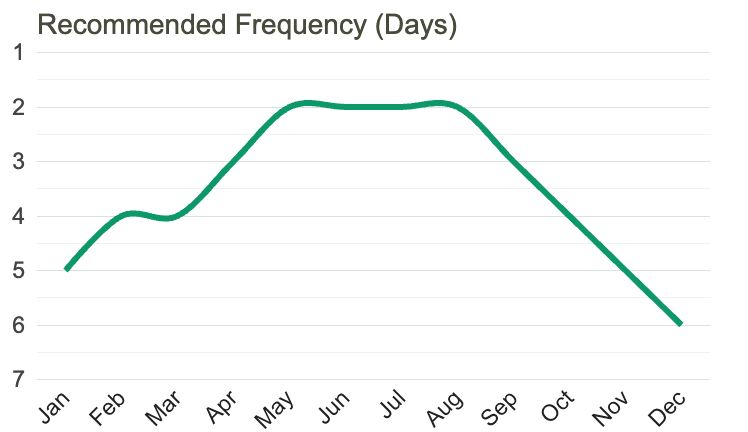
The best way to water this plant is to give it a deep watering once every week during the growing season. Ensure that the soil is moist but not soggy to avoid root rot. During the dormant season, reduce the frequency of watering but ensure that the soil doesn't completely dry out. It's essential to water the soil instead of the foliage to prevent disease spread. Use a watering can or a slow-drip irrigation system to supply water to the plant's root zone. Ensure that the plant is grown in well-draining soil and that the container it occupies has drainage holes to avoid waterlogging. Monitor the plant regularly for signs of overwatering, such as yellowing leaves, as this can lead to plant death.
To fertilize Carex hachijoensis, follow these instructions:
- Choose a balanced, water-soluble fertilizer with an N-P-K ratio of 10-10-10 or similar.
- Dilute the fertilizer according to the manufacturer's instructions, usually mixing 1 tablespoon of fertilizer per gallon of water.
- Water the plant thoroughly before applying the fertilizer to ensure the soil is moist.
- Pour the diluted fertilizer solution evenly around the base of the plant, taking care not to splash it onto the foliage.
- Avoid over-fertilizing as it can lead to plant stress or burn the roots. Always follow the recommended application rates.
- Repeat the fertilization process every 4 to 6 weeks during the growing season, typically from spring to early fall.
- Remember to adjust the fertilization schedule based on the specific needs of your Carex hachijoensis plant.
When planting Carex Hachijoensis, it is important to select a soil that is well-draining and moist but not waterlogged. The soil should be slightly acidic with a pH range of 5.5 to 6.5. The ideal soil texture is loamy, which provides a good balance of sand, silt, and clay. The soil should also be rich in organic matter, such as compost or leaf litter, to provide essential nutrients for the plant's growth. In addition, it is recommended to avoid highly compacted soils and to incorporate perlite or vermiculite to improve soil aeration. It is important to regularly water the plant to maintain the moist soil conditions it requires for healthy growth.
To propagate Carex Hachijoensis plant, you can follow these steps:
- Select a healthy parent plant: Choose a mature and established Carex Hachijoensis plant from which you want to propagate new plants. Ensure that the parent plant is disease-free and has a robust growth habit.
- Prepare a suitable planting medium: Carex Hachijoensis prefers well-draining soil. Prepare a potting mix by combining equal parts of sterile potting soil, perlite, and coarse sand. Alternatively, you can use a mixture of peat moss and sand.
- Take stem cuttings: Using a sharp, sterilized knife or pruners, take stem cuttings from the parent plant. Choose non-flowering stems that are healthy and about 4-6 inches long. Make clean cuts just below a leaf node.
- Remove lower leaves: Remove the lower one-third to one-half of the leaves from the stem cuttings. This helps promote root development rather than focusing energy on excessive leaf growth.
- Apply rooting hormone (optional): If desired, you can dip the cut ends of the stem cuttings into a rooting hormone powder or gel. This can enhance the chances of successful rooting.
- Plant the cuttings: Make small holes in the prepared planting medium and gently insert the stem cuttings into the holes. Ensure that at least one node is buried in the soil. Firmly press the medium around the cuttings to provide support.
- Provide appropriate conditions: Place the propagated cuttings in a warm and bright location, preferably with indirect sunlight. Maintain a temperature around 70-75°F (21-24°C) and provide consistent moisture without overwatering.
- Mist regularly: To maintain humidity around the cuttings and prevent them from drying out, mist them with water using a spray bottle. This helps prevent excessive moisture loss through transpiration.
- Monitor and care for the cuttings: Regularly check the moisture level of the planting medium and water whenever it starts to dry out. Avoid overwatering, as it can lead to root rot. Protect the cuttings from extreme temperatures and direct sunlight.
- Root development: After a few weeks or months, depending on the conditions and the plant's natural growth rate, check for root development. Gently tug on the cuttings and if you feel resistance, it indicates successful rooting.
- Transplanting: Once the propagated cuttings have developed strong roots, carefully transplant them into individual pots or directly into the garden. Ensure they receive adequate sunlight and regular watering until they become fully established.
Propagation of Carex Hachijoensis through stem cuttings is a reliable method that allows you to create new plants that have identical characteristics to the parent plant.








