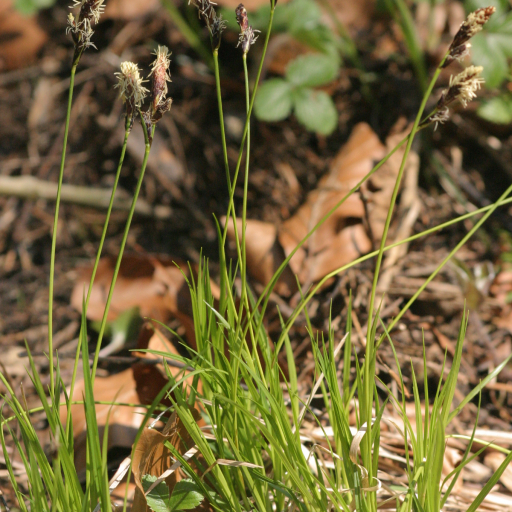
Plant Overview
Mountain Sedge (Carex montana) is a delicate, tufted perennial that brings the rugged elegance of the European highlands right into your backyard. Often called the "Soft Sedge," it forms dense, mop-like mounds of fine, arching foliage that feels surprisingly pleasant to the touch. It is a quiet hero of the early spring garden, offering subtle beauty long before most other plants have stirred from their winter slumber.
🔍 How to Identify
- 🌿 The Foliage: It features very thin, hair-like leaves that start as a bright, vibrant green and often transition to warm copper or tawny tones as the seasons change.
- 🖤 Dark Spikes: In early spring, look for distinctive, dark chocolate-brown to near-black flower spikes that rise just above the foliage, tipped with creamy yellow pollen.
- 🧶 Growth Habit: This sedge grows in tidy, non-invasive clumps (tussocks). It stays compact and rounded, avoiding the aggressive spreading typical of some other grassy species.
🏡 In Your Garden
- ⛰️ The Mountain Connection: Unlike many sedges that crave wetlands, Carex montana is a true hill-dweller. It prefers well-drained, lime-rich soils and can handle much drier conditions than its swamp-loving cousins once its roots are established.
- 🌞 Versatile Light: It is incredibly adaptable, thriving in full sun in cooler climates or dappled shade in hotter regions. It is often used as a "living mulch" to cover the ground between larger perennials.
- ✂️ Winter Care: It is mostly deciduous; a light "combing" with your fingers or a gentle rake in late winter is usually enough to remove old blades and make way for fresh spring growth.
⚠️ Safety & Toxicity
- 🐾 Safe for Pets: This plant is generally considered non-toxic to cats, dogs, and horses. It’s a great choice for a "pet-friendly" landscape where curious paws might wander.
- 🧤 Soft Texture: While many sedges are known for having "edges like saws," the Mountain Sedge is notably softer. However, always wear gloves when clearing out large patches of dried ornamental grasses to avoid minor skin irritation.
✨ Fun Fact
- 🐝 Early Bird Special: Because it blooms so early in the year, Carex montana provides an important early-season source of pollen for specialized insects when very few other nectar or pollen sources are available in the landscape.

Detailed Care Instructions
To grow Carex montana, also known as mountain sedge or blue sedge, you can follow these steps:
- Choose a suitable location: Carex montana thrives in partial shade to full shade areas and prefers moist, well-draining soil. It can tolerate both dry and wet conditions.
- Prepare the soil: Prior to planting, amend the soil with organic matter such as compost or peat moss to improve moisture retention and drainage.
- Planting: Dig a hole slightly larger than the root ball of the plant. Place the plant in the hole and backfill with soil, ensuring the top of the root ball is level with or slightly above the surrounding soil. Gently firm the soil around the plant.
- Watering: After planting, thoroughly water the Carex montana and keep the soil consistently moist during the establishment period. Once established, it is more tolerant of drier conditions, but regular watering during dry periods is still recommended.
- Mulching: Apply a layer of organic mulch around the plant to help retain moisture, suppress weeds, and maintain a cooler soil temperature.
- Maintenance: Carex montana is a low-maintenance plant. Remove any dead or damaged foliage throughout the year. If necessary, divide the plant every few years to promote its health and vigor.
- Fertilizing: A light application of balanced slow-release fertilizer in early spring can be beneficial, but it is not usually required.
- Pruning: Carex montana does not require regular pruning. However, to maintain a compact and tidy appearance, you can carefully trim back any overgrown or unruly foliage in early spring before new growth begins.
By following these guidelines, you should be able to successfully grow Carex montana in your garden.

Place in a window with dappled sun or a spot in the middle of a room. Or directly in a window facing west or east.

The plant in question is a perennial, grass-like plant that typically grows in moist to wet soils in full to partial sun. To water the plant, it is important to ensure that the soil remains consistently moist, but not waterlogged. This can be achieved by watering deeply and infrequently, rather than shallowly and frequently. It is also important to avoid allowing the soil to dry out completely, as this can cause stress to the plant and make it more susceptible to disease and pests. Mulching around the base of the plant can help to retain moisture in the soil and reduce the need for frequent watering. During periods of hot weather or drought, it may be necessary to water the plant more frequently to ensure that it receives adequate moisture. Regular monitoring of the soil moisture levels is important to ensure that the plant is receiving the right amount of water.
For best results, fertilize this plant in the spring with a slow-release, balanced fertilizer. Use a granular or liquid fertilizer according to package instructions. Apply the fertilizer evenly around the root zone, making sure not to overload any one area. Water thoroughly after applying the fertilizer to help it reach the roots. Avoid applying fertilizer to dry soil, as this can burn the roots. Repeat the process about once a month during the growing season, taking care not to overfeed the plant.
Carex Montana is a species of perennial plant that belongs to the family of sedges. It is native to certain regions of North America and is often used as ground cover or for erosion control. When selecting soil for Carex Montana, it is important to choose a well-draining soil that is high in organic matter. This type of soil will allow water to move freely through the soil profile, preventing the roots from becoming waterlogged. Additionally, the presence of organic matter will provide the plant with essential nutrients and promote healthy growth. Carex Montana prefers soils with a pH level that is slightly acidic, between 6 and 6.5. It is important to avoid using soil that is too alkaline, as this can negatively impact the plant's growth and health. Finally, it is recommended to amend the soil with compost or other organic matter prior to planting to improve soil structure and fertility.
One way to propagate this plant is through division. Start by gently lifting the plant out of the soil using a garden fork. Use a sharp knife or shears to divide the root ball into smaller sections, making sure that each section has its own roots and shoots. Replant the sections into pots or directly into the garden and keep the soil moist until the new plants become established.
Another method of propagation is through seed. Wait for the seed heads to form on the plant and collect them when they begin to turn brown. Remove the seeds from the seed heads and plant them in a seed tray or individual pots. Keep the soil moist and place the trays or pots in a warm, sunny spot. The seeds should germinate within a few weeks, after which they can be planted out in the garden once they are large enough.
Lastly, you can propagate Carex Montana through rhizome cuttings. Carefully dig up the plant and locate the rhizomes - these are the modified stems that grow horizontally underground. Use a sharp knife to cut a section of the rhizome, making sure it has at least one shoot and some roots attached. Plant the cutting in a pot or directly in the garden and keep it well-watered until it begins to grow.








