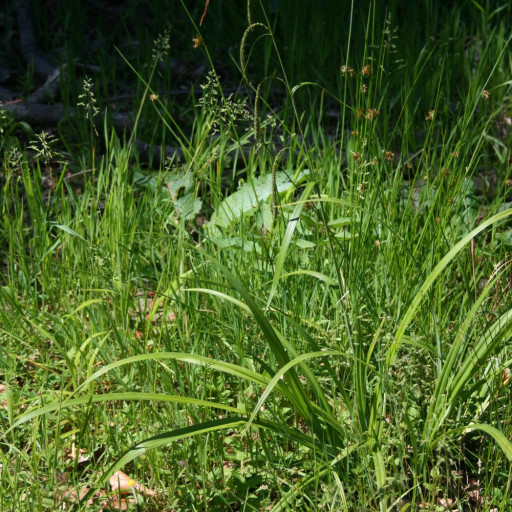
Plant Overview
Often referred to as the Great Pendulous Sedge or "Weeping Sedge," this plant is the undisputed giant of the sedge world. With its towering, fountain-like arches and dramatic hanging flower spikes, it looks like something plucked straight from a prehistoric jungle. It is a favorite for gardeners looking to add a structural, architectural element to damp, shaded corners where other plants might struggle.
🔍 How to Identify
- 🌿 The Leaves: Features long, strap-shaped leaves that are bright green and can reach up to 2 feet in length. They have a distinct "M" shape when viewed in cross-section.
- 📐 The Stem: Like most sedges, the stems are noticeably triangular. If you roll them between your fingers, you will feel the distinct three-sided "edges."
- 🐛 The Catkins: Its most famous feature is the long, drooping flower spikes (catkins) that hang down like fuzzy brown caterpillars. These can grow up to 15cm long and sway beautifully in the wind.
🏡 In Your Garden
- 💧 Moisture Lover: This plant is a "thirsty" species. It thrives in heavy clay or boggy soil where water naturally pools. If you plant it in a dry spot, it will quickly brown at the tips and lose its graceful luster.
- 🌱 Vigorous Seeder: While it is beautiful, be warned that it is a prolific self-seeder. One plant can quickly turn into a colony. If you want to keep it contained, it is best to snip off the hanging seed heads before they turn brown and drop their cargo.
- 🌑 Shade Specialist: Unlike many ornamental grasses that crave the sun, Carex pendula is perfectly happy in deep shade, making it a "problem-solver" for those dark, wet spots under large trees.
⚠️ Safety & Toxicity
- 🟢 Status: Non-toxic to humans, cats, and dogs.
- ⚔️ Physical Hazard: While not poisonous, the leaf edges are fused with tiny silica crystals, making them remarkably sharp. The name Carex actually comes from the Greek word for "to cut." Always wear gloves when pruning or dividing the plant to avoid "grass cuts."
✨ Fun Fact
In the Middle Ages, the tough, dried leaves of large sedges like Carex pendula were often used as "strewing herbs"—they were scattered across stone castle floors to provide insulation and a natural, cushioned carpet.

Detailed Care Instructions
| Humidity | High |
| Lighting | Part Sun |
| Toxicity | Poisonous |
| Difficulty | Medium |
| Hibernation | Cold Period |
| Hardiness Zones | 7 - 10 |
To grow a Carex Pendula plant, also known as pendulous sedge or weeping sedge, follow these steps:
- Choose the right location: Carex Pendula prefers a partially shaded area that receives some indirect sunlight. It thrives in moist soil conditions, so pick a spot with good drainage.
- Prepare the soil: Before planting, amend the soil with organic matter like compost or well-rotted manure to improve fertility and drainage.
- Planting: Dig a hole that is slightly larger than the plant's root ball. Place the plant in the hole and backfill with soil, gently firming it around the plant's base. Make sure the plant is planted at the same depth as it was in its container.
- Watering: After planting, thoroughly water the plant to ensure the soil is evenly moist. Carex Pendula requires regular watering, especially during dry periods, to keep the soil consistently moist.
- Mulching: Apply a layer of organic mulch around the base of the plant. This will help retain moisture, suppress weeds, and create a favorable environment for the plant to grow.
- Maintenance: Regularly water the plant as needed, especially in hot weather. Remove any weeds that may compete for nutrients and water. Prune damaged or dead leaves as necessary.
- Fertilization: Apply a balanced slow-release fertilizer in early spring to provide essential nutrients for healthy growth. Follow the manufacturer's instructions for application rates.
- Propagation: Carex Pendula can be propagated by division. In early spring or fall, carefully divide the plant by lifting it out of the ground and separating the clumps into smaller sections. Replant these sections in other areas or containers.
- Pruning: Pruning is usually not necessary for Carex Pendula. However, you may trim back any old or damaged leaves in the spring to encourage new growth and maintain the plant's aesthetic appearance.
By following these steps and providing proper care, your Carex Pendula plant should grow well and display its unique weeping habit and attractive foliage.

Place in a window with dappled sun or a spot in the middle of a room. Or directly in a window facing west or east.

This plant should be watered regularly, but not overly so. It prefers moist soil, so ensure the soil never completely dries out. However, it is important not to let it sit in standing water, as this can lead to root rot. Water deeply but infrequently, allowing the soil to drain properly. It is recommended to water in the morning, avoiding watering during the hottest part of the day to prevent water evaporation.
To fertilize this plant, use a slow-release granular fertilizer that is high in nitrogen. Apply the fertilizer in the spring and again in the fall, according to the instructions on the label. Water the plant thoroughly after fertilizing to help the nutrients absorb into the soil. Avoid fertilizing during the summer months when the plant is dormant.
For optimal growth and health of the Carex Pendula plant, it is recommended to use a well-draining and slightly acidic soil mixture. This can be achieved by mixing equal parts of loamy soil, sand, and peat moss. The soil should be kept consistently moist but not waterlogged, and the plant should be fertilized once a month during the growing season with a balanced fertilizer. Additionally, the plant prefers partial shade to full sun and should be protected from strong winds. Proper soil composition and care can promote lush foliage and healthy growth of the Carex Pendula plant.
To propagate this perennial plant, you will need to divide the root ball. Dig up the parent plant, being careful not to damage the roots. Use a sharp, sterile knife to separate a section of the root ball that has several stems attached. Replant this section in a pot or in the ground, making sure that the soil is moist and that the plant is in a shaded area. Keep the soil moist but not waterlogged, and in a few weeks, the plant will start to produce new shoots.
Common pests of the pendulous sedge include Thrips. Make a habit of checking your pendulous sedge frequently for pests so that any infestations can be caught and managed early.








