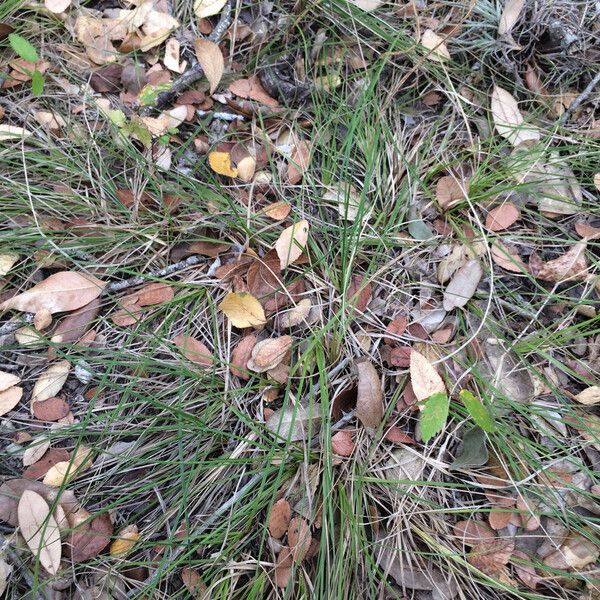
Plant Overview
Commonly known as the Cedar Sedge, this unassuming green hero is the secret weapon of southern woodland gardens. While most plants struggle to survive the dense shade and thirsty roots of cedar or juniper trees, Carex planostachys thrives there with a "tough-as-nails" attitude. It forms soft, mop-like tufts that stay green even when the heat turns up.
🔍 How to Identify
- 🌿 The "Edges": Like most sedges, it follows the rule "sedges have edges." If you roll the base of a stem between your fingers, you’ll feel a distinct triangular shape.
- 🍃 Foliage Texture: It features very fine, wiry, dark-green leaves that curve downward, creating a low, fountain-like clump.
- 🌾 Subtle Blooms: In early spring, it produces tiny, inconspicuous spikes of brownish-tan flowers that tuck themselves just slightly above the foliage.
🏡 In Your Garden
- 🌳 The Shade Specialist: This sedge is famous for its ability to grow in "dry shade," one of the most difficult garden niches. It is particularly happy living under the canopy of Ashe Junipers or Oaks where grass refuses to grow.
- 🪨 Soil Preference: It is a lover of limestone. It prefers well-drained, alkaline soils and is incredibly drought-tolerant once its root system is established, making it a perfect choice for xeriscaping or rock gardens.
⚠️ Safety & Toxicity
- ✅ Status: Non-toxic and safe.
- 🐾 Details: Cedar Sedge is generally considered safe for households with curious cats, dogs, and children. It lacks the sharp "saw-tooth" edges found on some larger sedge species, making it soft to the touch.
✨ Fun Fact
Native plant enthusiasts often call this the "Living Rug." Because it stays low to the ground and spreads slowly into colonies, it can be used as a no-mow lawn alternative in areas where traditional turfgrass would wither away.

Detailed Care Instructions
To grow Carex planostachys, also known as the bamboo sedge, you can follow these steps:
- Select a suitable location: The bamboo sedge prefers a partially shaded or shaded area, with moist or boggy soil. It can tolerate full sun if the soil remains consistently moist.
- Prepare the soil: Bamboo sedges prefer moist, well-draining soil. If your soil is heavy clay or lacks organic matter, consider amending it with compost or peat moss to improve drainage and fertility.
- Planting: Plant Carex planostachys in early spring or fall. Dig a hole slightly larger than the plant's root ball and place it in the hole. Ensure that the top of the root ball is level with or slightly above the soil surface. Fill the hole with soil, gently firming it around the plant.
- Watering: Keep the soil consistently moist but not waterlogged. Regularly check the moisture levels and water when the top inch of soil feels dry. Be cautious not to overwater.
- Mulching: Apply a layer of organic mulch, such as wood chips or shredded bark, around the base of the plant to help retain moisture and suppress weed growth. Leave a gap around the stem to prevent rotting.
- Fertilizing: In most cases, Carex planostachys does not require additional fertilization if it is planted in nutrient-rich soil. However, if your soil lacks nutrients, you can apply a slow-release balanced fertilizer according to the manufacturer's instructions in early spring.
- Maintenance: Regularly monitor the moisture levels of the soil and water as necessary. Remove any weeds that appear around the plant to reduce competition. In late winter or early spring, you can trim back the dead foliage to encourage new growth.
- Propagation: Carex planostachys can be propagated by dividing mature clumps. Dig up the clump and carefully separate it into smaller sections, ensuring each section has roots attached. Replant the divided sections in the desired location, following the planting instructions mentioned above.
By following these care guidelines, you should be able to grow and maintain a healthy Carex planostachys plant.

Place in a window with dappled sun or a spot in the middle of a room. Or directly in a window facing west or east.

To water this plant, you should first check the soil to ensure that it is not already moist. If the soil feels dry, you can pour water slowly and evenly around the base of the plant, being careful not to get water on the foliage. Allow the water to soak into the soil, but avoid overwatering, as this can lead to root rot. It is important to water consistently, but also to allow the soil to dry out partially between waterings. Watering should be adjusted depending on environmental factors such as temperature and humidity. Additionally, it is important to use water that is free from chlorine and salt, as these can harm the plant.
To fertilize this plant, apply a balanced, slow-release fertilizer in early spring. Follow the package instructions for the appropriate amount to use per square foot of soil. Repeat the application once in mid-summer. Avoid over-fertilizing as this can lead to excessive growth and weaker stems. Water the plant after fertilizing to help distribute the nutrients throughout the soil.
Carex Planostachys plant prefers to grow in a soil that is well-draining and rich in nutrients. It is recommended to use a soil mix that is specifically formulated for growing ornamental grasses. The soil mix should be slightly acidic with a pH level between 5.5 and 6.5. It should also contain organic matter, such as compost, to enhance the soil's fertility and promote healthy growth. The soil should be moist but not waterlogged, and it should allow for good air circulation around the plant's roots. It is important to avoid using heavy, clay soils, as they can hold too much water and lead to root rot. Additionally, adding a layer of mulch around the plant can help regulate soil moisture and temperature, as well as suppress weed growth.
To propagate this plant, first identify mature and healthy plants with many stems. Then, gently remove the plant from its pot or the ground, being careful not to damage the roots. Divide the plant into smaller sections, ensuring that each section has a healthy root system and several stems. Replant each section in fresh, well-draining soil and water thoroughly. Keep the new plants in a partially-shaded area and maintain adequate moisture until they establish themselves in their new location.








