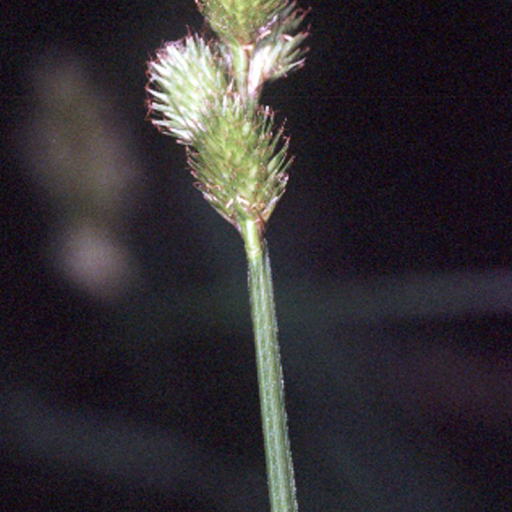
Plant Overview
Often called the Blunt Broom Sedge, this North American native is a structural workhorse of the wetlands. It is a member of the massive Cyperaceae family, often mistaken for grass until you get close enough to feel its sharp, triangular stems. Known for its "broom-like" clusters of seeds, it bridges the gap between wild meadow aesthetics and functional garden design, especially in areas where the soil stays stubbornly wet.
🔍 How to Identify
- 📐 Triangular Stems: Following the classic "sedges have edges" rule, the stems of this plant are distinctly three-sided. If you roll a stem between your fingers, you will clearly feel the sharp angles.
- 🌾 Broom-like Spikes: The "flowers" are actually dense, egg-shaped clusters of spikelets that crowd the top of the stem. They start out a pale, silvery green and mature into a warm tan color.
- 🍃 Fountain Habit: The leaves are narrow and bright green, arching outward from the center to create a lush, fountain-like clump that stands about 2 to 3 feet tall.
🏡 In Your Garden
- 💧 The Rain Garden Hero: This plant is an expert at handling "wet feet." It is the perfect choice for rain gardens, bioswales, or those low spots in your yard where water tends to pool after a storm.
- 🌱 Erosion Control: Because it develops a dense, fibrous root system, it is often used to stabilize soil along pond edges or stream banks, preventing the earth from washing away during heavy rains.
- 🦋 Wildlife Magnet: It serves as a vital host plant for several species of Satyrid butterflies and various moths. Additionally, its heavy seed production provides a reliable food source for songbirds in the late fall.
⚠️ Safety & Toxicity
- ✅ Safe Status: Carex tribuloides is generally considered non-toxic to humans, dogs, and cats. It is a safe addition to a family-friendly landscape.
- 🧤 Mechanical Irritation: While not poisonous, the leaf edges and stems can be surprisingly sharp. It is wise to wear gardening gloves when dividing or pruning the plant to avoid small "grass-cut" style nicks on your hands.
✨ Fun Fact
The specific epithet tribuloides is inspired by the Tribulus, an ancient Roman weapon (the caltrop) that featured four sharp spikes. This refers to the prickly, pointed appearance of the seed clusters when they are fully formed!

Detailed Care Instructions
To grow Carex tribuloides, also known as bladder sedge or pointy broom sedge, follow these steps:
- Collect seeds or purchase them from a reputable nursery. Carex tribuloides is a native grass species in North America, so you may be able to find seeds in the wild or through specialized nurseries.
- Choose a suitable location. Carex tribuloides thrives in moist to wet soil, hence growing it near a pond, lake, or in a rain garden is ideal. It prefers full sun to part shade.
- Prepare the soil. Remove any weeds or grass from the planting area and loosen the soil with a garden fork or tiller. Carex tribuloides prefers slightly acidic and well-draining soil.
- Sow the seeds. Sprinkle the Carex tribuloides seeds evenly over the planting area. You can mix the seeds with some sand to help distribute them more evenly. Lightly tamp down the soil or cover the seeds with a thin layer of soil.
- Water regularly. Keep the soil consistently moist until the seeds germinate. This may require watering every couple of days or as needed, depending on the moisture-retention capabilities of your soil.
- Thin out the seedlings. When the seedlings are a few inches tall, thin them out to about 12-18 inches apart to provide enough space for each plant to grow.
- Mulch the area. Apply a layer of mulch around the base of the plants to help retain moisture and suppress weeds.
- Maintain adequate moisture. Carex tribuloides prefers moist soil, so make sure to water it regularly during dry periods. Avoid overwatering, as excessive moisture can lead to root rot.
- Provide occasional fertilization. Although Carex tribuloides typically does not require fertilization, you can provide a light application of a balanced slow-release fertilizer in early spring to promote healthy growth.
- Monitor for pests and diseases. Keep an eye out for any signs of pests or diseases, such as leaf spots or discoloration. If necessary, use appropriate organic or chemical treatments to control the issue.
By following these steps, you should be able to successfully grow Carex tribuloides and enjoy its ornamental grass-like foliage in your garden or landscape.
Carex Tribuloides is a unique plant that requires a bit of attention when it comes to watering. This plant prefers a consistently moist soil, but too much water can cause root rot and kill the plant. To water this plant, you should first check the moisture level of the soil. Stick your finger about an inch into the soil, and if it feels slightly dry, it's time to water.
When watering, use room temperature water and pour it slowly onto the soil around the base of the plant. Avoid getting any water on the leaves as this can cause damage and rotting. Water until you see the water draining out of the bottom of the pot. Then, wait until the excess water has drained away before putting the pot back in its saucer.
It is important not to let the plant sit in standing water for a long time, as this can cause root rot. You can also mist the leaves with water once or twice a week to increase humidity, but be sure not to spray too much water as it can cause mold growth.
Overall, Carex Tribuloides requires regular and consistent watering, but it is essential to avoid overwatering. Following these guidelines should keep your plant healthy and thriving.
To fertilize this plant, use a balanced fertilizer with equal amounts of nitrogen, phosphorus, and potassium. Apply the fertilizer at a rate of 1/4 to 1/2 pound per 100 square feet, or follow the instructions on the packaging. Apply the fertilizer in early spring before new growth appears, and again in mid-summer if necessary. Water the plant well after fertilizing to help distribute the nutrients evenly. Avoid fertilizing in late fall or winter, as this can promote new growth that may be damaged by frost.
When planting [Carex Tribuloides], it is important to select a soil that is well-draining with a pH level between 5.5 and 7.0. The soil should be moist but not soggy, with a mixture of organic matter such as compost or peat moss to promote healthy growth. Avoid soils that are too heavy or clay-like, as this may lead to slow drainage and root rot. An ideal planting location would receive partial shade or full sun, depending on the preference of the species, and regular watering to keep the soil consistently moist. It is always recommended to test the soil in advance and amend as needed to ensure optimal growing conditions for the plant.
To propagate a certain species of plant (Carex Tribuloides), there are different methods depending on the desired result. One way to propagate this plant is through division. To do this, you must first locate a mature plant with roots that can be seen on the surface of the soil. After carefully removing the plant from the soil, gently separate the root ball into sections that have a few shoots and roots. Replant these sections into fresh soil and water well.
Another way to propagate this plant is by using stem cuttings. Cut a stem from the parent plant just below the node, which is the point where a leaf is attached to the stem. Dip the cut end of the stem into rooting hormone, which can be purchased at a garden center, and plant the stem in a pot filled with moist soil. Water the cutting regularly, keeping the soil evenly moist, and wait for roots and new growth to appear.
A third method is by seed propagation. Collect the seeds from the plant after they have ripened in the fall. Sow the seeds in a seed tray or pot filled with soil. Cover the seeds with a thin layer of soil, water well, and place the container in a location that receives indirect sunlight. Keep the soil moist while the seeds germinate, which can take several weeks. Once the seedlings have grown, transplant them into individual pots or into the ground.








