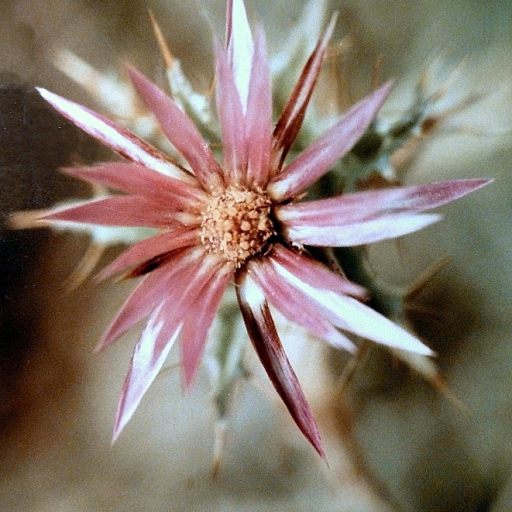
Plant Overview
Known as the Purple Carline Thistle or Woolly Carline Thistle, this Mediterranean native is a master of survival in harsh, sun-drenched landscapes. It often looks like a beautiful piece of dried floral art even while it is still rooted in the ground, making it a favorite for "everlasting" garden displays. Legend suggests the genus Carlina was named after Emperor Charlemagne, who supposedly used a related species to save his army from a plague.
🔍 How to Identify
- 🌸 Radiant Bracts: The central flower head is surrounded by stiff, straw-like outer bracts that radiate outward like a star, usually in shades of vibrant purple, magenta, or pinkish-tan.
- 🧶 Woolly Texture: True to its name (lanata meaning "woolly"), the stems and undersides of the leaves are covered in fine, white, cobweb-like hairs that help the plant retain moisture.
- 🗡️ Spiny Foliage: The leaves are rigid, deeply lobed, and armed with sharp spines at the tips, giving the plant a rugged, defensive appearance.
🏡 In Your Garden
- 🏜️ Drought Warrior: This plant is a "set it and forget it" choice for rock gardens or xeriscapes. It thrives in poor, gravelly soil and requires almost no supplemental water once established.
- ⚓ The Taproot Rule: Like many thistles, it develops a long, sturdy taproot designed to find deep water reserves. Because of this, it hates being moved; transplanting often results in the plant failing to recover.
- ☀️ Sun Worshiper: It requires full, unobstructed sunlight to maintain its structural integrity. In the shade, the woolly hairs can trap too much moisture, leading to rot.
⚠️ Safety & Toxicity
- 🌵 Physical Hazard: Carlina lanata is not known to be chemically toxic to humans or common pets, but it is physically aggressive.
- 🩹 Details: The spines are sharp enough to puncture skin or paws. Wear thick gardening gloves when handling, and keep it away from the edges of walkways where children or curious dogs might brush against it.
✨ Fun Fact
The flower bracts of the Carline Thistle are hygroscopic, meaning they react to changes in humidity. They tend to open wide in dry, sunny weather and close up when the air becomes damp, acting as a natural, rustic barometer for Mediterranean farmers!

Detailed Care Instructions
To grow Carlina Lanata plants, also known as Carline Thistle, you can follow these steps:
- Climate and Soil: Carlina Lanata plants prefer regions with a Mediterranean climate, preferring dry, well-draining soil. They can tolerate poor soil conditions, rocky areas, and even clay soil.
- Location: Choose a sunny spot for planting. Carlina Lanata plants require at least 6-8 hours of direct sunlight every day. Ensure there is enough space for the plants to spread as they grow.
- Planting: Sow the seeds directly into the ground in spring or fall. Alternatively, you can start them indoors about 6-8 weeks before the last frost. Fill a seed tray or pots with compost and sow the seeds. Lightly cover the seeds with a thin layer of compost or vermiculite. Keep the soil consistently moist until germination, which can take 2-4 weeks.
- Watering: Once established, Carlina Lanata plants are drought tolerant and do not require frequent watering. Water sparingly, allowing the soil to dry out between waterings.
- Maintenance: Weed the area around the plants regularly, especially during the initial stages of growth. Mulching around the plants can help control weed growth and retain soil moisture. Deadhead spent flowers to encourage further blooming.
- Pruning: Carlina Lanata plants have a unique rosette base with spiky, silver-green leaves. Pruning is not necessary unless you want to control the size or shape of the plant. Trim off any dead or damaged foliage as needed.
- Pests and Diseases: Carlina Lanata plants are relatively resistant to pests and diseases. However, they may occasionally be affected by aphids, slugs, or snails. Monitor your plants regularly and take appropriate measures, such as handpicking pests or using organic insecticides if necessary.
- Propagation: Carlina Lanata plants can be propagated from seeds or by dividing established clumps in spring or early fall. Dig up the clump, carefully separate the roots, and replant in well-prepared soil.
Remember that Carlina Lanata plants are slow-growing, so it may take a year or more before they reach maturity and start flowering. Patience is key when growing these unique and beautiful plants.

Place in a bright room that is sun drenched almost all day. Or directly in a south-facing window.

To properly water the Carlina Lanata plant, it is important to first check the soil moisture level. Stick your finger about an inch into the soil to determine if it feels dry or moist. If the soil is dry, it is time to water the plant.
When watering, be sure to use room temperature water and pour slowly and evenly over the soil until it begins to drain from the bottom of the pot. Allow the excess water to drain completely before placing the plant back in its location.
It is important not to overwater the Carlina Lanata plant, as this can lead to root rot and other issues. Aim to water the plant once every 7-10 days, depending on the temperature and humidity levels in your home.
If you notice any yellowing or wilting of the leaves, it may be a sign of either over or under watering. Adjust your watering schedule accordingly and monitor the plant closely until it has fully recovered.
To fertilize the Carlina Lanata plant, apply a slow-release fertilizer formulated for flowering plants in early spring. Use a balanced fertilizer with equal parts nitrogen, phosphorus, and potassium. A liquid fertilizer can be applied every two weeks during the growing season. Keep in mind to water the plant thoroughly before and after fertilizing. Additionally, avoid over-fertilizing as it can damage the plant.
Carlina Lanata plant grows well in well-draining soil that is slightly alkaline and has good aeration. The soil should be rich in organic matter to provide a good source of nutrients to the plant. It is important to avoid using heavy, clay-based soils as they may cause waterlogging and root rot. A sandy loam soil with a pH range of 7.0 to 7.5 is optimal for Carlina Lanata plant growth. Additionally, it is advisable to add sand and perlite to the soil to improve the drainage and aeration. The soil should be moist but not waterlogged, as the plant prefers a slightly dry environment. Overall, Carlina Lanata plant does well in well-drained, organic-rich soils with good aeration and a pH range of 7.0 to 7.5.
Carlina Lanata plant can be propagated through seeds or cuttings. For propagation by seeds, collect the seeds from the plant when they are fully ripe. Sow the seeds in well-draining soil in a greenhouse or a protected area in the fall. Keep the soil moist and warm to encourage germination.
To propagate through cuttings, take softwood or semi-hardwood cuttings in the spring or early summer. Cut a 4-6 inch long stem with a sharp, sterile knife just below a node. Remove the lower leaves on the cutting and dip the cut end in rooting hormone. Insert the cutting into a well-draining soil mix, and cover with a plastic bag or a cloche to create a humid environment. Place the cutting in a warm, bright spot, but out of direct sunlight. Keep the soil moist but not waterlogged.
After a few weeks, the cutting should begin to root. Once the roots have established themselves, remove the plastic cover and transplant the cutting into individual pots filled with well-draining soil. Water the newly propagated plant until the soil is moist, and then let it dry out a bit before watering again. Continue to care for the plant like you would for an adult Carlina Lanata plant.








