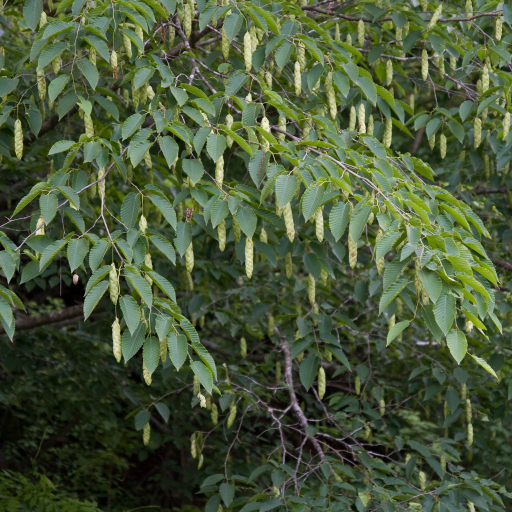
Plant Overview
Known affectionately as the Heartleaf Hornbeam, this elegant deciduous tree is a hidden gem of East Asian mountain forests. Unlike its more common cousins, it boasts large, romantic heart-shaped leaves that create a lush, layered canopy. It is a slow-growing master of the understory, perfect for gardeners who appreciate architectural beauty and quiet, long-lasting presence.
🔍 How to Identify
- 💚 Heart-Shaped Foliage: The leaves are the star of the show—large, deeply veined, and featuring a distinct "cordate" (heart-shaped) base where the leaf meets the stem.
- 🍃 Serrated Edges: Each leaf edge is finely "double-toothed," giving the foliage a crisp, textured appearance that catches the light.
- 🎐 Hanging Nutlets: In late summer, the tree produces beautiful, pendulous clusters of seeds protected by papery, leaf-like bracts that resemble delicate Japanese lanterns.
🏡 In Your Garden
- 💧 Thirsty Roots: This species thrives in cool, moist, and well-drained soil. It is particularly sensitive to extreme drought; providing a thick layer of organic mulch helps keep the root zone cool and hydrated during hot summers.
- 🌳 The Patient Specimen: Because it grows slowly and maintains a graceful, rounded crown, it is an excellent choice for smaller urban gardens or as a specimen tree in a semi-shaded woodland corner. It rarely outgrows its welcome.
⚠️ Safety & Toxicity
- ✅ Non-Toxic: The Heartleaf Hornbeam is generally considered safe and is not known to be toxic to humans, cats, or dogs.
- 🧤 Family Friendly: Unlike some ornamental shrubs, it lacks thorns or irritating saps, making it a safe choice for landscapes where children and pets play.
✨ Fun Fact
The name "Hornbeam" comes from the Old English words horn (meaning tough or hard) and beam (meaning tree). The wood of Carpinus cordata is so incredibly dense and heavy that it was historically used to craft ox-yokes and tool handles that could withstand immense pressure without snapping.

Detailed Care Instructions
To grow Carpinus Cordata plants, also known as Hornbeam, you can follow these steps:
- Choose the right location: Select a spot that gets full or partial sun, as Carpinus Cordata prefers sunlight. Ensure the soil is well-draining.
- Prepare the soil: Hornbeam plants thrive in well-drained soil enriched with organic matter. Amend the soil with compost or well-rotted manure before planting.
- Planting: Dig a hole twice as wide and slightly deeper than the root ball of the plant. Place the Carpinus Cordata in the hole, making sure the top of the root ball is level with or slightly above the ground surface.
- Backfill: Fill the hole with soil, making sure there are no air pockets. Gently firm the soil around the plant.
- Watering: Water the plant deeply after planting and continue to water regularly, especially during dry periods. Keep the soil consistently moist, but avoid overwatering, as excessive moisture can lead to root rot.
- Mulching: Apply a layer of organic mulch, such as wood chips or shredded bark, around the base of the plant. Mulching helps retain moisture, suppresses weeds, and maintains a more consistent soil temperature.
- Pruning: Prune Carpinus Cordata in late winter or early spring to shape and remove any dead or damaged branches. This will help maintain a healthy and attractive plant.
- Fertilizing: Fertilize in early spring with a balanced, slow-release fertilizer according to the package instructions. Avoid excessive fertilization, as it can lead to weak growth.
- Protection: If you live in an area with harsh winters, protect young Carpinus Cordata plants from cold temperatures and heavy snowfall by wrapping burlap around the trunk. This will shield the bark and prevent winter damage.
- Regular maintenance: Regularly monitor the plant for signs of pests, diseases, or any other issues. Treat any problems promptly to ensure the health and growth of the Carpinus Cordata plant.
By following these steps, you can successfully grow and care for Carpinus Cordata plants. Remember to adjust the care based on your specific climate and growing conditions.

Place in a window with dappled sun or a spot in the middle of a room. Or directly in a window facing west or east.

Carpinus Cordata, also known as the Korean Hornbeam, requires regular watering to maintain optimal growth and health. It is essential to water the plant consistently to prevent its soil from drying out, as this can lead to stunted growth and leaf drop.
When watering Carpinus Cordata, it is important to avoid overwatering, as this can also damage the plant's root system and lead to root rot. The frequency of watering should be adjusted based on the weather conditions and soil moisture levels. A good rule of thumb is to water deeply once a week during the growing season, and less frequently during colder months.
To water Carpinus Cordata, saturate the soil around the plant's root system, ensuring that the water reaches the roots at a depth of at least 6 inches. It is best to water the plant in the early morning or late evening when temperatures are cooler and evaporation rates are lower.
Once the soil has been adequately watered, allow the water to drain away from the plant to prevent standing water around the roots. This will ensure that the plant's roots have access to adequate oxygen and prevent root rot.
Overall, by providing consistent and appropriate watering, Carpinus Cordata will thrive and provide a beautiful addition to any landscape.
To fertilize this plant, use a slow-release fertilizer with a balanced NPK ratio (such as 10-10-10) in early spring before new growth appears. Apply the fertilizer evenly around the base of the plant, avoiding direct contact with the trunk or stems. Water the plant well after fertilizing. Repeat this process every 3-4 months throughout the growing season for optimal growth and health.
The ideal type of soil to use for this plant is well drained soil that is rich in nutrients and organic matter. It should have a slightly acidic to neutral pH level, ranging from 6.0-7.5. It is important to avoid using heavy clay soil, as this can cause waterlogging and root rot. The soil should be kept consistently moist, but not waterlogged, as this can also lead to disease and root rot. Adding compost or aged manure to the soil can help to improve its fertility and texture.
To propagate this plant, you will need to take cuttings from a healthy, mature plant during the growing season. Choose a stem that is at least 4 inches long with several nodes.
Use sterilized pruning shears to make a clean cut just below a node. Remove any leaves from the bottom half of the cutting to reduce moisture loss.
Dip the cut end into rooting hormone powder or gel. Place the cutting into a pot filled with a well-draining soil mix. Cover the pot with a plastic bag to create a humid environment.
Place the pot in a warm, bright location but out of direct sunlight. Keep the soil moist but not soggy. After a few weeks, check for roots by gently tugging on the stem. If it resists, roots have formed.
Transplant the rooted cutting into a larger pot or directly into the ground once it has established a healthy root system. Keep the new plant watered and protected from extreme temperatures until it becomes established.








