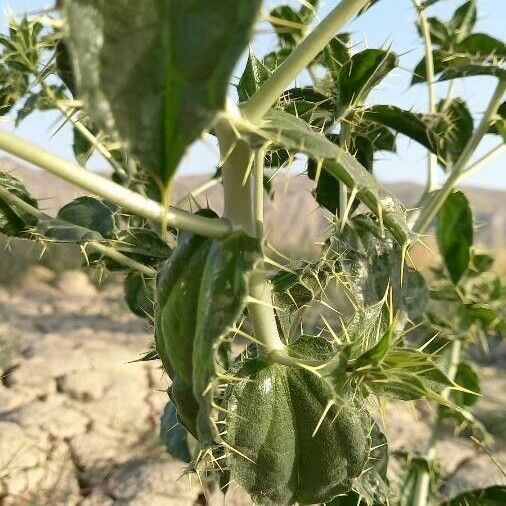
Plant Overview
Often called the Wild Safflower or Yellow Thistle, this plant is the rugged, spiny cousin of the cultivated safflower used in cooking oils. In its native lands across the Middle East and South Asia, it is known for its incredible resilience and its ability to thrive in sun-baked, arid landscapes. While some gardeners view it as a stubborn weed, it is a fascinating example of botanical defense and survival.
🔍 How to Identify
- 🌼 Golden Blooms: The plant produces small, vibrant yellow flower heads that often transition to a deep orange or reddish hue as they mature.
- ⚔️ Spiny Armor: The leaves are lance-shaped and heavily armed with sharp, pale spines along the margins—a natural deterrent against grazing animals.
- 🌿 Bushy Growth: It typically grows as a rigid, branching annual, forming a dense and prickly mound that can reach up to a meter in height.
🏡 In Your Garden
- 🏜️ Drought Warrior: This plant is a true master of water conservation. It possesses a deep taproot that seeks out moisture far below the surface, allowing it to stay green even when the surrounding grass has turned brown.
- 🌾 Spread Management: Because it is a prolific self-seeder, it can quickly take over open spaces. If you find it in your yard, you’ll need to manage it early; once those spines harden, it becomes much more difficult to remove without heavy-duty gear.
⚠️ Safety & Toxicity
- 🌵 Physical Risk: While not considered chemically toxic to humans, the plant is physically hazardous. The spines are needle-sharp and can easily puncture skin or thin gardening gloves, leading to irritation or localized swelling.
- 🐾 Pet Safety: It is generally safe regarding ingestion, but the sharp foliage can cause painful injuries to the mouths, paws, and eyes of curious dogs or cats.
✨ Fun Fact
Despite its prickly and "weedy" reputation, the seeds of the Wild Safflower are packed with high-quality oil. Scientists are currently studying this plant as a potential source for sustainable biofuels and as a hardy "crop of the future" that can grow in areas affected by climate change and desertification.

Detailed Care Instructions







