Plant Overview
Known as the "Fishtail Palm" for its jagged, triangular leaves, Caryota urens is a tropical giant hailing from the misty jungles of South Asia. It holds a legendary status in its native lands as the "Jaggery Palm," prized for the sweet sap used to make traditional sugar and wine. This palm is a dramatic addition to any landscape, known for a unique life cycle where it grows for decades, blooms in a spectacular downward sequence, and then peacefully passes away.
🔍 How to Identify
- 🐠 Fishtail Leaves: The most striking feature is the bipinnate foliage; the leaflets are torn and jagged at the ends, perfectly mimicking the tail of a goldfish or koi.
- 🗿 Solitary Trunk: Unlike some clumping palms, this species grows as a single, smooth, gray pillar that can reach towering heights of 40 to 60 feet in the wild.
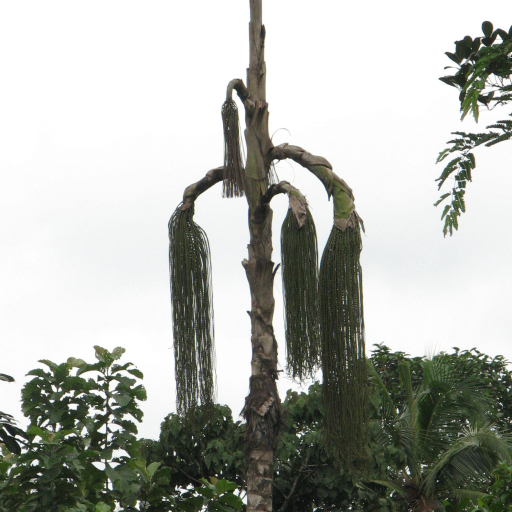
- 🧶 Tasseled Blooms: When it reaches maturity, it produces massive, pendulous flower clusters that hang down like heavy, thick dreadlocks or ornate tassels.
🏡 In Your Garden
- ⏳ Monocarpic Nature: This plant follows a "one-and-done" life cycle. It spends about 15–20 years growing upward before it begins flowering from the top down. Once the bottom-most fruit ripens, the individual tree dies, making it a temporary but majestic focal point.
- ⚓ Root Sensitivity: Caryota urens develops a deep taproot and strongly dislikes being transplanted. It is best to choose its "forever home" carefully while it is still young to avoid fatal root shock.
⚠️ Safety & Toxicity
- 🚫 Severe Irritant: The fruit of the Fishtail Palm contains microscopic, needle-like crystals of calcium oxalate (raphides).
- 🧤 Skin & Pet Warning: Handling the fruit with bare hands can cause intense itching and burning of the skin. It is toxic if ingested by pets or humans, causing severe swelling of the mouth and throat. Always wear gloves if you are cleaning up fallen seeds.
✨ Fun Fact
In Sri Lanka and India, the sap of this palm is harvested to create "Toddy," a popular local fermented drink. When the sap is boiled down instead of fermented, it creates a delicious, dark, unrefined sugar called "Jaggery," which is a staple in South Asian desserts.

Detailed Care Instructions
| Lighting | Full Sun |
| Toxicity | Poisonous |
| Hardiness Zones | 9B - 11 |
To grow Caryota Urens plant, also known as fishtail palm or toddy palm, follow these steps:
- Choose a suitable location: Caryota Urens prefers partial shade or filtered sunlight, although it can tolerate full sun. Make sure the location has well-draining soil.
- Planting: Dig a hole that is wider and slightly deeper than the root ball of the plant. Place the plant in the hole and backfill it with soil. Gently tamp down the soil to eliminate any air pockets.
- Watering: Keep the soil consistently moist but not soggy. Water the plant whenever the top inch of soil dries out. Avoid overwatering, as it can lead to root rot. During the winter, reduce watering frequency.
- Fertilizing: Feed the plant with a balanced, slow-release fertilizer during the growing season (spring and summer) to promote healthy growth. Follow the instructions on the fertilizer package for application rates.
- Pruning: Remove any dead or yellowing leaves regularly to maintain the plant's appearance. Prune damaged or crossed branches to improve air circulation.
- Mulching: Apply a layer of organic mulch around the base of the plant to help retain moisture, suppress weed growth, and improve soil fertility.
- Temperature and humidity: Caryota Urens thrives in tropical and subtropical climates with warm temperatures ranging from 60-85°F (15-29°C). It prefers high humidity levels, so misting the leaves with water can help increase humidity if you live in a dry climate.
- Transplanting: As the plant grows, you may need to transplant it to a larger container or a larger outdoor space to accommodate its size. Be careful with the long roots when transplanting.
- Pests and diseases: Monitor your plant for common pests like spider mites or mealybugs. Treat any infestations promptly using organic or chemical insecticides. Inspect the plant regularly for signs of diseases like leaf spot or root rot. If detected, take appropriate measures to control the issue.
With proper care, your Caryota Urens plant should gradually grow and thrive, showcasing its unique fishtail-shaped leaves and striking appearance.

Place in a window with dappled sun or a spot in the middle of a room. Or directly in a window facing west or east.

The best way to water this plant is to check the moisture levels of the soil frequently. This can be done by sticking your finger into the soil about 2-3 inches deep. If the soil feels dry, it is time to water the plant. When watering, it is important to thoroughly soak the soil until water runs out of the drainage holes in the pot. It is best to avoid allowing the plant to sit in standing water, as this can lead to root rot. This plant prefers slightly moist, but not waterlogged, soil. Overwatering can cause the plant to develop yellowing leaves and eventually lead to its death. It is also important to ensure that the pot has good drainage. Additionally, this plant benefits from occasional misting to increase humidity levels around it.
To fertilize this plant, use a balanced fertilizer with equal amounts of nitrogen, phosphorus, and potassium. Apply the fertilizer once a month during the growing season, which typically occurs in the spring and summer months. Dilute the fertilizer in water according to the package instructions and apply it to the soil around the base of the plant. Be sure not to over-fertilize as this can be harmful to the plant.
The ideal soil for the plant [Caryota Urens] is a well-draining soil mix that is comprised of organic matter and a good quality potting mix. The soil pH for this plant should be slightly acidic to neutral, and it should be rich in nutrients. It is important to ensure that the soil is moist but not waterlogged, as the plant does not tolerate water logging well. Additionally, the soil should be kept somewhat compact to prevent the plant from shifting or leaning. Finally, the pot or planter containing the plant should have adequate drainage holes to prevent water retention in the soil and prevent root rot.
To propagate the plant known as Caryota Urens, you will first need to collect the seeds from the mature fruit. These seeds should be soaked in water for up to 48 hours to soften the outer coating.
Next, you will need to fill a pot with a well-draining soil mix and plant the seeds at a depth of around 1 inch. Place the pot in a warm, humid location and keep the soil consistently moist.
It can take several weeks for the seeds to sprout, so be patient. Once they do, you can continue to care for them as you would any young plants, including providing ample sunlight, water, and nutrients.
As the plants grow, you may need to transplant them into larger pots or outside into a sunny location. With proper care, your Caryota Urens plants should grow into beautiful specimen trees.








