Plant Overview
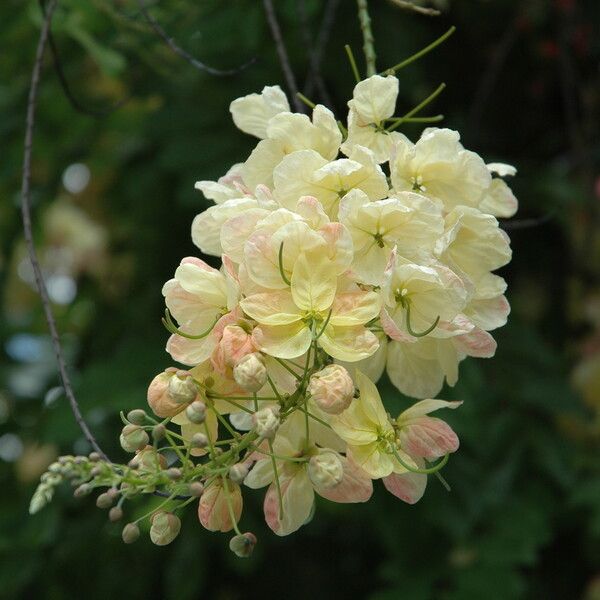
Often called the "Jewel of Honolulu," the Rainbow Shower Tree is a breathtaking hybrid that looks like a sunset captured in a canopy. This tree is a sterile cross between the Golden Shower (Cassia fistula) and the Pink-and-white Shower (Cassia javanica), resulting in a kaleidoscope of colors on a single branch. It is widely celebrated as one of the most beautiful ornamental trees in the world, specifically prized for its ability to bloom without the messy cleanup of falling seed pods.
🔍 How to Identify
- 🌸 Floral Fireworks: Large, drooping clusters (racemes) of flowers that transition through shades of cream, lemon yellow, orange-gold, and soft pink.
- 🍃 Feathery Foliage: Bright green, pinnate leaves arranged in pairs that create a lush, airy "fern-like" texture across the canopy.
- 🌳 Umbrella Shape: A broad, spreading growth habit that naturally forms a wide, rounded crown, providing excellent dappled shade.
🏡 In Your Garden
- 🧹 The "Clean" Hybrid: Unlike its parent species, Cassia × nealiae is sterile and rarely produces the long, heavy brown seed pods that can litter lawns. This makes it a "pedestrian-friendly" tree perfect for sidewalks and patios.
- ☀️ Sun & Space: This tree is a true sun-worshipper. It requires full sun to trigger its spectacular flowering and needs plenty of room to spread its wide canopy without crowding nearby structures.
- 💧 Drought Tolerance: Once established, it is remarkably resilient to dry spells, though it performs best with deep, occasional watering during the peak of summer.
⚠️ Safety & Toxicity
- 🐾 Generally Safe: The Rainbow Shower Tree is considered non-toxic to humans and is widely used in public parks.
- 🐕 Pet Note: While not considered high-risk, ingestion of any ornamental plant material (leaves or bark) can cause mild digestive upset in dogs or cats. It is always best to discourage pets from chewing on the fallen blooms.
✨ Fun Fact
The Rainbow Shower Tree is the official city tree of Honolulu, Hawaii. Because it is a hybrid, it cannot be grown from seeds; every true Rainbow Shower Tree you see has been painstakingly created through grafting or air-layering by horticulturists!

Detailed Care Instructions
To grow Cassia X Nealiae plants, follow these steps:
- Choose an appropriate location: Cassia X Nealiae plants prefer full sun but can tolerate some shade. Ensure that the location has well-draining soil.
- Prepare the soil: Before planting, prepare the soil by removing any weeds or rocks. Loosen the soil to a depth of about 12 inches and mix in some organic compost or well-rotted manure to improve the soil's fertility and drainage.
- Planting: Dig a hole that is slightly larger than the root ball of the plant. Place the Cassia X Nealiae plant into the hole, making sure that the top of the root ball is level with the soil surface. Backfill the hole with soil and gently firm it around the plant.
- Watering: After planting, water the plant thoroughly to settle the soil and encourage root establishment. Depending on the climate and moisture levels, water the plant regularly but do not allow the soil to become waterlogged. Cassia X Nealiae plants prefer moderately moist, well-drained soil.
- Fertilizing: Apply a balanced, slow-release fertilizer in spring and mid-summer to provide essential nutrients for healthy growth. Follow the instructions on the fertilizer packaging for proper application rates.
- Pruning: Cassia X Nealiae plants benefit from regular pruning to maintain their shape and encourage blooming. Prune any dead or diseased branches, as well as any overly leggy growth. Additionally, you can lightly prune after flowering to control the size and shape of the plant.
- Mulching: Apply a layer of mulch around the base of the plant, leaving a small gap around the stem to prevent moisture accumulation. Mulch helps to suppress weeds, conserve moisture, and regulate soil temperature.
- Pest and disease control: Monitor your Cassia X Nealiae plant for pests such as aphids or caterpillars. Treat any pest infestations promptly with appropriate insecticides or horticultural oils. Ensure good air circulation around the plant to prevent fungal diseases.
- Propagation: Cassia X Nealiae plants can be propagated through softwood cuttings taken in late spring or early summer. Dip the cut end of the cutting in rooting hormone and plant it in a well-draining potting mix. Keep the soil evenly moist and provide bright, indirect light until the cutting establishes roots.
With proper care and maintenance, your Cassia X Nealiae plant should thrive and produce beautiful flowers. Remember to adjust your care routine based on your specific climate and local conditions.

Place in a bright room that is sun drenched almost all day. Or directly in a south-facing window.

To water this plant, ensure that the soil is completely dry before watering. Check the moisture level by inserting your finger into the soil up to the first knuckle. If the soil feels dry, it's time to water. Water thoroughly until water drains out of the bottom of the pot, then discard any excess water in the saucer. It's important to not let the plant sit in standing water, as this can lead to root rot. Wait until the soil is completely dry before watering again, which could take a few days to a week depending on the humidity and temperature of the environment.
The best time to fertilize this plant is during the growing season, which is typically in the spring and summer months. Use a balanced fertilizer with equal parts nitrogen, phosphorus, and potassium. Follow the instructions on the fertilizer package for proper application rates, which usually involves diluting the fertilizer in water and applying it evenly over the soil surface. Avoid getting the fertilizer on the leaves or stems of the plant, as this can cause burn marks or other damage. Water the plant thoroughly after fertilizing to help distribute the nutrients throughout the soil.
The ideal soil for the Cassia X Nealiae plant should be a well-draining and aerated soil mix. It is recommended to use a combination of ingredients such as sand, perlite, and peat moss to create a balanced soil texture. The soil should also have a slightly acidic pH level, around 6.0-6.5.
Organic matter like compost or leaf mold can be added to the soil to enhance its nutrient content, but it is important not to over-fertilize the plant as it may cause damage. The plant prefers a moderately fertile soil, so a balanced fertilizer with N-P-K ratio around 10-10-10 can be used every 6-8 weeks during the active growing season.
It is crucial to avoid using heavy or clay soils, which can lead to waterlogging and suffocate the plant roots. Additionally, the soil should never be soggy or constantly wet, as it can cause root rot and fungal issues. Keeping the soil slightly moist but not waterlogged is the key to maintaining a healthy Cassia X Nealiae plant.
The propagation of this plant can be achieved through various methods like stem cuttings or seed sowing. For stem cuttings, you need to select a healthy stem that has a few leaves on it. Ensure that the stem is at least 4-6 inches long and make a cut at an angle using a sterile tool. Remove the leaves from the bottom of the stem and dip it in rooting hormone powder. Plant the stem in a pot filled with well-draining soil and keep the soil moist. Place the pot in a warm and bright location and wait for the roots to form.
Another method is seed sowing- Collect the seeds from mature plants and store them in a dry and cool place. When the time is right, place the seeds on top of moist soil and gently cover them with a thin layer of soil. Keep the soil moist by watering it whenever it dries out and ensure that the pot is placed in a warm and bright location. Soon, the seeds will sprout and grow into healthy plants.
Common pests of the rainbow shower tree include Spider mites, thrips, whiteflies, larvae. Make a habit of checking your rainbow shower tree frequently for pests so that any infestations can be caught and managed early.








