Plant Overview
The Allegheny Chinkapin, often called the "Little Brother" of the once-mighty American Chestnut, is a resilient shrub or small tree beloved by foragers and wildlife enthusiasts. Known for its sweet, buttery nuts that ripen much earlier than other forest masts, it has a rich history as a staple food in the Appalachian region. Despite the shadow of the chestnut blight, this "bush chestnut" continues to thrive in the wild, offering a glimpse into the ancient forests of North America.
🔍 How to Identify
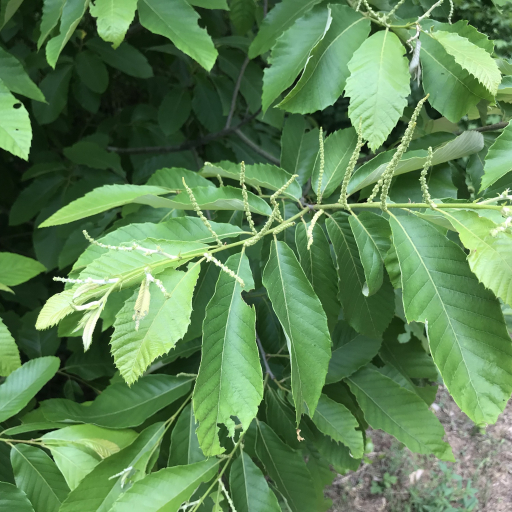
- 🍃 Serrated Foliage: Look for oblong, canoe-shaped leaves with sharp, saw-toothed edges. A key tell-tale sign is the underside, which is covered in a soft, velvety white "fuzz."
- 🌰 The Single-Nut Burr: Unlike the American Chestnut, which holds three nuts per husk, the Chinkapin produces a small, golden-brown spiny burr that contains only one single, rounded, shiny dark-brown nut.
- 🌼 Fragrant Catkins: In early summer, the tree is draped in long, creamy-yellow cylindrical flower spikes (catkins) that emit a strong, musky scent to attract a wide variety of pollinators.
🏡 In Your Garden
- ☀️ Thrives in "Tough" Spots: This plant is a pioneer species that actually prefers dry, sandy, or rocky upland soils where other trees might struggle. It is highly drought-tolerant once established.
- 🦅 Ecological Powerhouse: Planting a Chinkapin is like installing a buffet for local wildlife. It provides high-protein forage for wild turkeys, squirrels, and chipmunks, while its dense, shrubby growth habit offers excellent nesting cover for songbirds.
⚠️ Safety & Toxicity
- ✅ Edible & Delicious: The nuts are completely safe for human consumption and are often considered sweeter and more flavorful than traditional chestnuts. They can be enjoyed raw, roasted, or even ground into flour.
- 🌵 Physical Hazard: The primary safety concern is the "burr" itself. The needle-sharp spines are incredibly prickly and can easily pierce skin; always wear thick leather gloves during harvest season.
- 🐾 Pet Safety: The plant is non-toxic to dogs and cats, though the sharp husks can pose a painful poking hazard to curious paws or noses if left on the ground.
✨ Fun Fact
Indigenous peoples, including the Cherokee and Rappahannock tribes, prized the Chinkapin not just for food, but for medicine. They traditionally used a tea made from the dried leaves to soothe headaches and reduce stubborn fevers.

Detailed Care Instructions
To grow Castanea pumila, also known as the Allegheny chinquapin or American chinquapin, follow these steps:
- Climate: Castanea pumila thrives in USDA hardiness zones 5 to 9. It prefers a temperate climate with mild winters and hot summers.
- Soil: The plant prefers well-draining soils that are slightly acidic to neutral pH. It thrives in loamy soils with good organic matter content.
- Sunlight: Choose a location that receives full sun or partial shade. Castanea pumila needs at least 6-8 hours of direct sunlight per day to grow well.
- Planting: Ideally, plant Castanea pumila in late fall or early spring when temperatures are cooler. Dig a hole that is twice the width and depth of the root ball. Place the plant in the hole, making sure the crown is level with the soil surface. Backfill the hole with soil and gently firm it around the roots.
- Watering: Keep the soil evenly moist but not waterlogged. Water deeply and regularly during dry spells, especially during the first growing season. Avoid overwatering, as Castanea pumila does not tolerate waterlogged conditions.
- Mulching: Apply a layer of organic mulch around the base of the plant, keeping it a few inches away from the stem. Mulch helps retain moisture, suppresses weeds, and regulates soil temperature.
- Fertilization: In the first year, apply a slow-release fertilizer formulated for trees according to the package instructions in early spring. In subsequent years, apply a balanced fertilizer once a year in early spring.
- Pruning: Young plants can benefit from pruning to encourage a balanced shape and structure. Prune any dead or damaged branches and remove any suckers that appear at the base. Avoid heavy pruning that may affect the plant's ability to produce nuts.
- Pest and disease management: Castanea pumila is generally resistant to most pests and diseases. However, monitor for common issues like chestnut blight or chestnut weevils. Consult with local experts for specific control measures if necessary.
- Harvesting: Castanea pumila produces sweet edible nuts. Harvest them as they ripen in the fall. The nuts can be roasted or used in various recipes.
Remember, growing Castanea pumila requires patience, as it can take several years before the plant starts producing nuts.

Place in a bright room that is sun drenched almost all day. Or directly in a south-facing window.

To properly hydrate this plant species, it is important to avoid over-watering as it can cause root rot. Watering should be done only when the soil feels moderately dry to the touch. When watering, pour water slowly and directly onto the soil, avoiding the leaves and stem. The amount of water needed may vary depending on the size of the plant and the environmental conditions, but a good rule of thumb is to water until the soil is evenly moist but not saturated. In dry or hot weather conditions, more frequent watering may be necessary. It is also important to provide good drainage to prevent water from stagnating in the soil.
To fertilize this plant, use a balanced fertilizer with equal proportions of nitrogen, phosphorus, and potassium in the spring before new growth begins. Apply the fertilizer around the drip line of the plant, making sure not to allow the granules to touch the trunk or foliage. Water the plant thoroughly after fertilizing to help distribute the nutrients throughout the soil. Avoid fertilizing in the fall as this can lead to tender new growth that is susceptible to damage during the winter months. It is important to follow the instructions on the fertilizer packaging and not over-fertilize, as this can lead to damage or even death of the plant.
Castanea Pumila is a shrub that prefers well-draining soils with good organic matter content. The soil pH should be slightly acidic to neutral. It thrives in soils that are moist but never waterlogged and needs good drainage to avoid root rot. It can be grown in various soil types, including sandy loam, loam, and clay loam, as long as it is well-aerated and well-drained. Ultimately, Castanea Pumila grows best in nutrient-rich soil, so adding organic matter, such as compost or aged manure, can help improve soil quality.
To propagate this plant, you can collect its seeds in the late summer or early fall when the fruit is mature. Clean the seeds by removing the outer husks and soak them in water overnight. Then, place the seeds in a mixture of moist sand and peat moss and cover with a layer of soil. Keep the soil moist and place the container in a cool, dark place for several months.
After the winter months, the seeds should have germinated and you can transplant them into individual pots with potting soil. Keep the young plants in a shaded area for a few weeks and gradually introduce them to brighter light.
Another method of propagation is through cuttings. In early summer, take cuttings from the plant's new growth, making sure to include a few leaves at the tip. Dip the cut end of the stem in rooting hormone and plant it in a mixture of sand and peat moss. Keep the soil moist and the cutting in a shaded area until it has developed roots.
Transplant the cutting into a pot with potting soil and gradually introduce it to brighter light. With proper care, both seed-sown and cutting-grown plants can be successfully propagated.








