Plant Overview
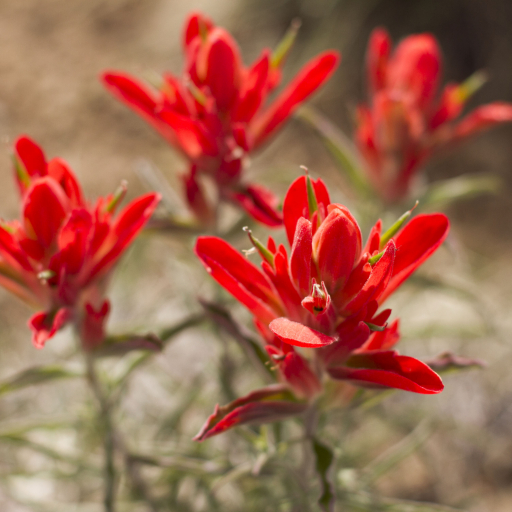
Often called the Wholeleaf Indian Paintbrush, Castilleja integra looks as if a desert spirit took a brush and dipped the tips of a wild herb into vibrant orange or scarlet pigment. Found decorating the high deserts and rocky slopes of the American Southwest, this resilient wildflower is a favorite among hikers and hummingbirds alike. Its presence often signals a healthy, diverse ecosystem where complex underground connections run deep.
🔍 How to Identify
- 🎨 The "Paintbrush" Bracts: The most striking feature isn't the flower itself, but the leaf-like "bracts" at the top. These range from brilliant orange to a deep, sunset red, hiding the small, greenish tube-shaped true flowers within.
- 🍃 Smooth Foliage: True to its name (integra meaning "whole"), this species features smooth-edged, narrow, grayish-green leaves. Unlike other paintbrush varieties, these leaves are not lobed or "toothed."
- 📏 Sturdy Stature: It typically grows in clumps of upright, unbranched stems, reaching about 6 to 15 inches in height, often appearing slightly woody at the very base.
🏡 In Your Garden
- 🤝 The Secret Neighbor: This plant is a "hemiparasite," meaning its roots sneakily attach to nearby grasses or shrubs to "borrow" extra water and nutrients. Because of this complex relationship, it is notoriously difficult to transplant; it literally needs its neighbors to survive.
- ⛰️ Highland Native: If you are lucky enough to have it in your landscape, leave it be! It craves the conditions of its native home—well-draining, rocky soil and intense, full sun. It is extremely drought-tolerant because it relies on the root systems of surrounding plants to get through dry spells.
⚠️ Safety & Toxicity
- 🟡 Selenium Accumulator: While not inherently poisonous to the touch, Indian Paintbrushes are known to absorb selenium (a mineral) from the soil. In areas with high selenium levels, the plant can become toxic if ingested in significant amounts.
- 🐾 Pets & Kids: It is generally considered non-toxic to cats and dogs in passing. However, due to its ability to concentrate minerals from the ground, it should never be consumed as part of a "wild forage" snack.
✨ Fun Fact
Native American legends tell of a young brave who was trying to paint the sunset. Frustrated that he couldn't match the colors, he asked the Great Spirit for help. He was given brushes loaded with living colors; after he finished his masterpiece, he left the brushes scattered across the landscape, where they took root and became the Indian Paintbrush.

Detailed Care Instructions
To grow Castilleja integra, also known as Indian paintbrush, you can follow these steps:
- Soil: Choose a well-draining soil that is rich in organic matter. Indian paintbrush prefers slightly acidic to neutral soil.
- Location: Find a sunny spot in your garden for planting as Indian paintbrush thrives in full sunlight.
- Climate: This plant is native to the western United States and prefers cooler temperatures. It grows well in USDA hardiness zones 3 to 8.
- Planting: Sow the seeds in late fall to early spring. Lightly press the seeds into the soil, but do not cover them completely, as they require light to germinate. You can also mix the seeds with moist sand and scatter them over the planting area.
- Watering: Keep the soil evenly moist during the germination period, which usually takes 10-20 days. Once established, Indian paintbrush is fairly drought-tolerant and does not require frequent watering.
- Maintenance: The plant does not require much maintenance once it starts growing. However, it is important to prevent weeds from taking over the area. Regularly remove any competing weeds near the plant to allow it to grow freely.
- Propagation: Indian paintbrush can also be propagated by dividing clumps in the early spring. Carefully dig up the plant, separate the clumps, and replant them in suitable locations.
- Protection: Protect the plants from pests, such as slugs and snails, by using organic or chemical methods. Also, protect the plants from extreme heat and frost, if necessary.
- Flowering: Enjoy the beautiful red, orange, or yellow bracts that resemble paintbrushes. The actual flowers are smaller and usually green or yellow, hidden within the colorful bracts. Castilleja integra typically blooms from spring to early summer.
By following these steps, you can successfully grow Castilleja integra and enjoy its vibrant colors in your garden.

Place in a bright room that is sun drenched almost all day. Or directly in a south-facing window.

To water this plant, it is important to first check the soil for moisture levels. Stick your finger into the soil to a depth of about 2 inches and feel for moisture. If the soil is dry to the touch, it is time to water.
Fill a watering can with water and slowly pour it onto the soil around the base of the plant. Be sure to avoid getting water on the foliage as this could lead to fungal disease.
Water deeply enough so that the water penetrates the root zone but do not over-water. This plant prefers well-drained soil, so ensure that excess water is able to drain away.
During periods of drought or hot weather, it may be necessary to water this plant more frequently. Always check the soil moisture levels before watering to avoid over-watering.
In general, it is better to water this plant deeply and less frequently rather than providing shallow watering more frequently.
Use a slow-release fertilizer with high nitrogen content during the spring growing season when new growth appears. Apply a balanced fertilizer with equal amounts of nitrogen, phosphorus, and potassium in mid-summer for a healthy, robust plant. Avoid fertilizing during the fall and winter months when growth slows down. Follow the manufacturer's instructions carefully, or consult a gardening expert for specific advice tailored to your location and growing conditions.
The most suitable soil for Castilleja Integra plants is a well-draining and fertile soil that is rich in organic matter. It should be slightly acidic with a pH range between 5.5 – 6.5. The plant prefers sandy or loamy soils that are moisture-retentive but not waterlogged. The ideal soil texture for Castilleja Integra is gritty and porous, which allows for proper drainage and aeration. Topsoil mixed with sand or perlite can be used to create a free-draining soil mix. The plant also tolerates clayey soils as long as it is not waterlogged. It is recommended to amend the heavy soil with compost or coarse sand to improve drainage. Generally, a well-draining soil with a balanced pH and high nutrient content will promote healthy growth and flowering of Castilleja Integra.
Castilleja integra can be propagated through division or seed sowing.
To propagate through division, carefully dig up the plant and separate the roots and stems into smaller sections. Make sure each section has at least one healthy stem and several roots. Replant the sections in well-draining soil and water thoroughly.
To propagate through seed sowing, collect mature seeds from the plant and sow them in a seed tray or pot filled with well-draining soil. Press the seeds lightly into the soil and water gently. Keep the soil moist but not saturated and place the tray or pot in a warm, bright location. Seeds should germinate within a few weeks. Once the seedlings are large enough to handle, transplant them into individual pots or into a garden bed.
Ensure that the new plants are watered regularly and kept in well-draining soil with adequate sunlight. Castilleja integra is a hardy plant that can tolerate drought and extreme temperatures, but it thrives in a moist, fertile soil and moderate temperatures.








