Plant Overview
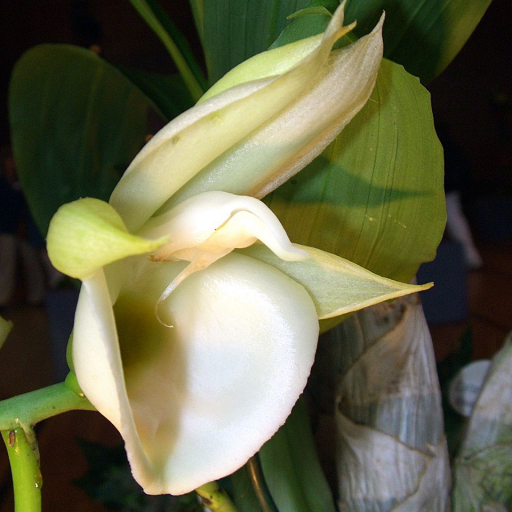
Known as the "Mother of Pearls" or "Flor de Nácar," Catasetum pileatum is one of the most magnificent orchids in the world. As the national flower of Venezuela, it is celebrated for its massive, waxy blooms that look like they were carved from ivory or porcelain. This orchid is famous among collectors for its dramatic life cycle and its "theatrical" method of pollination.
🔍 How to Identify
- 🐚 The Blooms: These are among the largest in the genus, featuring a wide, saucer-shaped lip that can reach up to 4 inches across. They are typically creamy white, though rare greens and reds exist.
- 🌿 Pleated Foliage: The leaves are large, thin, and deeply "pleated" (plicate), fanning out from the top of the plant during the growing season.
- 🍾 Cigar Pseudobulbs: It stores water in thick, silvery-green, cigar-shaped pseudobulbs that become wrinkled and bare during its dormant winter phase.
🏡 In Your Garden
- 🍂 The Big Sleep: Unlike many houseplants, this orchid is deciduous. It will naturally drop all its leaves once a year. When this happens, you must stop watering entirely, or the "bulbs" will rot. It's not dying; it's just resting!
- 🧪 Heavy Feeders: During the summer growth spurt, this plant is "hungry." It requires frequent watering and high-nitrogen fertilizer to build up enough energy to produce its massive flowers in the autumn.
- 🐝 Bees & Baits: In the wild, it produces a powerful spicy-sweet scent to attract male Eulaema bees, who use the orchid’s fragrance as a "perfume" to attract their own mates.
⚠️ Safety & Toxicity
- ✅ Safe for All: Catasetum pileatum is generally considered non-toxic to cats, dogs, and humans.
- 💧 Sap Sensitivity: While not poisonous, the sticky nectar (honeydew) produced on the flower spikes can sometimes attract ants or cause a mild sticky residue that might irritate very sensitive skin if handled excessively.
✨ Fun Fact
This orchid is a "marksman!" The male flowers have two sensitive antennae; when a bee touches them, the plant physically launches a sticky "pollen bomb" (pollinaria) at the bee’s back with surprising force, ensuring the pollen hitches a ride to the next flower.

Detailed Care Instructions
To grow a Catasetum Pileatum plant, follow these steps:
- Light: Place your plant in a spot that receives bright, indirect light. Catasetum Pileatum plants thrive in medium to high light conditions.
- Temperature and Humidity: Maintain a warm and humid environment for your plant. The optimal temperature range is between 70-85°F (21-29°C). Increase humidity levels by placing the plant on a tray filled with water and misting the leaves regularly.
- Watering and Fertilizing: Water your Catasetum Pileatum plant thoroughly when the top inch of soil feels dry. In general, water it once a week during active growth and decrease watering during the plant's dormant period. Use a balanced orchid fertilizer at one-quarter to one-half the recommended strength once a month during the growing season.
- Potting and Potting Medium: Use a well-draining orchid potting mix, like a mix of bark, perlite, and sphagnum moss. Repot your plant every 1-2 years when it outgrows its pot or when the potting mix starts to break down.
- Dormancy: Catasetum Pileatum plants require a period of dormancy to bloom. Typically, they enter dormancy in the winter when the temperature drops. During this time, reduce watering and stop fertilizing. Keep the plant in a cooler spot with reduced light until new growth emerges in the spring.
- Pruning: Remove any dead or yellowing leaves to improve the appearance of the plant and prevent the spread of diseases.
- Reproduction: Catasetum Pileatum plants can be propagated through division. When repotting, carefully separate the rhizome and pseudobulbs into individual clumps and plant them in separate pots.
Remember to monitor your plant regularly for signs of pests, such as mealybugs or spider mites, and address any issues promptly. With proper care, your Catasetum Pileatum plant should thrive and produce beautiful flowers.

Place in a window with dappled sun or a spot in the middle of a room. Or directly in a window facing west or east.

Catasetum pileatum is an orchid plant that requires special attention when it comes to watering. One should be very careful while watering this plant since overwatering can lead to root rot. The best way to water Catasetum pileatum is to wait until the potting mix has dried out completely before watering again.
One should use room temperature water to water the plant, as warm water can cause damage to the delicate roots. It is best to water the plant early in the morning or later in the evening when the sun is not too hot since the hot sun can damage the leaves.
It is also important to water the plant from the bottom up. This can be done by filling a saucer with water and placing the pot in the saucer. The water will be drawn up into the potting mix, ensuring that the roots receive the required amount of moisture.
Another important thing to keep in mind is to water the plant sparingly during the dormant period (winter) as the plant will require less water during this time. One should also reduce watering during the flowering period to avoid spoiling the flowers.
In summary, watering the Catasetum pileatum plant requires careful attention and knowledge of its specific watering needs. It is important to water the plant from the bottom up, use room temperature water, and wait for the potting mix to dry out completely before watering again.
For best results, fertilize this plant with a balanced fertilizer that contains equal parts nitrogen, phosphorus, and potassium. Fertilize the plant once a month during the growing season, which typically begins in the spring and lasts until late summer. Be sure to dilute the fertilizer to half strength before applying it, and water the plant thoroughly after fertilizing to prevent the roots from being burned. Additionally, avoid fertilizing the plant during the dormant season, which occurs in the fall and winter months.
When it comes to planting Catasetum Pileatum, it is important to choose the right type of soil to ensure optimal growth and health. This species thrives in well-draining soil that is rich in nutrients and organic matter. It is best to avoid heavy clay soils and choose a soil mix that provides adequate drainage, while also holding onto enough moisture to keep the roots hydrated.
One good soil mix for Catasetum Pileatum would be a combination of orchid bark, sphagnum moss, and perlite or vermiculite. This mix provides good drainage while also holding onto enough moisture to prevent the roots from drying out. The orchid bark provides ample air circulation, while the sphagnum moss and vermiculite hold onto moisture and provide additional nutrients.
It is important to avoid using any soil that contains chemicals or fertilizers, as these can be harmful to the plant's delicate root system. Additionally, it is important to choose a pot with good drainage holes to prevent water from accumulating at the bottom and causing the roots to rot.
Finally, it is also important to monitor the soil moisture regularly and water the plant only when the soil is dry to the touch. Overwatering can cause root rot, which can quickly lead to the death of the plant.
To propagate this plant, you can start by taking a cutting from the main stem. Choose a healthy stem that has at least one node. Use a sharp, sterile knife or scissors to make a clean cut below the node. Then, remove any leaves or twigs from the lower part of the stem, leaving only a few leaves at the top.
Next, prepare a pot with well-draining soil and place the stem cutting into the soil. Water the soil lightly and cover the pot with a clear plastic bag or dome to create a humid environment for the cutting. Keep the pot in a bright, warm location, but out of direct sunlight.
After a few weeks, you should start to see root growth and new leaves emerging from the top of the stem cutting. At this point, you can remove the plastic covering and continue to care for the plant as you would any adult plant of its species. This may include regular watering, periodic fertilization, and appropriate lighting and temperature conditions.
With proper care and attention, your new Catasetum Pileatum plant can grow into a healthy and flourishing member of your collection.








