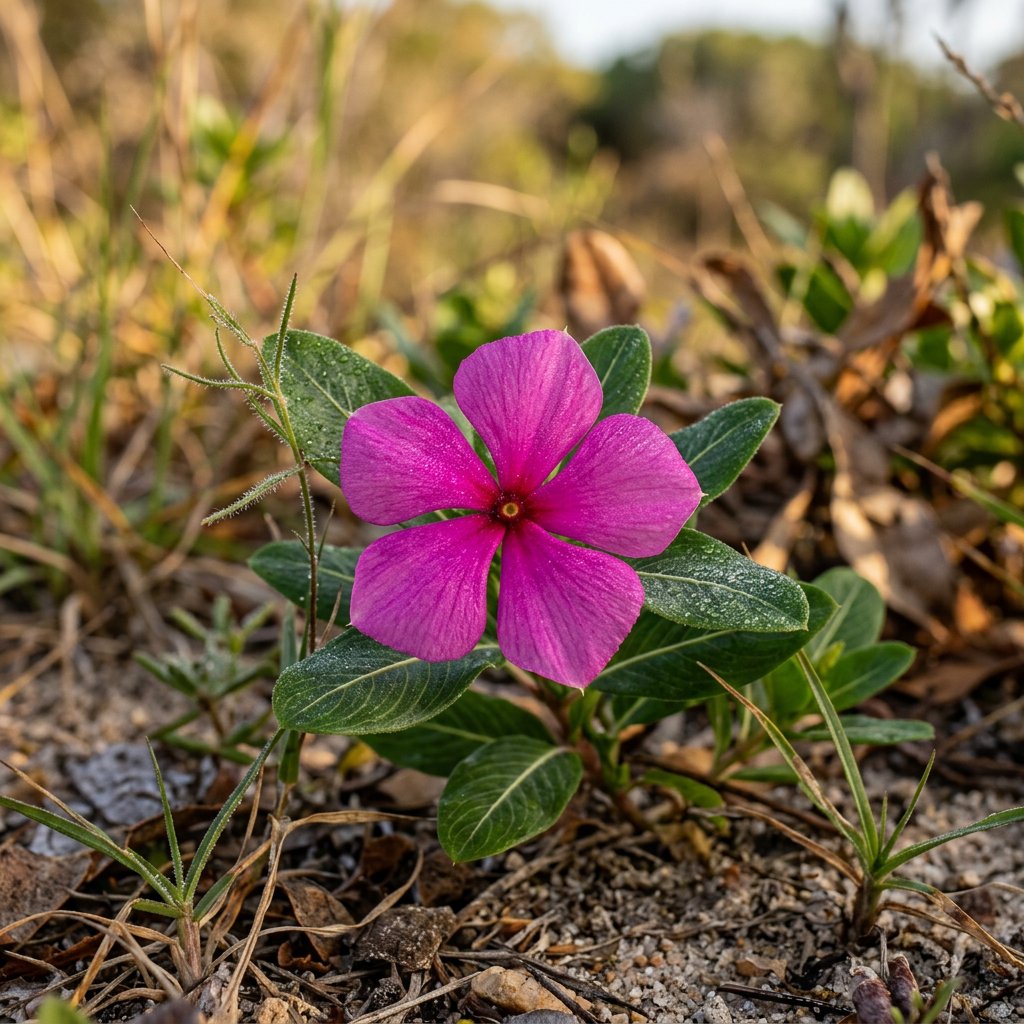
Plant Overview
Often called the "Madagascar Periwinkle" or the "Old Maid," this resilient beauty is a staple in tropical and subtropical gardens worldwide. Despite its delicate, pinwheel-shaped petals, it is a powerhouse of survival, thriving in intense heat and poor soil where other flowers might wilt. While it began as a coastal wildflower in Madagascar, it has earned global fame not just for its color, but for its profound contributions to modern medicine.
🔍 How to Identify
- 🍃 The Foliage: Look for glossy, dark green, oval-shaped leaves that grow in opposite pairs. Each leaf typically features a prominent, pale-white midrib running down the center.
- 🌸 The Bloom: The flowers have five flat, overlapping petals that form a distinct star or "eye" in the center. They come in vibrant shades of rose-pink, white, and lilac.
- 📏 The Stature: It usually grows as a compact, mounding sub-shrub or a trailing groundcover, reaching about 6 to 24 inches in height depending on the variety.
🏡 In Your Garden
- ☀️ The Sun Worshipper: This plant is the ultimate "sun seeker." It performs best in full heat and can handle drought surprisingly well, making it perfect for rock gardens or those "difficult" sunny spots where the hose rarely reaches.
- 💧 The Drainage Rule: The fastest way to hurt a Periwinkle is through kindness—specifically, overwatering. It is highly susceptible to root rot, so it prefers sandy, well-draining soil and hates having "wet feet" during the night.
⚠️ Safety & Toxicity
- 🚫 Status: Toxic to humans and pets.
- 🐾 The Risk: While beautiful, the plant contains alkaloids that are dangerous if swallowed. If pets (especially cats and dogs) or children ingest any part of the plant, it can cause vomiting, diarrhea, low blood pressure, and even tremors. Always wash your hands after pruning to avoid skin irritation from the sap.
✨ Fun Fact
- 🧬 A Medical Miracle: Although toxic to eat, scientists discovered that this plant contains compounds used to create Vincristine and Vinblastine—two critical chemotherapy drugs used to treat leukemia and Hodgkin's disease. It is a literal lifesaver found in a flowerpot!

Detailed Care Instructions
| Color | White, Pink, Mauve, Red |
| Soil Ph | 6.0-7.0 |
| Humidity | Normal |
| Lighting | Full Sun |
| Toxicity | Toxic |
| Soil Type | Sandy Loam |
| Bloom Time | June To Frost |
| Difficulty | Medium |
| Plant Type | Herbaceous Perennial, Usually Grown As An Annual |
| Mature Size | 6 To 18 Inches Similar Spread |
| Native Area | Madagascar |
| Temperature | 18°C - 25°C |
| Sun Exposure | Full Sun To Part Shade |
| Hardiness Zones | 10-11 |
To grow a Catharanthus roseus plant, also known as Madagascar periwinkle, follow these steps:
- Purchase seeds or seedlings from a reputable nursery or online store. Choose a sunny spot in your garden or a pot with well-draining soil for planting.
- Prepare the soil by loosening it with a garden fork or tiller. Mix in organic matter such as compost or well-rotted manure to enhance fertility and drainage.
- Sow the seeds directly in the soil or plant the seedlings according to the package instructions. Ensure proper spacing between each plant, allowing them room to grow. If planting in a pot, make sure it has drainage holes.
- Water the newly planted seeds or seedlings thoroughly, keeping the soil consistently moist but not overly saturated. As the plants establish, reduce the frequency of watering but ensure they never dry out completely.
- Catharanthus roseus plants thrive in full sun, so make sure they receive at least six to eight hours of direct sunlight each day. If planting indoors, place them near a south or west-facing window.
- Apply a balanced fertilizer once every two weeks during the growing season. Follow the label instructions for the recommended dosage. This will promote healthy growth and abundant flowering.
- Pinch back the tips of the plants when they reach about 6 inches in height. This will encourage bushier growth and more flowers.
- Remove any weeds or competing plants that may interfere with the growth of your Catharanthus roseus. Mulching around the plants can help suppress weed growth and retain moisture.
- Monitor for common pests such as aphids or snails. Apply appropriate organic or chemical controls if necessary.
- Enjoy the colorful blooms of Catharanthus roseus! Deadhead the faded flowers regularly to encourage continuous blooming throughout the season.
Remember that Catharanthus roseus is an annual plant in most regions, meaning it will complete its life cycle in one season. However, it can self-seed in warmer climates or be treated as a perennial in zones with mild winters.

Place in a bright room that is sun drenched almost all day. Or directly in a south-facing window.

To water this plant, it is important to ensure that the soil is adequately moist but not waterlogged. Water the plant deeply, so that the water reaches the root zone and promotes healthy growth. It is recommended to water this plant in the early morning or late afternoon to avoid evaporation during hot temperatures. Depending on the climate and soil type, this plant may require watering once or twice a week. To determine if the plant needs water, check the soil moisture level by inserting a finger into the soil, if it feels dry to the touch it needs watering. Be careful not to over-water the plant as this can lead to root rot.
To fertilize this plant, you should use a balanced fertilizer with equal amounts of nitrogen, phosphorus, and potassium. Apply the fertilizer once a month during the growing season, which is typically spring and summer. Make sure to dilute the fertilizer according to the instructions on the label before applying it to the soil around the plant. Avoid applying fertilizer to the leaves or flowers as this can cause damage. Water the plant after applying the fertilizer to help it absorb the nutrients.
The ideal soil for this plant is well-draining and rich in organic matter. It should have a pH range of 6.0 to 7.5. It should be a loamy soil with a good amount of sand and clay for proper drainage and moisture retention. The soil should also be free of any pests or diseases that can harm the plant. It is recommended to add compost or aged manure to improve soil structure and fertility. Additionally, adding a slow-release fertilizer can provide necessary nutrients for optimum growth and flowering.
Propagation of this species of plant can be done through various methods such as stem cuttings, layering, and seeds. Stem cuttings should be taken from healthy and mature plants, with at least two nodes on the cutting. These cuttings should be planted in well-draining soil and kept moist until they have rooted and developed new growth. Layering involves burying a stem of the plant beneath the soil, allowing it to root and develop new shoots before separating it from the parent plant. Seeds are another option; however, they can take longer to germinate and require proper conditions such as warmth and moisture. With proper care and attention, newly propagated plants can thrive and produce stunning flowers.
Common pests of the madagascar periwinkle include Aphids, whiteflies. Make a habit of checking your madagascar periwinkle frequently for pests so that any infestations can be caught and managed early.








