Plant Overview
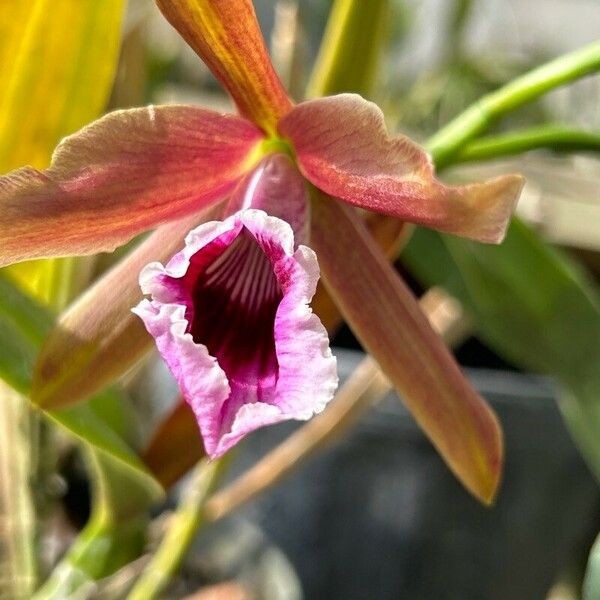
Known as the "Dark Cattleya" or the "Bronze Queen of Brazil," this orchid is a showstopper for those who prefer moody, dramatic tones over traditional bright pinks. Hailing from the coastal rainforests of Brazil, it is legendary among collectors for its metallic, tawny petals and its commanding presence. It carries an air of Victorian mystery, often looking like something plucked from a gothic fairy tale.
🔍 How to Identify
- 🎨 The Bloom: Large, star-shaped flowers that feature striking petals ranging from burnished copper and chocolate brown to a deep, sunset bronze.
- 🎺 The Lip: A massive, trumpet-shaped throat (labellum) that provides a startling contrast, usually colored in rich magenta or velvety purple with dark, "tene brous" (shadowy) veining.
- 🌿 Growth Habit: A sturdy epiphyte with tall, cigar-shaped pseudobulbs topped by a single, thick, leathery leaf that feels like stiff parchment.
🏡 In Your Garden
- ☀️ Sun-Kissed Leaves: Unlike many orchids that prefer deep shade, the Tenebrosa craves high light. If the leaves are a dark, forest green, it’s likely too "comfortable" to bloom; aim for a light lime-green tint to trigger those bronze flowers.
- 🌬️ The Breeze Factor: Because it naturally lives high in the forest canopy, it is an "air plant" at heart. It hates "wet feet" and requires a very coarse potting medium (like large chunks of fir bark) and high-octane airflow to prevent root rot.
⚠️ Safety & Toxicity
- 🐾 Pet Safety: Good news for pet parents! Cattleya tenebrosa is considered non-toxic to cats and dogs, making it a safe choice for indoor displays.
- 👶 Human Interaction: While not poisonous, the plant is purely ornamental. The sap can occasionally be sticky (called "happy sap"), which is harmless but can attract dust or tiny sugar ants if not wiped away.
✨ Fun Fact
Cattleya tenebrosa was once so heavily collected for European conservatories that it nearly vanished from its native Brazilian habitat. Today, almost all plants found in nurseries are "line-bred" by specialists, meaning they are the descendants of champion plants raised in labs rather than taken from the wild.

Detailed Care Instructions
- Light: Cattleya Tenebrosa plants prefer bright, indirect light. Place them in a location where they will receive ample light, such as near a south-facing window. Avoid direct sunlight as it can scorch the leaves.
- Temperature: Cattleya Tenebrosa plants thrive in warm temperatures, ideally between 65-85°F (18-29°C) during the day and no lower than 55°F (13°C) at night. Ensure they are kept in a warm environment year-round.
- Humidity: These plants require high humidity levels, ideally between 50-70%. To increase humidity, you can use a humidifier, place a tray of water near the plant, or regularly mist the plant's leaves.
- Watering: Cattleya Tenebrosa plants prefer to dry out slightly between waterings. Water them thoroughly when the top inch of the potting mix is dry, but be sure not to let the roots sit in standing water as this can cause root rot.
- Potting mix: Use a well-draining orchid mix, such as a combination of coarse bark, perlite, and charcoal. Repot the plant every 2-3 years or when the potting mix breaks down.
- Fertilizing: Fertilize your Cattleya Tenebrosa plant with a balanced orchid fertilizer every 2-3 weeks during the growing season (spring and summer). Reduce fertilization in the fall and winter when the plant is not actively growing.
- Air circulation: Ensure good air circulation around the plant to prevent pests and diseases. You can use a fan to provide gentle air movement.
- Repotting: Repot your Cattleya Tenebrosa plant when it outgrows its current pot or the potting mix breaks down. Choose a slightly larger pot and trim any dead or damaged roots before repotting.
By following these care tips, you can successfully grow a Cattleya Tenebrosa plant and enjoy its beautiful blooms.
Cattleya Tenebrosa plants should be watered thoroughly, allowing water to soak through the roots and drain out of the bottom of the pot. It is important to water them when the top inch of soil is dry to the touch, typically every 7-10 days depending on the temperature and humidity levels. Avoid overwatering as this can lead to root rot. It is also important to provide good air circulation around the plant to prevent the leaves from getting too moist and promoting the growth of fungal diseases. Watering in the morning is ideal as it allows the plant to dry off during the day, reducing the risk of issues like mold or mildew.
To fertilize the plant, you can use a balanced water-soluble fertilizer diluted to half strength. Apply the fertilizer every 2-3 weeks during the plant's active growing season, which is typically spring and summer. Make sure to thoroughly water the plant before and after fertilizing to prevent root burn. Avoid over-fertilizing as this can damage the plant's roots. If you notice any signs of nutrient deficiencies, adjust the fertilizer type or frequency accordingly.
Cattleya Tenebrosa plants prefer a well-draining, loose, and organic-rich medium. A suitable soil mixture for these plants can consist of a blend of fine bark, perlite, and sphagnum moss. This type of soil provides good aeration and moisture retention, which is crucial for the optimal growth of Cattleya Tenebrosa plants. Additionally, adding some charcoal can help prevent soil compaction and maintain proper pH levels. It is important to regularly repot these plants to refresh the soil and ensure the health and vigor of the plant.
Cattleya Tenebrosa can be propagated through division of its pseudobulbs. To do this, carefully remove the plant from its pot and gently separate the individual pseudobulbs, making sure each division has at least one healthy pseudobulb with roots attached. Plant each division in a new pot with well-draining orchid mix and water thoroughly. Place the newly divided plants in a warm and humid environment with bright, indirect light to encourage growth. Keep the soil consistently moist but not waterlogged, and fertilize regularly with a balanced orchid fertilizer to promote healthy growth. With proper care, the divisions should establish roots and begin to grow into new plants.







