Plant Overview
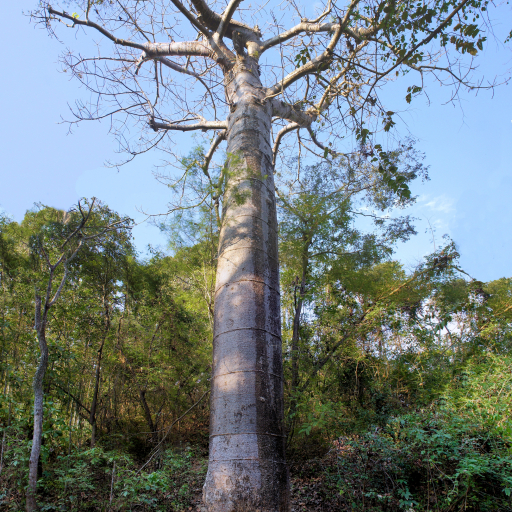
Known as the "Cuipo" or the legendary "Macondo" tree, this tropical giant is the undisputed skyscraper of the Central and South American rainforests. It is famous for its massive, bottle-shaped trunk that towers above the jungle canopy, often serving as a majestic landmark for travelers. In literature, it gained mythical status as the namesake for the fictional town in Gabriel García Márquez's One Hundred Years of Solitude.
🔍 How to Identify
- 🐘 The Trunk: The most striking feature is its massive, swollen, and smooth grayish trunk that resembles an elephant’s leg or a giant bottle, often marked with horizontal rings.
- 🍁 The Foliage: Its name platanifolia refers to its leaves, which are large, heart-shaped, and divided into 5 to 7 lobes, very similar to those of a Sycamore or Plane tree.
- 🌸 The Flowers: During the dry season, the tree sheds its leaves and produces clusters of small, star-shaped red or brownish flowers at the very tips of its high branches.
🏡 In Your Garden & Landscape
- 🌳 Space Requirements: This is not a plant for a backyard! The Cuipo is an "emergent" tree, meaning it grows taller than the surrounding forest, reaching heights of up to 130 feet. It requires vast open spaces and tropical lowland conditions.
- 🦅 Ecological Penthouse: In the wild, it serves as a critical nesting site for the Harpy Eagle and various macaws, who prefer its height for safety and a clear view of the horizon.
- 🛶 Lightweight Wood: The wood is incredibly soft and buoyant—even lighter than Balsa wood. While not great for furniture, it has historically been used by indigenous communities to create rafts and floating devices.
⚠️ Safety & Toxicity
- ✅ Status: Generally Non-Toxic.
- 👶 Details: There are no records of this tree being poisonous to humans or pets. However, due to its immense height and the softness of its wood, "self-pruning" (dropping heavy branches) can be a physical hazard during high winds or storms.
✨ Fun Fact
The Cuipo tree is so iconic to the landscape of the Panama Canal region that it is often called the "Watchman of the Forest." Because it stays green while other trees turn brown in the dry season, it acts as a vibrant green beacon in the middle of the jungle.

Detailed Care Instructions
To successfully grow Cavanillesia platanifolia, also known as the Saman or Monkeypod tree, you can follow these steps:
- Climate: Ensure you live in a suitable climate for this tree. Cavanillesia platanifolia thrives in tropical or subtropical regions with temperatures ranging from 20-35°C (68-95°F). It does not tolerate frost or cold temperatures.
- Soil: The tree prefers well-draining soil with a pH between 6.0-7.5. Prepare the planting area by loosening the soil and removing any weeds or grass.
- Planting: Dig a hole that is two times larger than the root ball of the plant. Place the Cavanillesia platanifolia sapling in the hole, ensuring it is at the same depth as it was in the nursery pot. Backfill the hole gently with soil, ensuring there are no air pockets around the roots. Tamp the soil lightly to secure the plant.
- Watering: Water the newly planted tree thoroughly after planting, then water regularly for the first few months. Once established, Cavanillesia platanifolia is relatively drought-tolerant but benefits from regular watering during dry spells.
- Sunlight: This tree thrives in full sun, so ensure it receives at least 6 hours of direct sunlight per day.
- Fertilizing: Provide the tree with regular applications of balanced fertilizer during the growing season to promote healthy growth. Follow the package instructions for proper dosage and timing.
- Pruning: Prune the tree sparingly and only to remove dead, damaged, or crossing branches. Avoid heavy pruning, as this can weaken the tree and affect its overall growth.
- Mulching: Apply a layer of organic mulch around the base of the tree to help retain moisture, suppress weeds, and provide additional nutrients. Keep the mulch a few inches away from the trunk to prevent rot.
- Protection: In areas with strong winds or storms, consider staking the young tree to provide stability and prevent structural damage. Additionally, protect the tree from potential herbicide drift as it can be sensitive to some herbicides.
- Patience: Cavanillesia platanifolia can take several years to establish and grow significantly. Be patient and provide regular care, and you will eventually see the tree flourish.
Remember to research and adhere to any specific local guidelines or regulations related to planting trees in your area.

To water this plant, you should consider the soil moisture level and the climate in its environment. This plant prefers well-draining soil that retains some moisture, but not too much. You should avoid letting the soil become completely dry or waterlogged.
Water the plant deeply once or twice a week during warmer weather or if the soil is dry. However, during cooler weather or if the soil is already moist, you should reduce watering to every two or three weeks.
It is important to avoid getting the leaves or trunk of the plant wet when watering. This can cause fungal growth and other issues. Instead, water the soil around the plant, focusing on the root zone.
You should also avoid watering the plant at nightime, as this can contribute to the development of fungal disease. Watering in the morning or early afternoon is ideal.
To determine if the plant needs water, you can check the soil moisture level by sticking your finger about an inch into the soil. If it feels dry, it's time to water.
To fertilize this plant, use a slow-release fertilizer with a balanced ratio of nitrogen, phosphorus, and potassium. Apply the fertilizer during the growing season, following the manufacturer's instructions for dosage. Be careful not to over-fertilize as this can damage the plant. Water the plant deeply before and after fertilizing to help distribute the nutrients evenly. Avoid fertilizing during the dormant period.
Cavanillesia Platanifolia plant prefers well-draining soil with moderate fertility. It grows well in soil that is light and rich in organic matter. The pH level of the soil should be slightly acidic to neutral. Avoid using heavy soils that retain excess water, as this can lead to root rot. A good soil mix for Cavanillesia Platanifolia plant can be achieved by combining equal parts of peat moss, perlite, and coarse sand. It is recommended to add a slow-release fertilizer to the soil during the growing season to provide the necessary nutrients for the plant's optimal growth.
To propagate this plant, you will need to obtain a stem cutting from a healthy and mature plant. Ensure that the stem cutting is at least 6 inches long and has a few nodes on it. Then, remove the lower leaves from the stem cutting, leaving only two or three leaves at the top.
Next, dip the cut end of the stem into a rooting hormone powder to promote root development. Plant the stem cutting in a pot filled with a well-draining soil mix. Water the soil thoroughly and place the pot in a warm and humid environment with indirect sunlight.
Ensure that the soil remains moist but not waterlogged and mist the plant regularly to maintain high humidity levels. Within a few weeks, the stem cutting should start developing roots. After a few months, the plant should be well-established, and you can re-pot it into a larger container or transplant it to a suitable outdoor location.








